- Rock Crushing
The Geochronology Laboratory at UAF houses a full suite of rock crushing and mineral separation equipment including two jaw crushers (large and small), a disk mill, three Frantz isodynamic magnetic separators, density separation equipment using LST (lithium heteropolytungstate) and SPT (sodium polytungstate), grain picking microscopes, and drying ovens. For bulk rock crushing and mineral separation, please contact the Geochronology Laboratory at UAF-Geochron@alaska.edu.
- Pulverizing/Grain Size Reduction
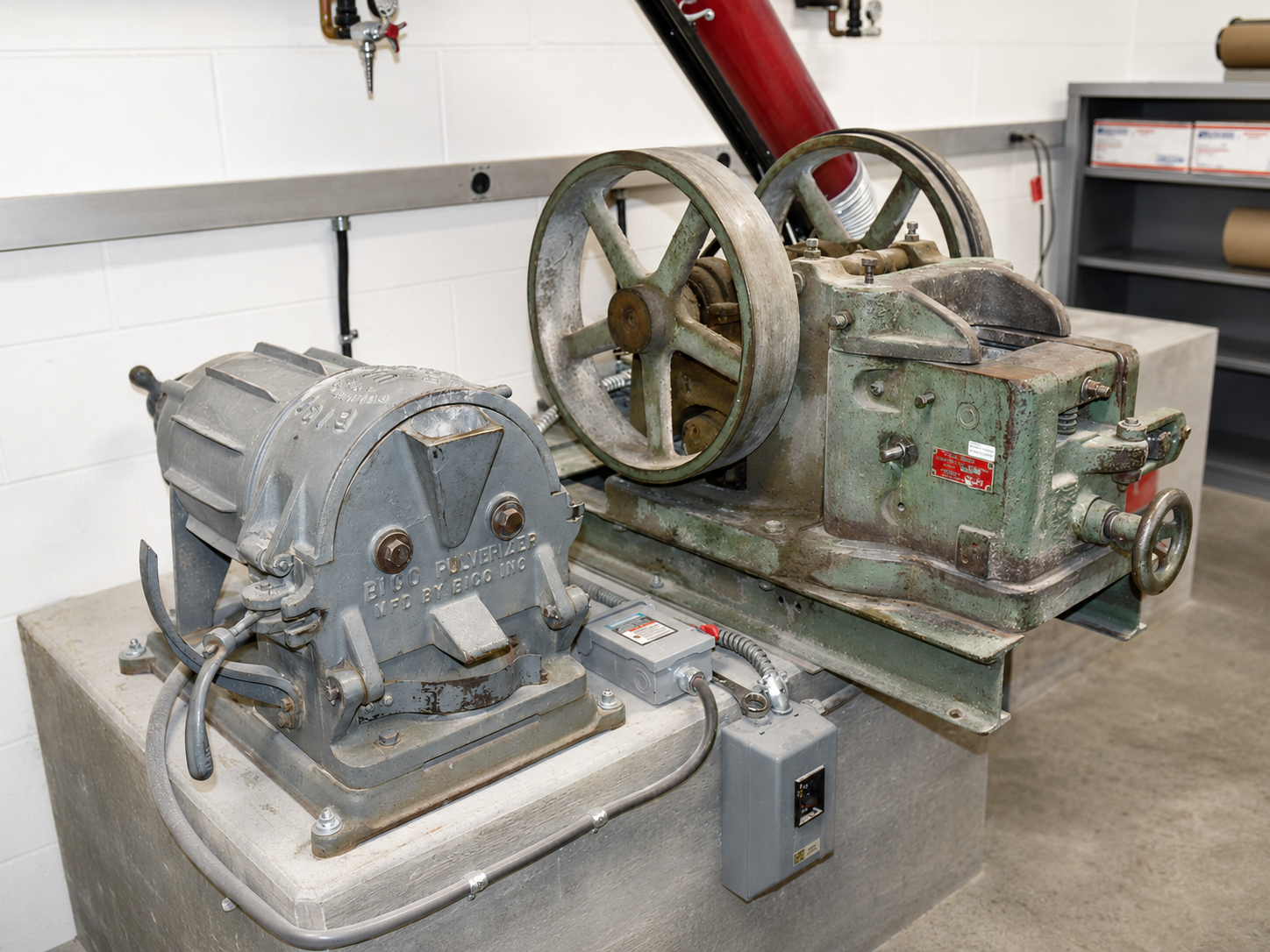
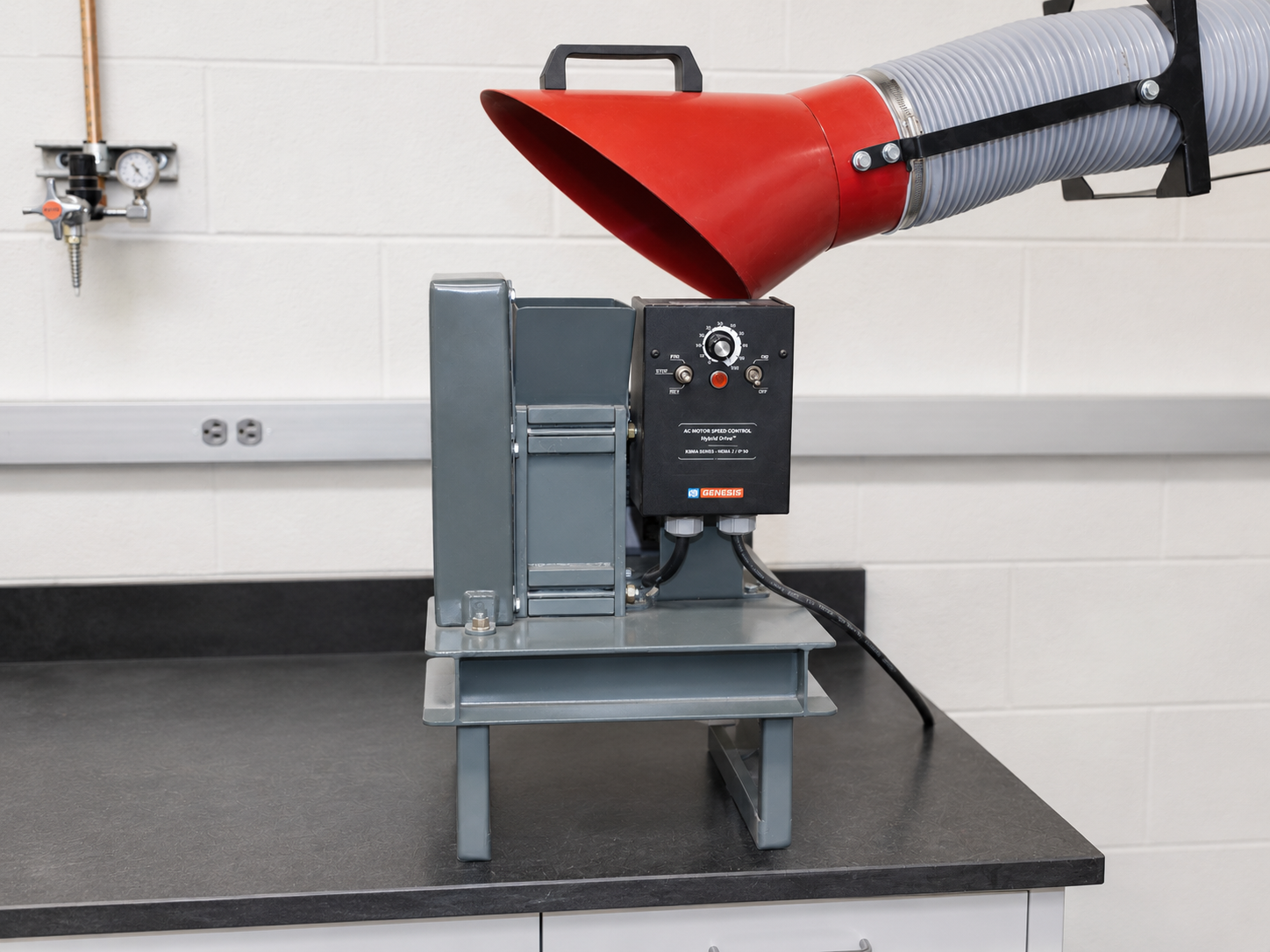
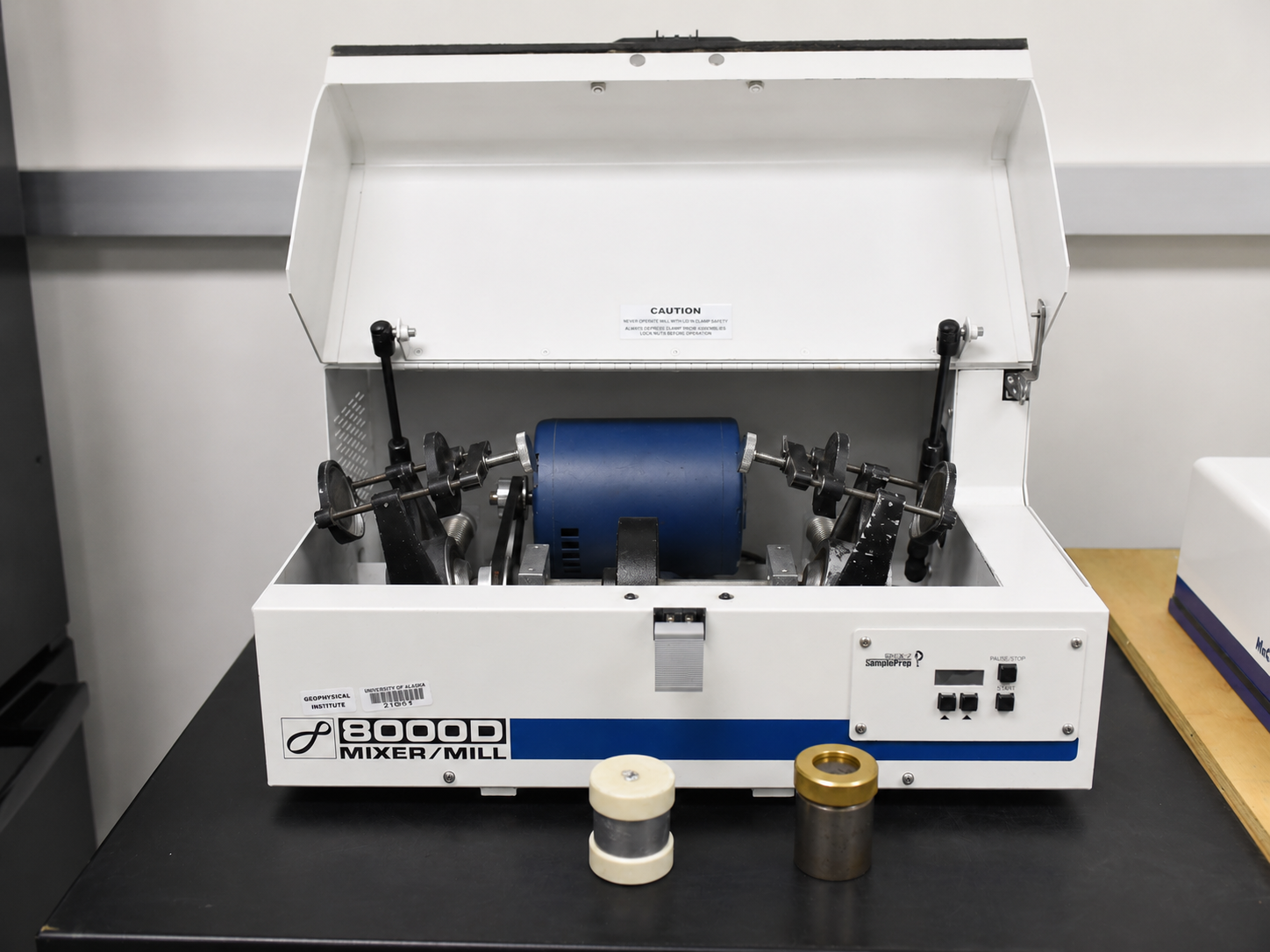
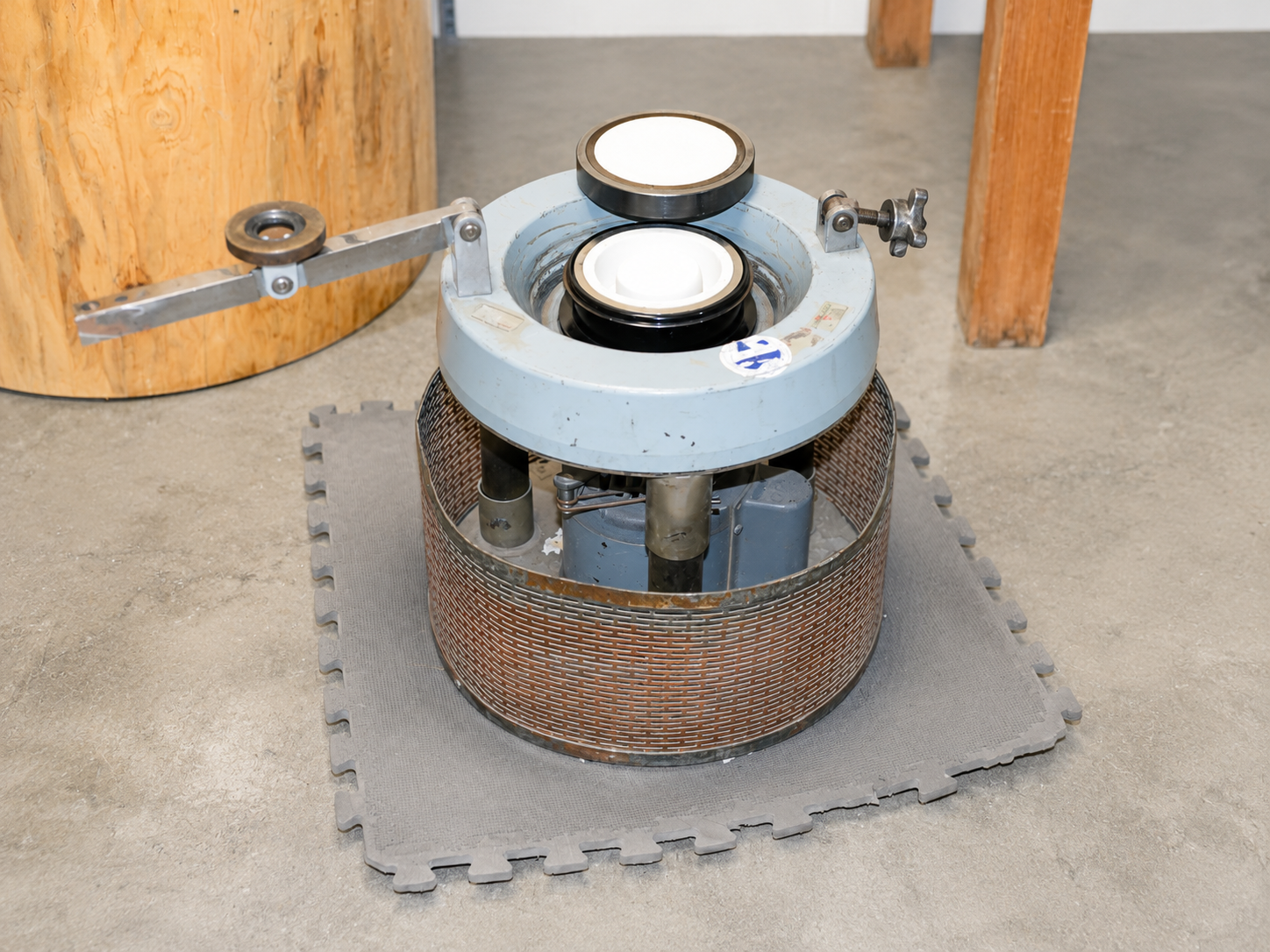
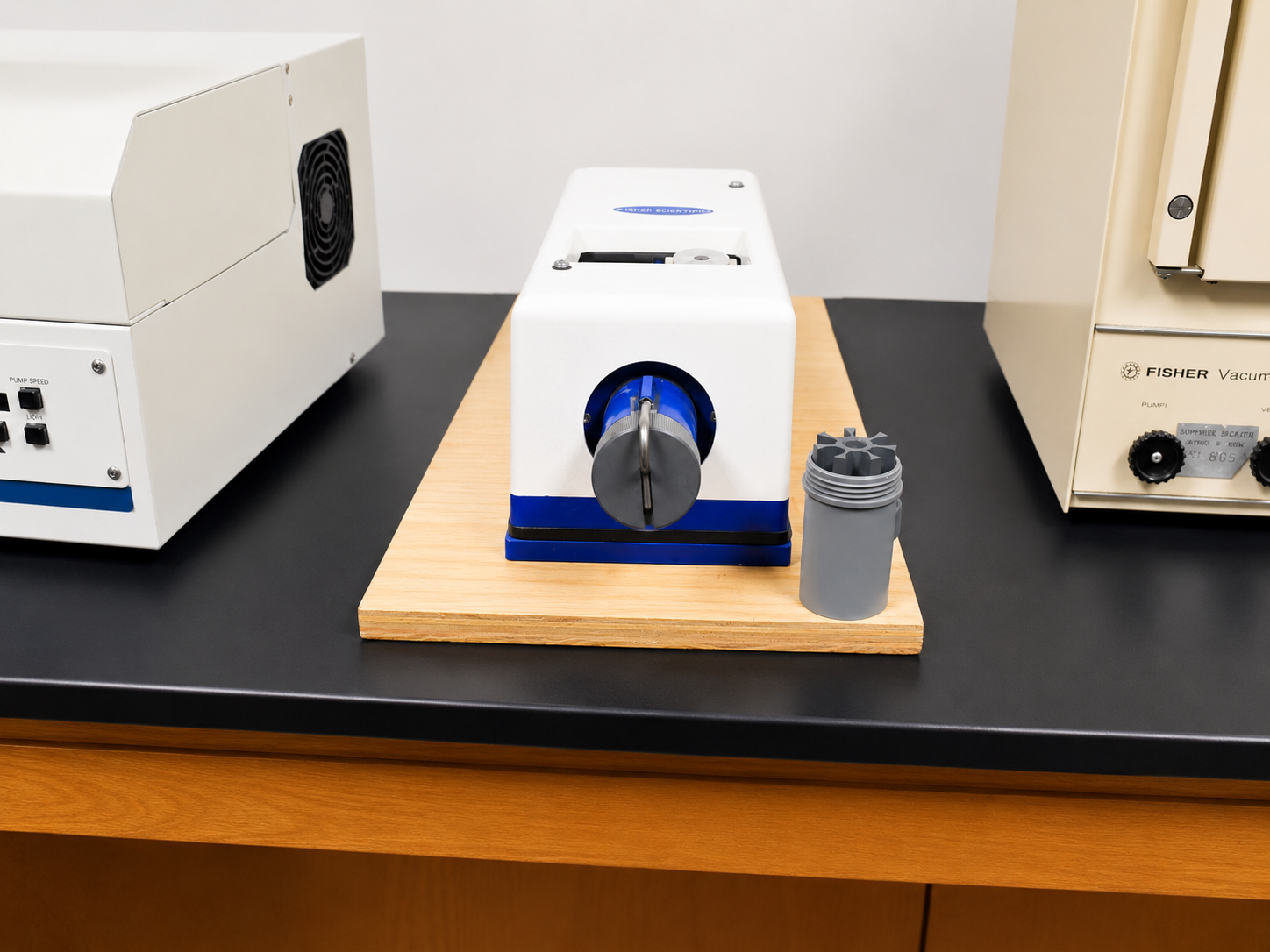
The Advanced Instrumentation Laboratory houses equipment for grain size reduction and sample homogenization necessary for XRF and XRD sample preparation. Samples need to be pre-crushed down to ~5 mm maximum size prior to further pulverizing. The Spex Ball mill mixer and ring mill shatterbox pulverizers can be utilized to achieve ~50 micron particle size fractions and have options for milling containers of either hardened steel or ceramic. McCrone Micronising Mill can be used to achieve grain size reduction down to ~3 micron particle size fractions, which is ideal for high-resolution XRD analysis.
- Sieving
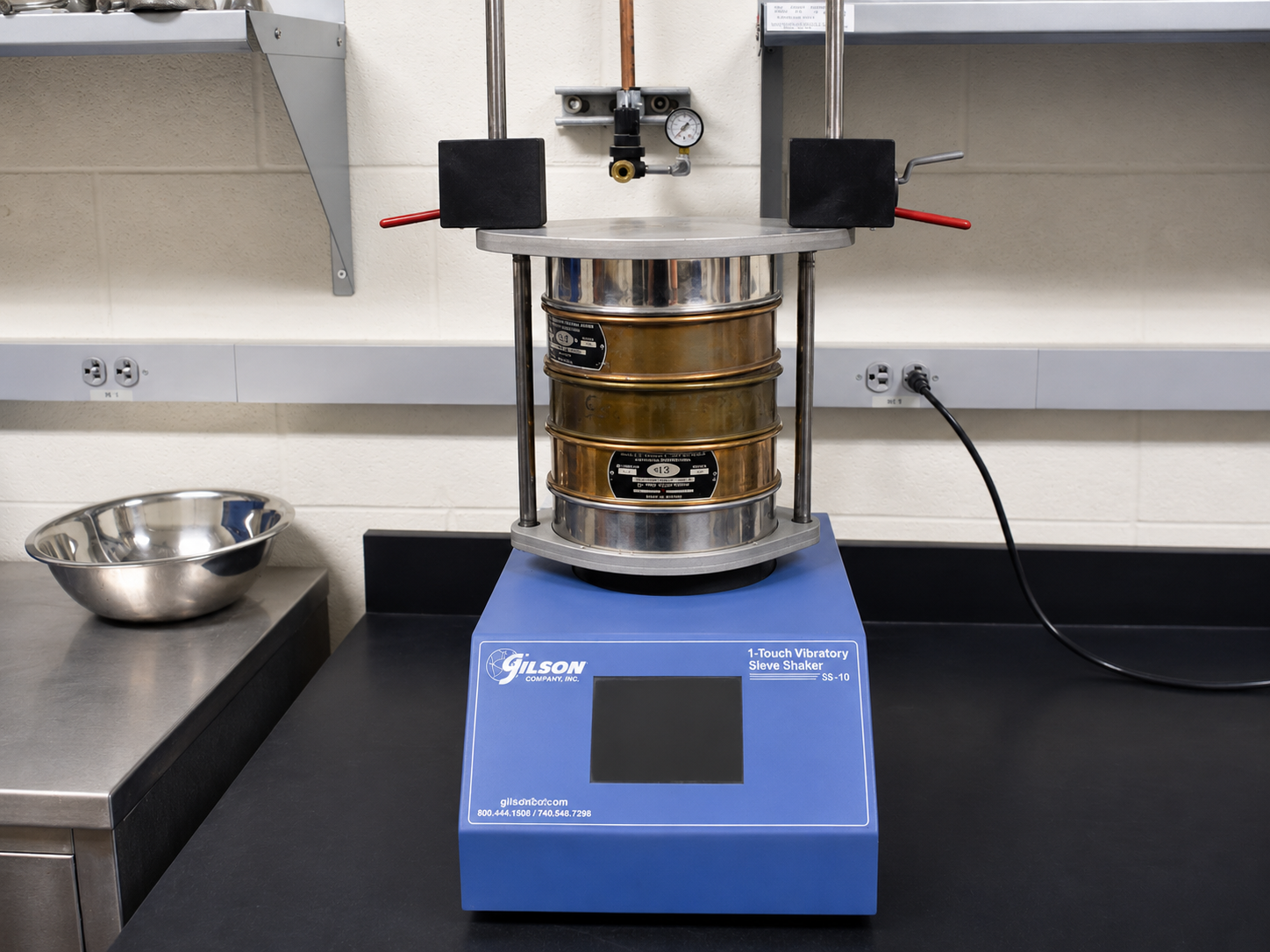
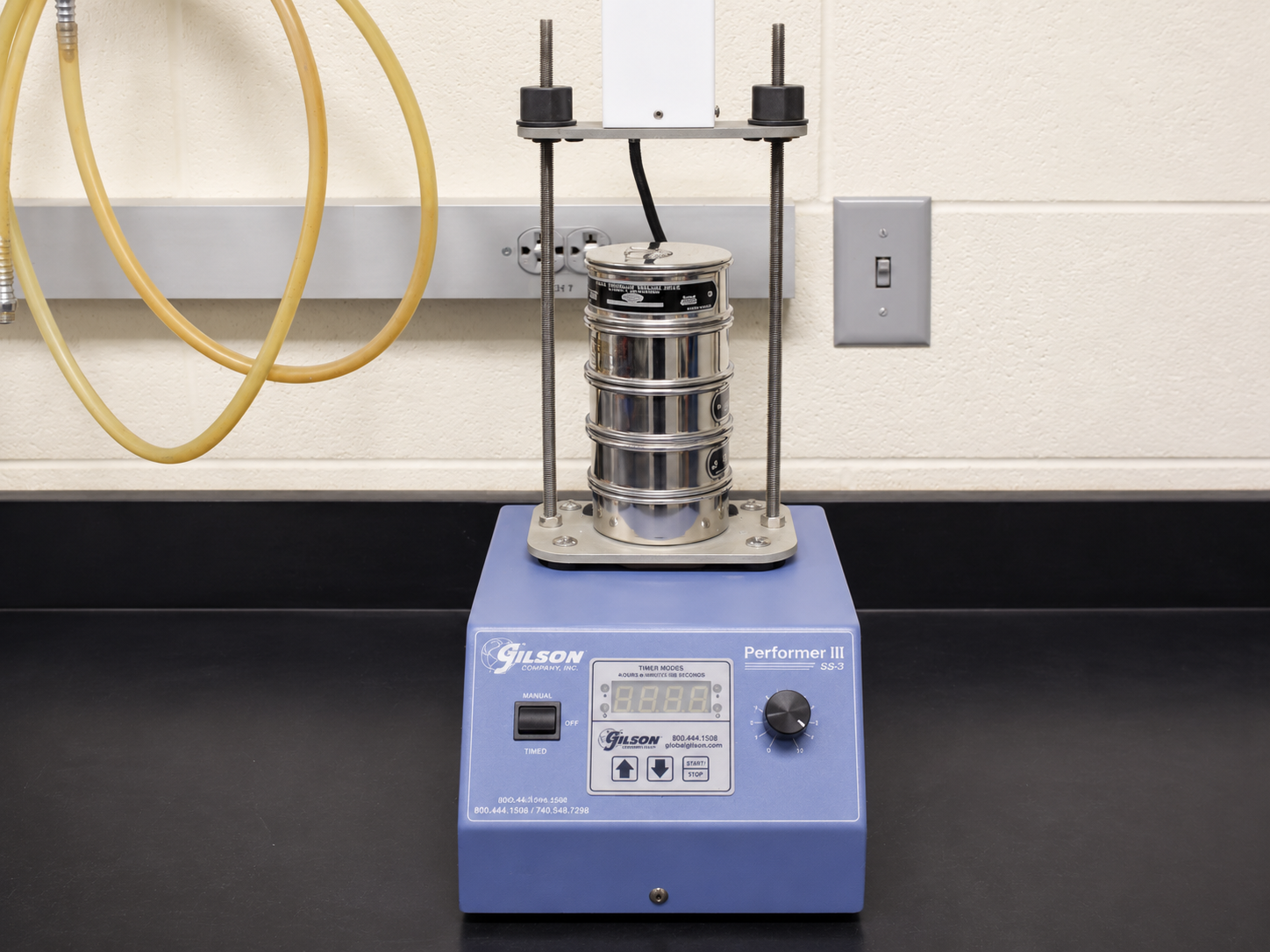
The Advanced Instrumentation Laboratory and the Geochronology Laboratory operate a series of automated sieve shakers for both 8” and 3” sieve stacks with a wide range of sieves to choose from.
- Cutting/Trimming/Polishing
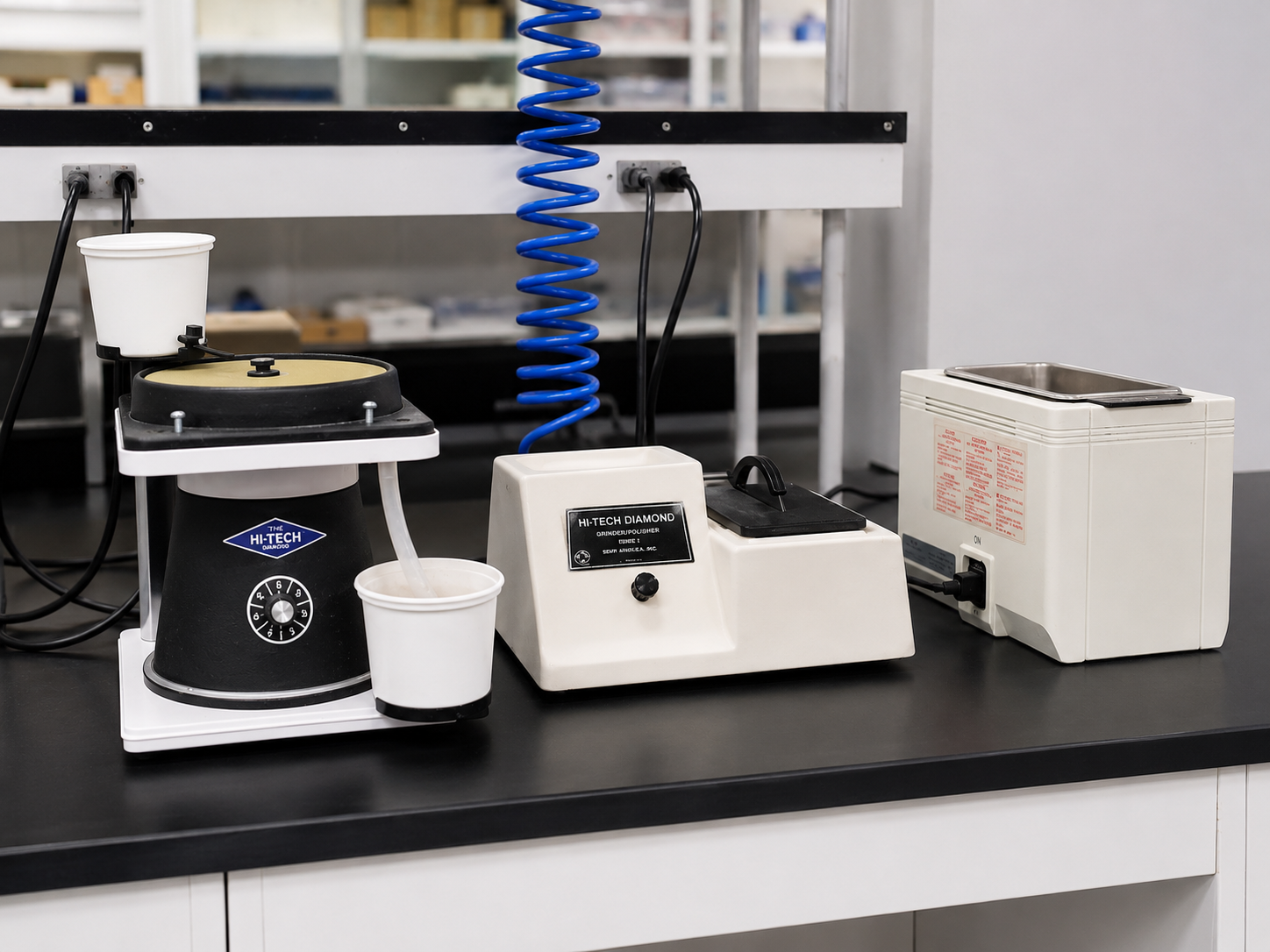
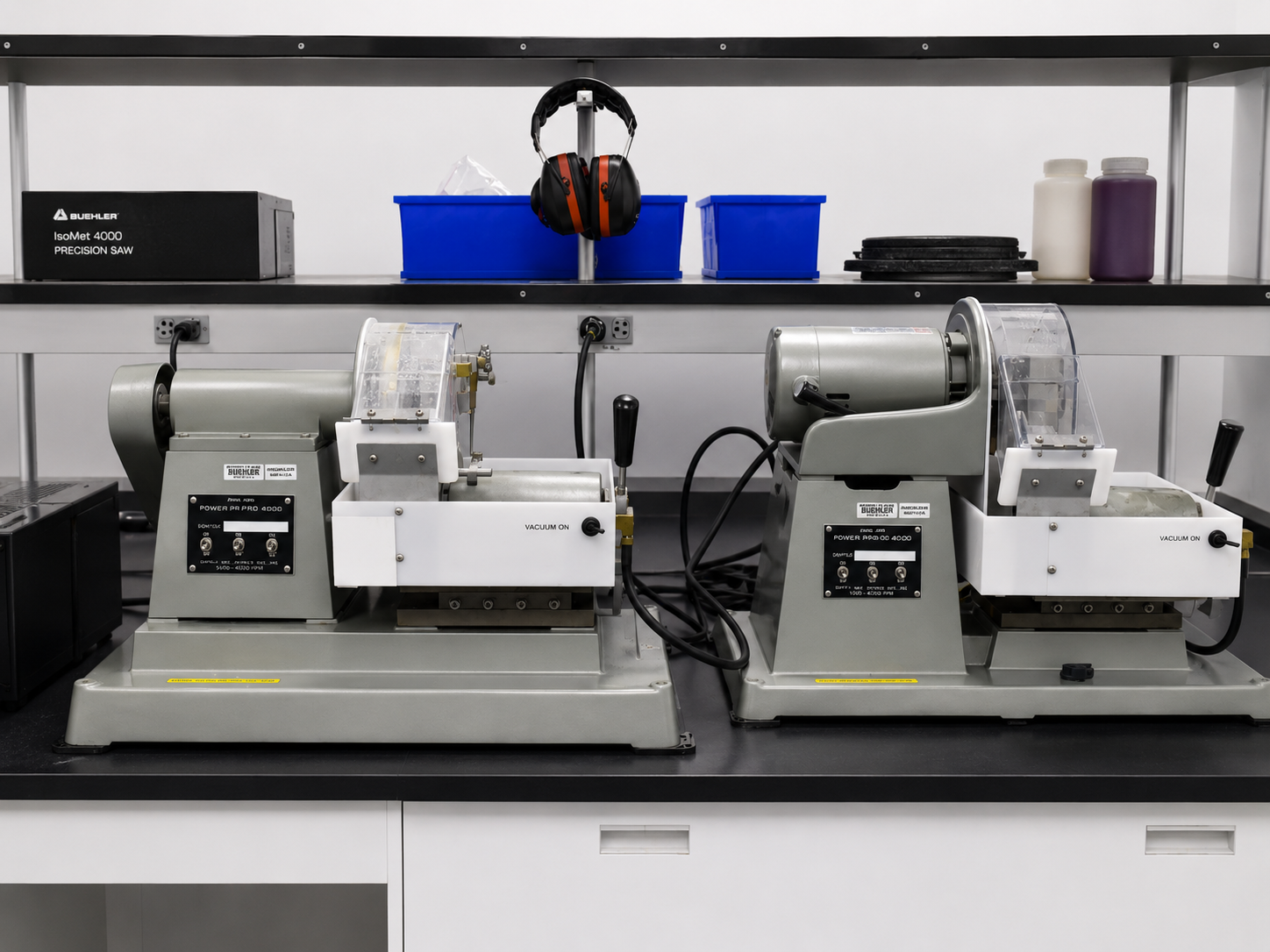
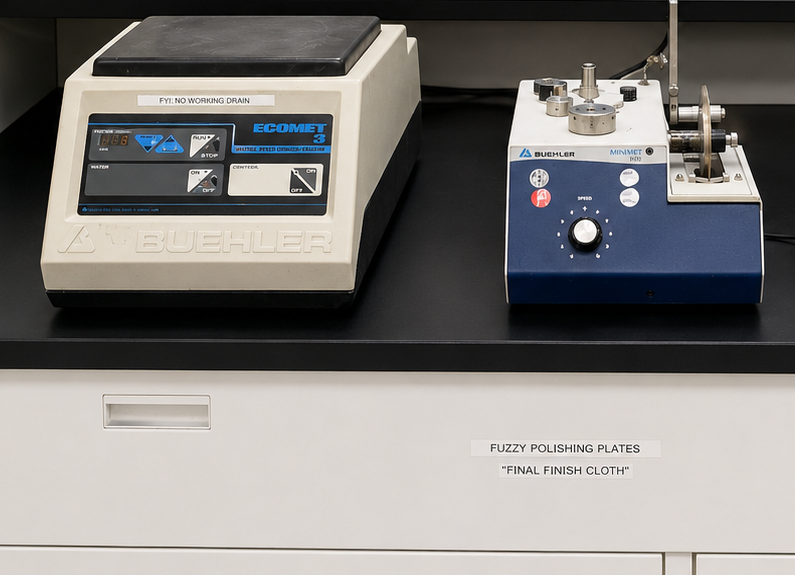
The Advanced Instrumentation Laboratory maintains a series of sample cutting and polishing equipment including larger rock slabbing saws for preparing sample billets, trim saws for fine quick cuts, and a Buehler Isomet slow speed saw for high precision cutting and sectioning, including various mounting and embedding medians. A set of Ingram saws are available for thin section preparation including a billet chop saw used to cut a billet from a glass slide with ~1mm of sample remaining on the slide, as well as a sample plainer/grinder to reduce the thickness of the grinder down to the desired thickness. The AIL also maintains a series of grinding and polishing equipment capable of surface polishing down to 0.25 micron final surface polish.
- Pelletizing/ Disc Fusion
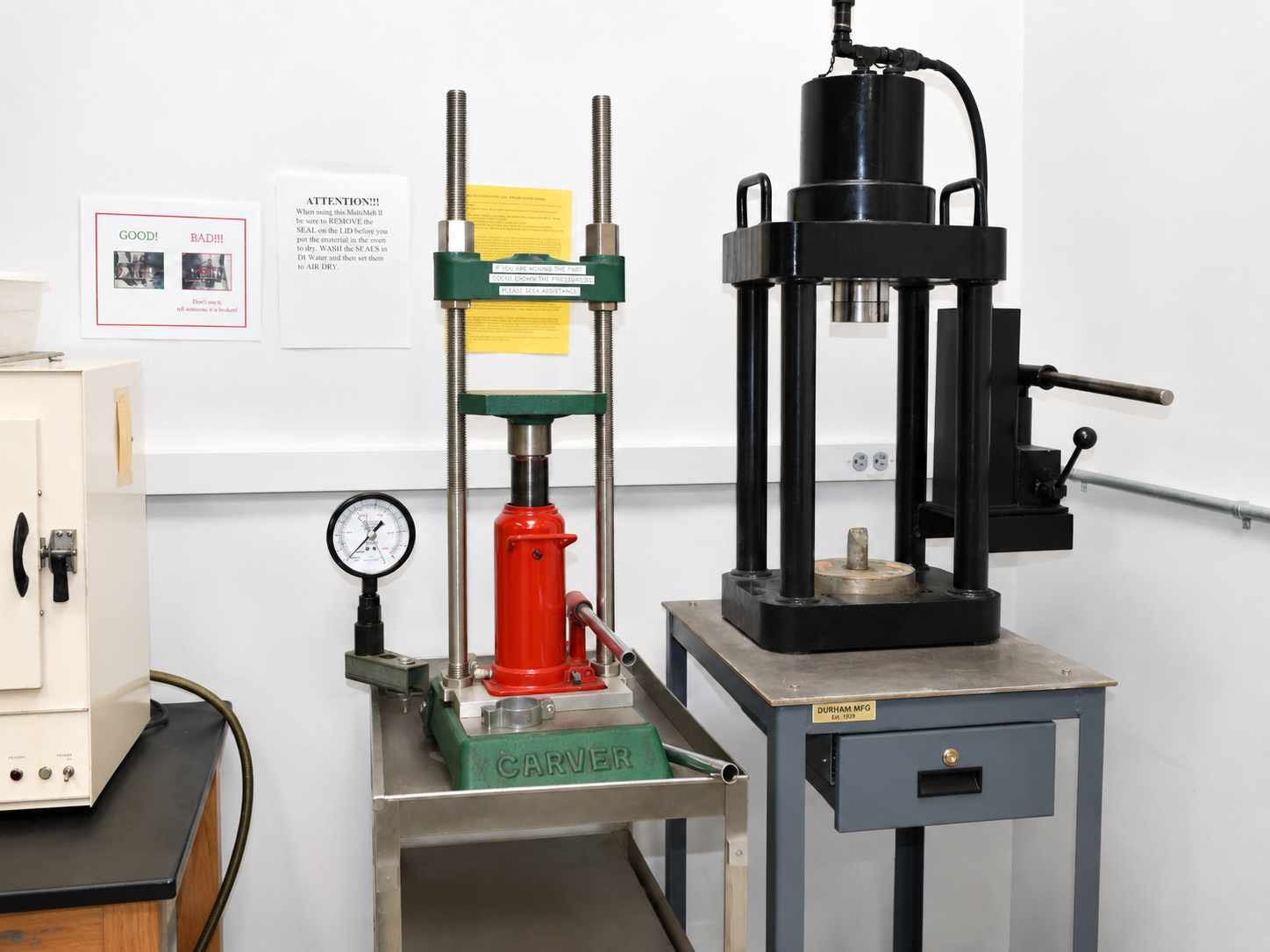
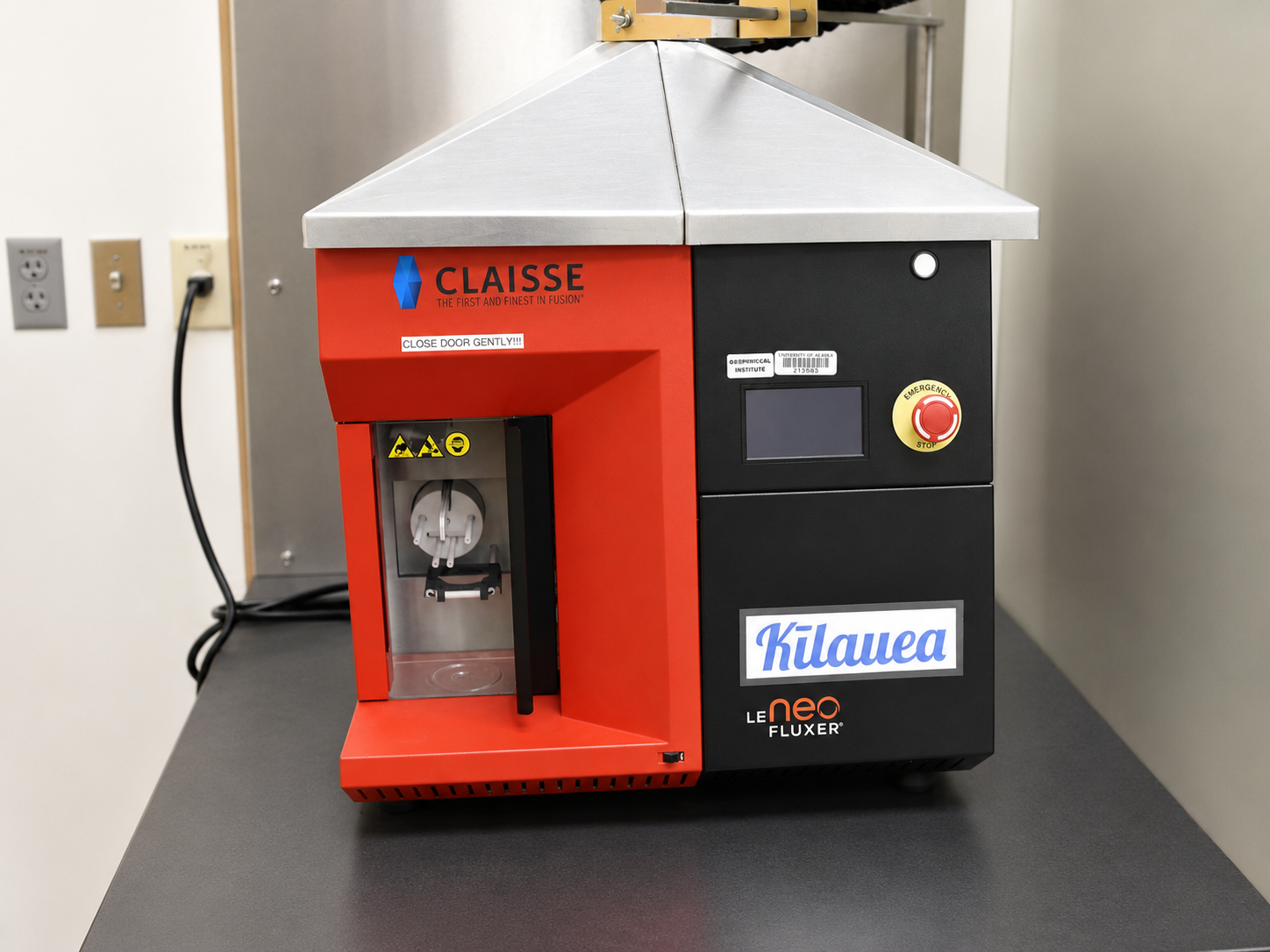
The Advanced Instrumentation Laboratory maintains equipment for manufacturing pressed powder pellets and fused glass discs of various sizes for XRF analysis. Pelletizing capabilities include high pressure die pressing with 40, 35, and 10 mm die options. Available binding agents include polyvinyl alcohol (PVA) and Cellulose. Fused glass discs and doped glass beads can be prepared using AIL’s Claisse LeNeo automated fluxer oven. Standard preparation protocols for XRF require ~2 grams of finely ground and homogenized sample to be mixed with ~10 grams of Lithium Tetraborate flux agent. Please inquire about developing a sample preparation procedure that fits your needs. For additional information and instructions, please refer to the AIL sample preparation catalog.
- SEM/EPMA Sample preparation (drying and coating)
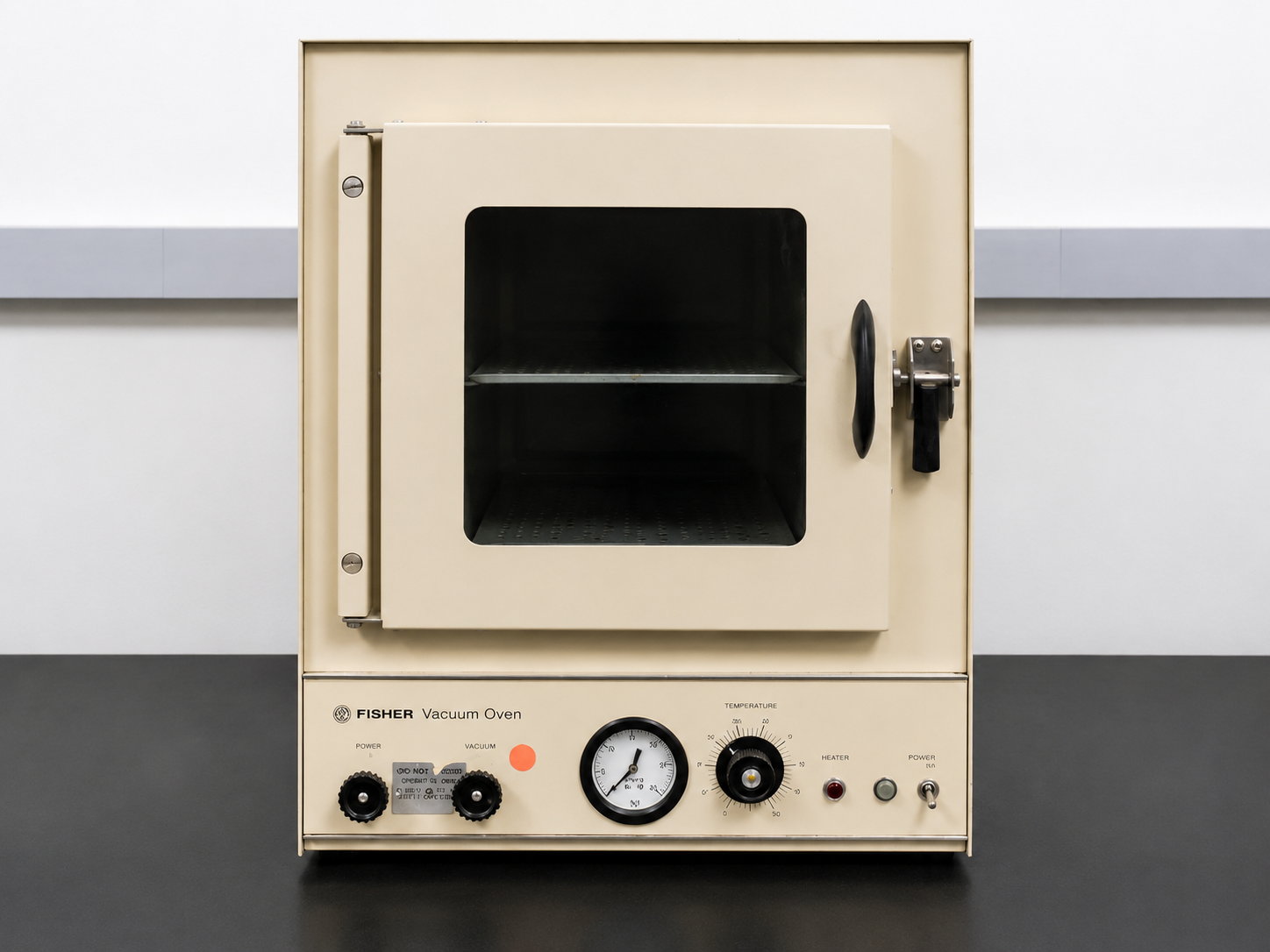
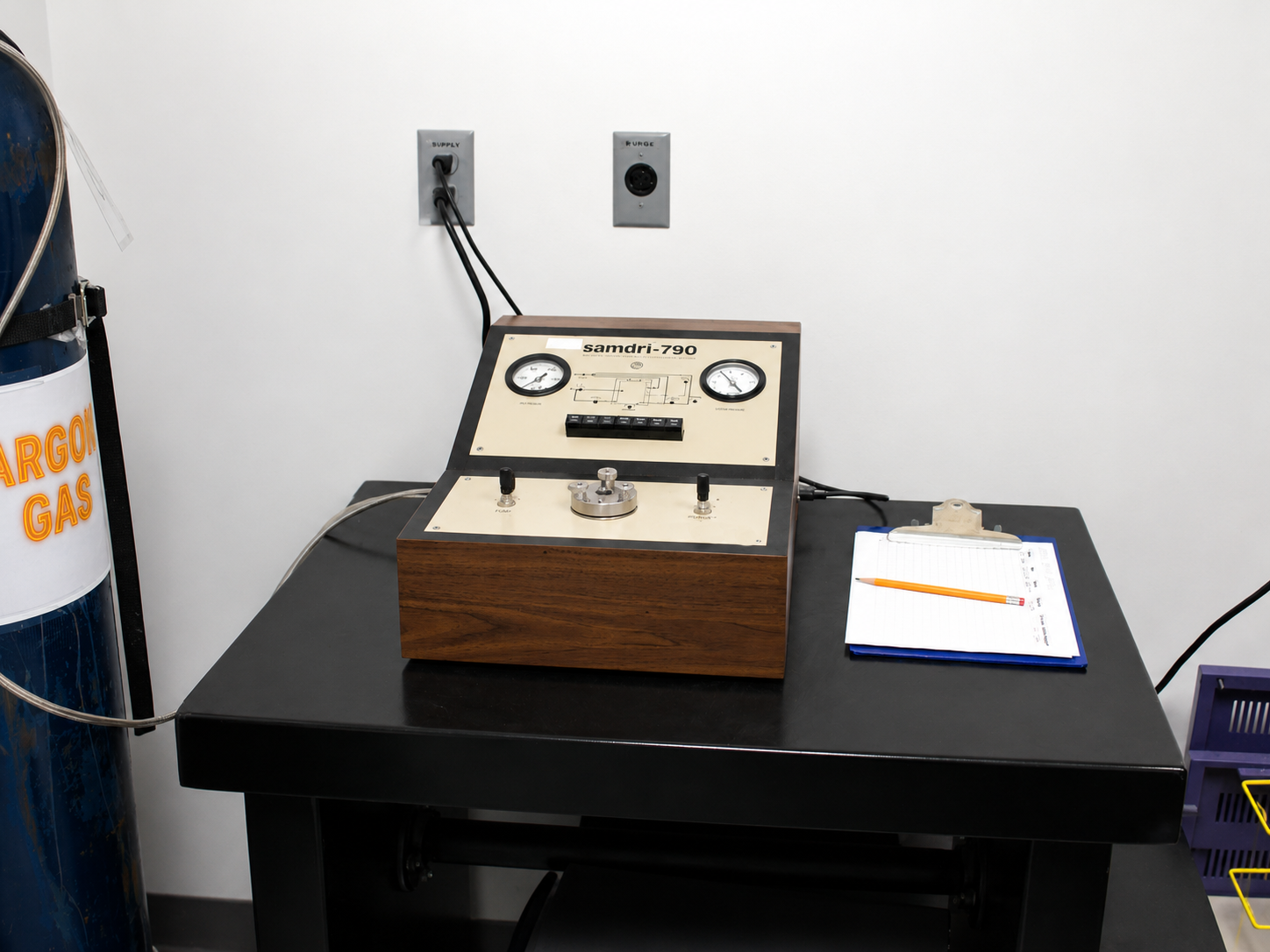
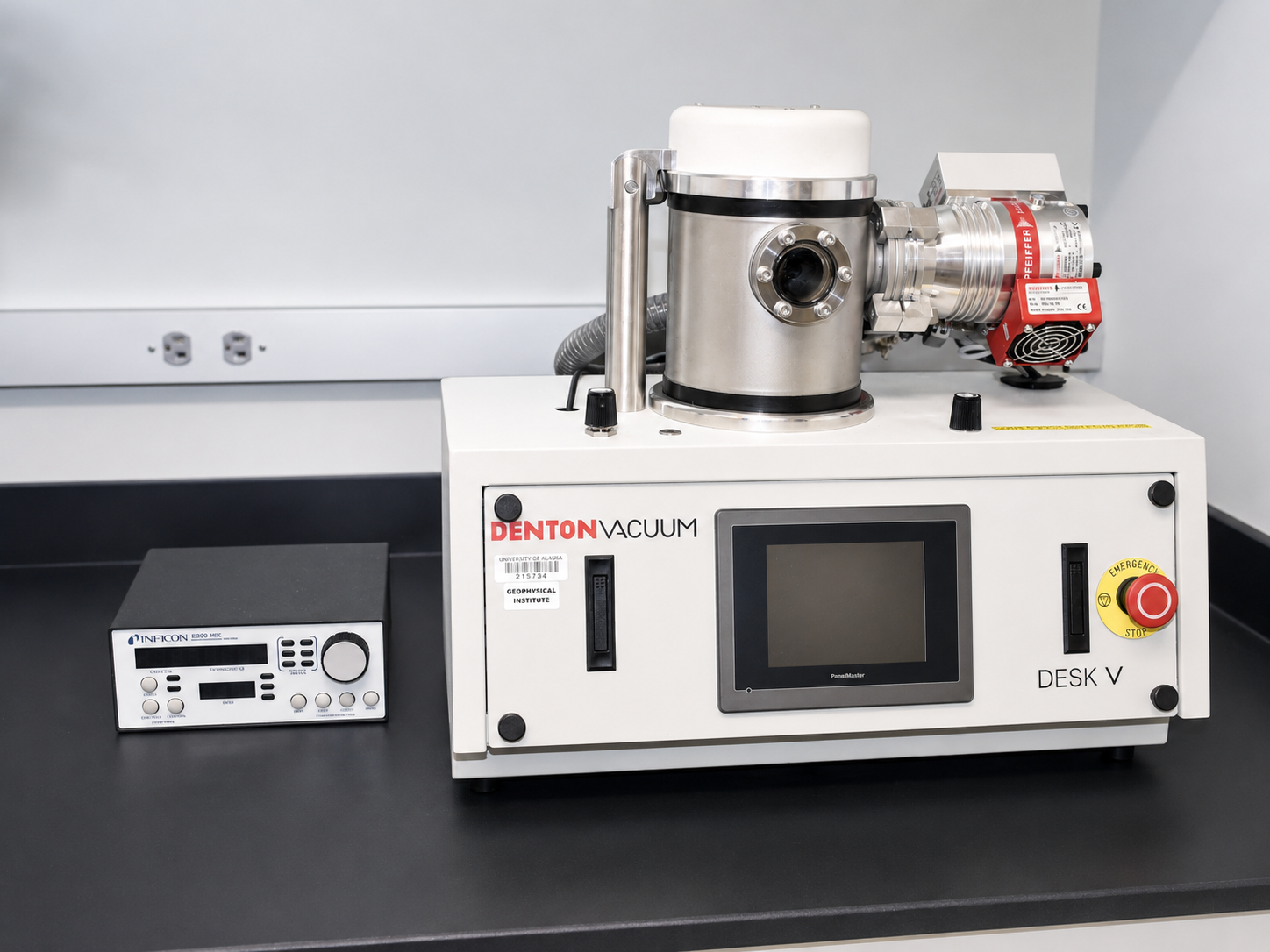
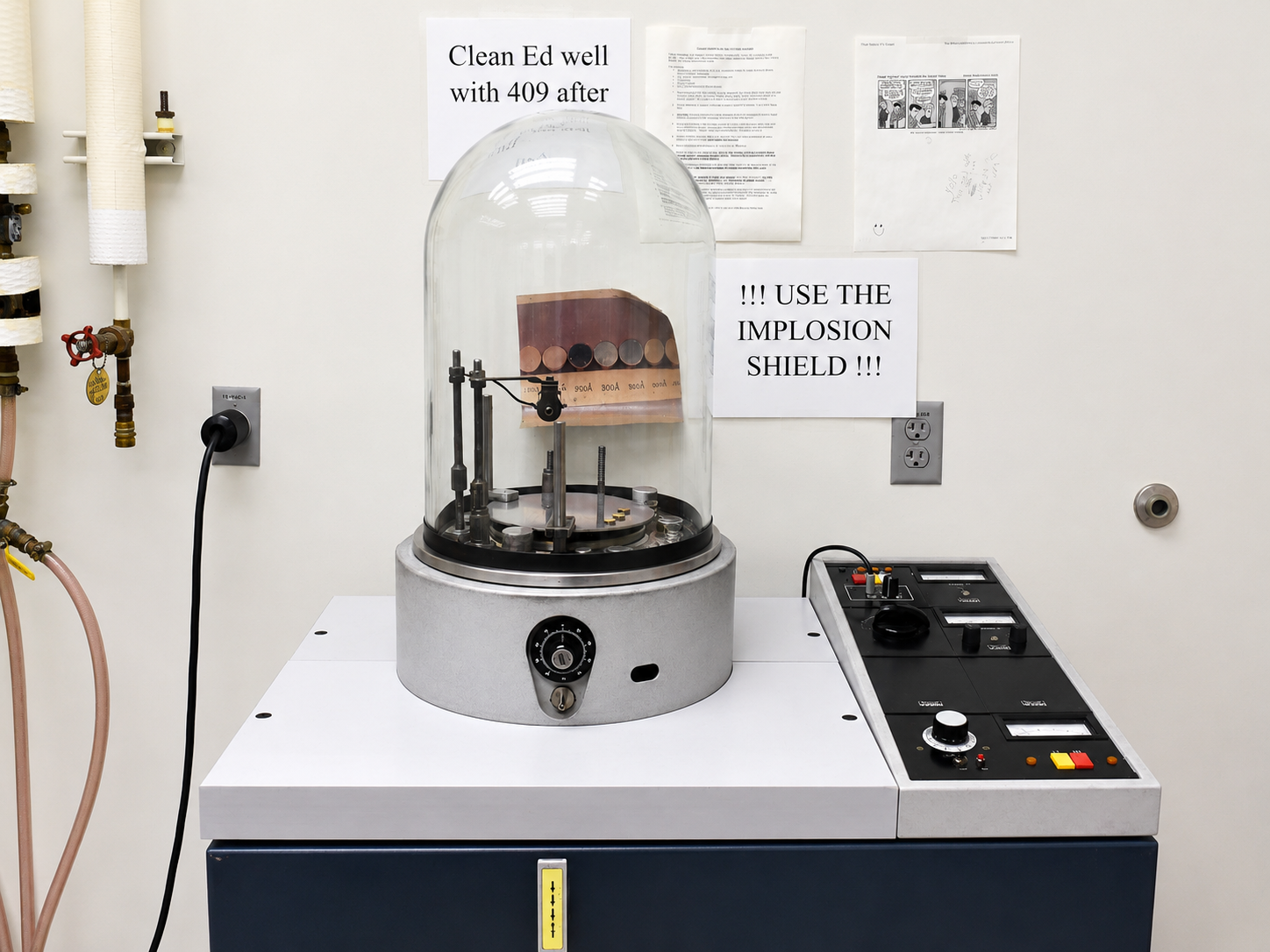
The Advanced Instrumentation Laboratory houses a suite of sample preparation equipment and methods for preparing both biologic and inorganic samples for SEM or EPMA analysis including sample drying and embedding. For biological samples, the AIL uses a Samdri-790 carbon dioxide critical point dryer for removing moisture from the sample while preserving the molecular integrity of the sample. For conductive sample coating the AIL houses a Denton sputter coating system typically configured to coat with Iridium, but other sputter targets can be used. For EDS and EPMA analysis, the Edwards coating system is configured for coating polished samples with Carbon to ~25 nanometer thickness.
- Microscopy/Micro Milling
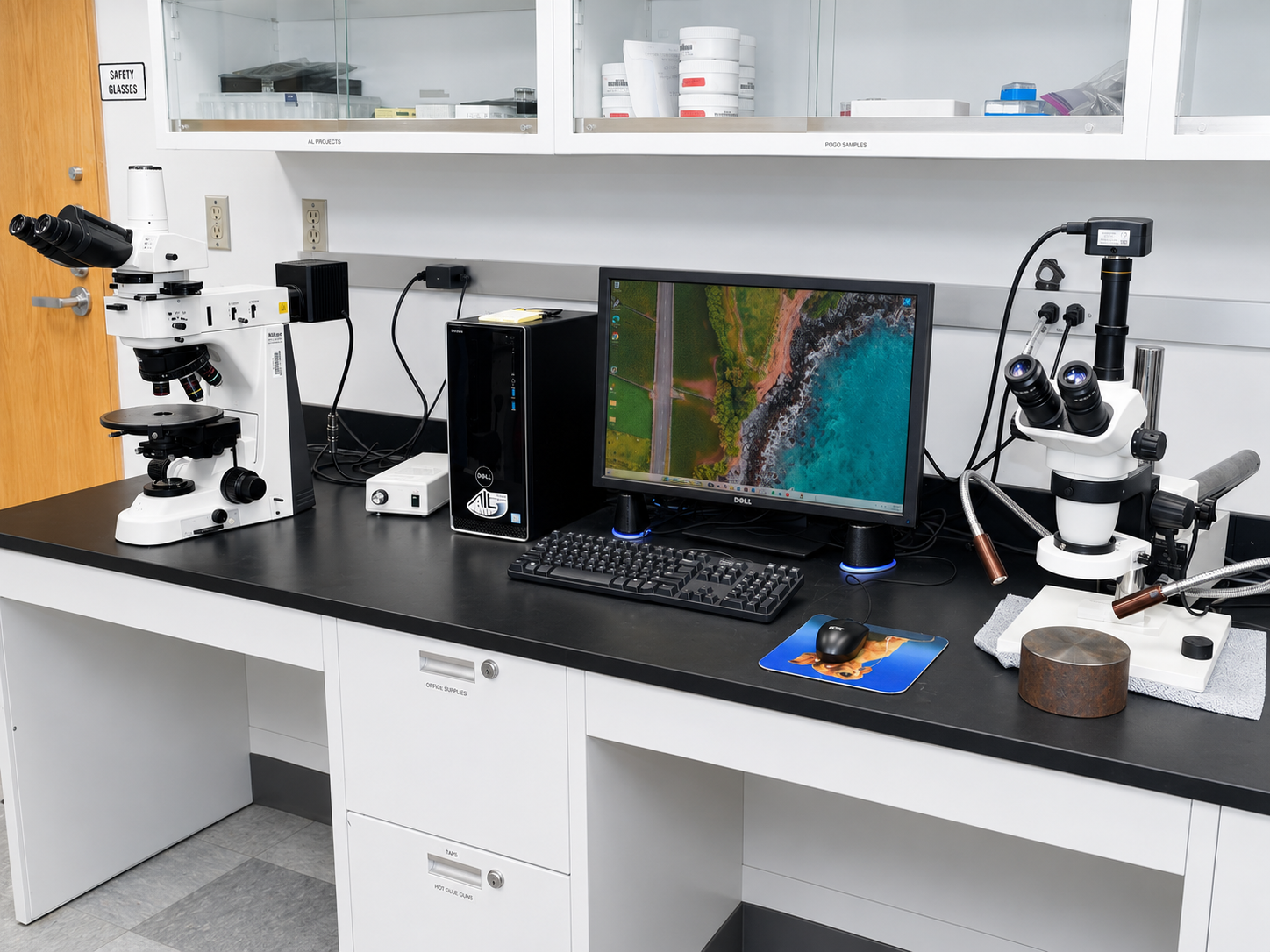
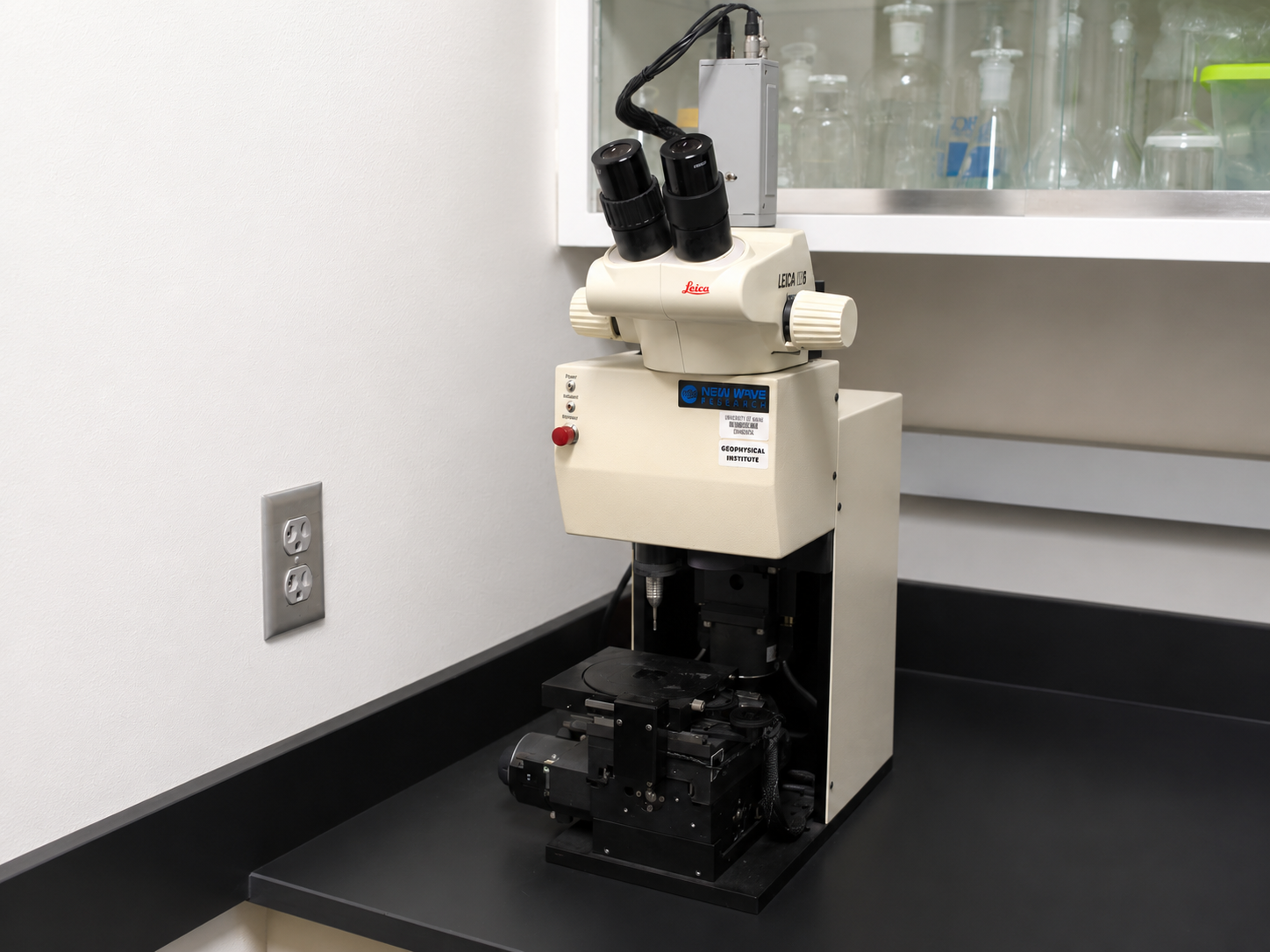
The Advanced Instrumentation Laboratory maintains a series of optical microscopes including dissection scopes for picking grains and mounting samples, as well as petrographic microscopes with both transmitted and reflected light capabilities. All microscopes have cameras capable of generating scaled microscopic images. The AIL also operates a New Wave micro-mill microscope for surface etching, grain removal, and phase targeting.