Skip to main content
Shop
Donate
UA Directory
Intranet
Quick Links
Geophysical Institute
Main navigation
Home
About
Contact Information
Contact
UAF Directory
Visitor Information
About the GI
Community
GI Publications
Timeline
GI Quarterly
People
Leadership
Researchers
Graduate Student Researchers
Emeriti
Research
Atmospheric Sciences
Remote Sensing
Seismology & Geodesy
Snow, Ice & Permafrost
Space Physics & Aeronomy
Tectonics & Sedimentation
Volcanology
Facilities & Labs
Services
Design & Printing
GI Human Resources
Education Outreach
Instrument Development
Keith B. Mather Library
Research Computing Systems
News & Info
News
Alaska Science Forum
Alaska Science Pod
Science for Alaska
Aurora Forecast
Visitor Information & Tours
Events
Community
Student Info
Intranet
Search
Breadcrumb
Home
/
News
Filter By Year
- Any -
2026
2025
2024
2023
2022
2021
2020
2019
2018
2017
2016
2015
2014
2013
2012
2011
2010
Article Type
- Any -
Read
Explore
Research Group
- Any -
Atmospheric Sciences
Remote Sensing
Seismology & Geodesy
Snow, Ice & Permafrost
Space Physics & Aeronomy
Tectonics & Sedimentation
Volcanology
Facility/Lab
- Any -
Alaska Center for Unmanned Aircraft Systems Integration (ACUASI)
Arctic and Homeland Defense Center University Affiliated Research Center (AHDC UARC)
Alaska Climate Research Center (ACRC)
Alaska Critical Minerals Collaborative (ACMC)
Alaska Earthquake Center (AEC)
Alaska Satellite Facility (ASF)
Alaska Space Grant Program (ASGP)
Alaska Volcano Observatory (AVO)
Advanced Instrumentation Laboratory (AIL)
Arctic Coastal Geoscience Lab (ACGL)
College International Geophysical Observatory (CIGO)
Geochronology Laboratory (Geochron Lab)
Geographic Information Network of Alaska (GINA)
Geophysical Institute Permafrost Laboratory (GIPL)
High-frequency Active Auroral Research Program (HAARP)
Hyperspectral Imaging Laboratory (HyLab)
Poker Flat Research Range (PFRR)
Wilson Alaska Technical Center (WATC)
Permafrost thawing below shallow Arctic lakes
June 16, 2016
New research conducted by scientists at the University of Alaska Fairbanks, the U.S. Geological Survey, the University of Wyoming and other...
Read more
Satellites, drones can help predict path of wildfire smoke
April 26, 2016
University of Alaska Fairbanks atmospheric scientists are developing ways to help forecast air quality in areas downwind from wildfires. Nicole...
Read more
Alaska volcano researchers refine ‘hearing’ to find eruptions
April 4, 2016
Seismologists at the University of Alaska Fairbanks Alaska Volcano Network have developed a refined set of methods that allows them to detect and...
Read more
New Alaska satellite image map released
March 30, 2016
A University of Alaska Fairbanks partnership with the Alaska Department of Natural Resources has made the first high-resolution satellite image...
Read more
Study says Alaska could lose massive icefield by 2200
March 24, 2016
The massive icefield that feeds Alaska’s Mendenhall Glacier may be gone by 2200 if warming trend predictions hold true, according to University...
Read more
UAF researcher gets data on Pluto’s atmosphere
March 17, 2016
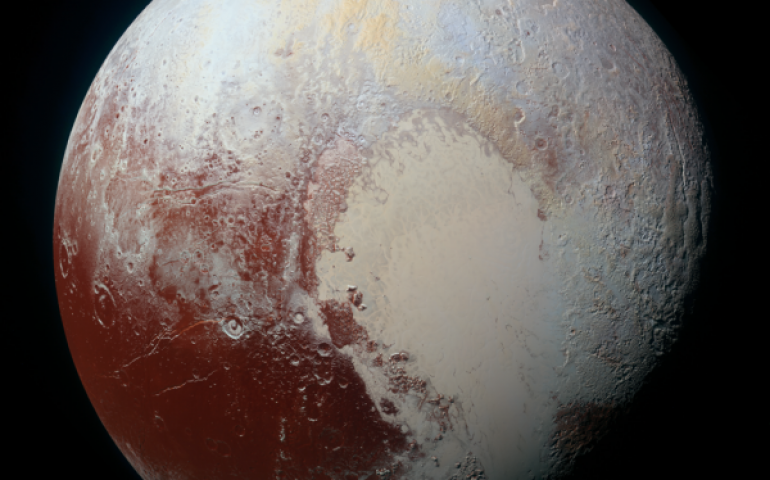
Pluto has a thinner layer of atmosphere than previously thought, according to researchers who are sifting through the data gathered by NASA’s New...
Read more
UAF facility to distribute new satellite’s imagery
March 16, 2016
NASA has announced that unprecedented, detailed radar views of Earth from a future satellite will be distributed by the Alaska Satellite Facility...
Read more
Aurora explored in film by scientists and Inupiat elders
March 1, 2016
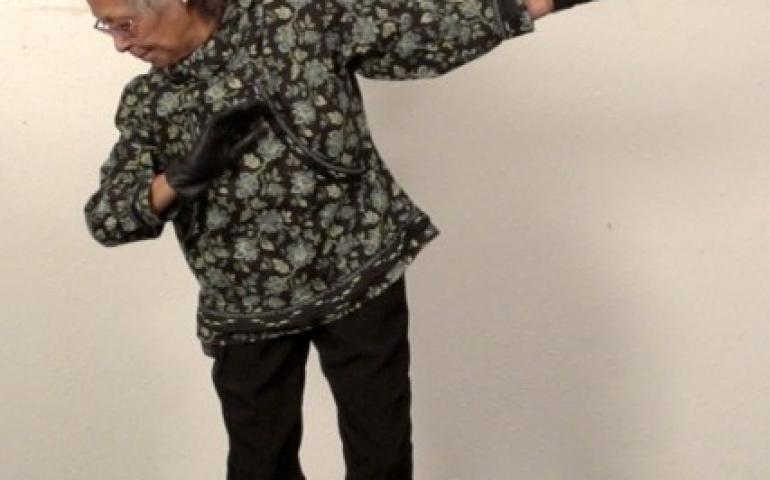
When the northern lights are bright and strong, the ancestors are happy, according to Inupiaq elders highlighted in a new documentary by the...
Read more
Kenai students visit quake center 10 days after big temblor
February 15, 2016
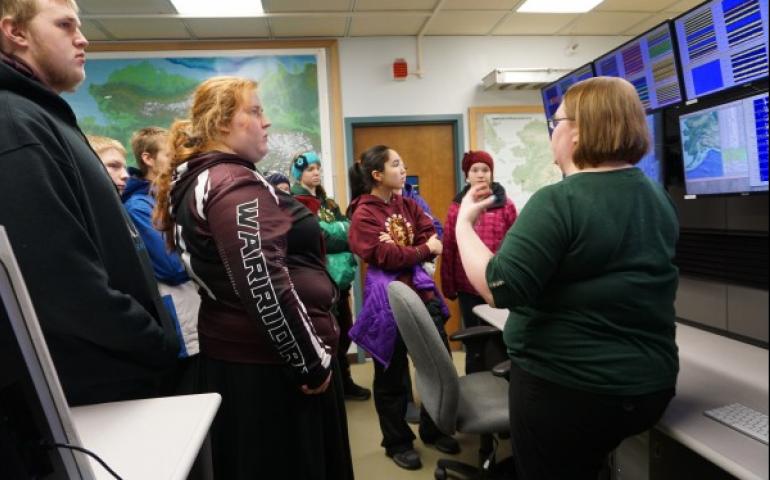
High school students from the village of Nikolaevsk visited the University of Alaska Fairbanks Geophysical Institute on Feb. 3, just 10 days...
Read more
BP donates methane-detecting drone technology
February 9, 2016
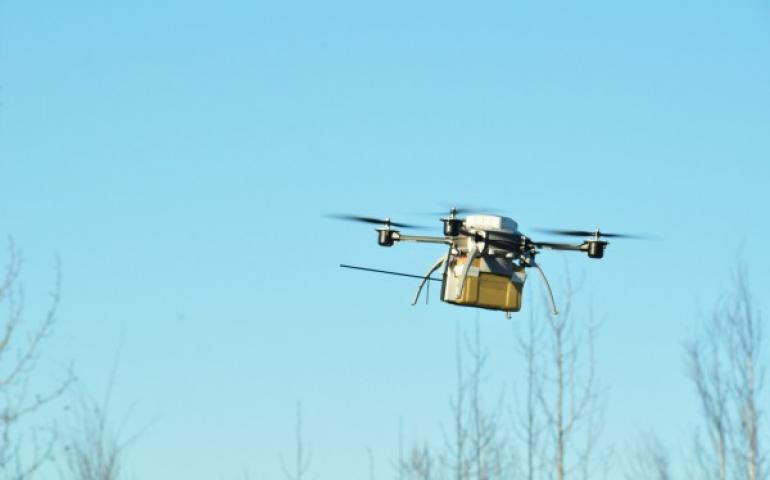
The University of Alaska Fairbanks Geophysical Institute and BP have developed a way to detect methane gas using aerial drones. The technology...
Read more
Map shows faster past ice movement in Greenland’s interior
February 4, 2016
A University of Alaska Fairbanks researcher has helped create the first map that shows how the Greenland Ice Sheet has moved over time. The map...
Read more
Greenland model could help estimate sea level rise
February 1, 2016
University of Alaska Fairbanks mathematicians and glaciologists have taken a first step toward understanding how glacier ice flowing off...
Read more
Cahill to lead university’s unmanned aircraft center
January 13, 2016
University of Alaska Fairbanks atmospheric chemistry professor Catherine Cahill is the new director of the Alaska Center for Unmanned Aircraft...
Read more
North Slope permafrost thawing sooner than expected
December 10, 2015
New projections of permafrost change in northern Alaska suggest far-reaching effects will come sooner than expected, scientists reported this...
Read more
Arctic scientist to map space weather from Antarctica
November 16, 2015
A University of Alaska Fairbanks scientist is sending two devices to Antarctica to measure winds and temperatures in space more than 100 miles...
Read more
Project aims to increase number of women in geophysics
October 9, 2015
The University of Alaska Fairbanks will begin a study designed to encourage high school-age girls to consider geophysics and technology science...
Read more
UAF students track launch of satellite they built
October 8, 2015
A small research satellite designed and built by University of Alaska Fairbanks students is among 13 launched early Thursday morning from...
Read more
Half of Alaska’s glaciers could be gone by 2100
September 27, 2015
A new study predicts that Alaska’s glaciers will lose 30 to 60 percent of their volume and contribute half an inch to 1 inch to global sea level...
Read more
Pagination
Previous page
←
Previous
First page
1
Page
21
Page
22
Page
23
Page
24
Current page
25
Page
26
Page
27
Page
28
Page
29
Last page
30
Next page
Next
→