Skip to main content
Shop
Donate
UA Directory
Intranet
Quick Links
Geophysical Institute
Main navigation
Home
About
Contact Information
Contact
UAF Directory
Visitor Information
About the GI
Community
GI Publications
Timeline
GI Quarterly
People
Leadership
Researchers
Graduate Student Researchers
Emeriti
Research
Atmospheric Sciences
Remote Sensing
Seismology & Geodesy
Snow, Ice & Permafrost
Space Physics & Aeronomy
Tectonics & Sedimentation
Volcanology
Facilities & Labs
Services
Design & Printing
GI Human Resources
Education Outreach
Instrument Development
Keith B. Mather Library
Research Computing Systems
News & Info
News
Alaska Science Forum
Alaska Science Pod
Science for Alaska
Aurora Forecast
Visitor Information & Tours
Events
Community
Student Info
Intranet
Search
Breadcrumb
Home
/
News
Filter By Year
- Any -
2026
2025
2024
2023
2022
2021
2020
2019
2018
2017
2016
2015
2014
2013
2012
2011
2010
Article Type
- Any -
Read
Explore
Research Group
- Any -
Atmospheric Sciences
Remote Sensing
Seismology & Geodesy
Snow, Ice & Permafrost
Space Physics & Aeronomy
Tectonics & Sedimentation
Volcanology
Facility/Lab
- Any -
Alaska Center for Unmanned Aircraft Systems Integration (ACUASI)
Arctic and Homeland Defense Center University Affiliated Research Center (AHDC UARC)
Alaska Climate Research Center (ACRC)
Alaska Critical Minerals Collaborative (ACMC)
Alaska Earthquake Center (AEC)
Alaska Satellite Facility (ASF)
Alaska Space Grant Program (ASGP)
Alaska Volcano Observatory (AVO)
Advanced Instrumentation Laboratory (AIL)
Arctic Coastal Geoscience Lab (ACGL)
College International Geophysical Observatory (CIGO)
Geochronology Laboratory (Geochron Lab)
Geographic Information Network of Alaska (GINA)
Geophysical Institute Permafrost Laboratory (GIPL)
High-frequency Active Auroral Research Program (HAARP)
Hyperspectral Imaging Laboratory (HyLab)
Poker Flat Research Range (PFRR)
Wilson Alaska Technical Center (WATC)
UAF science communicator gets an explosion of literary notoriety
June 28, 2024
A little bit of fame can be just an email or phone call away. That happened for Elisabeth Nadin, communications manager at the Alaska Earthquake...
Read more
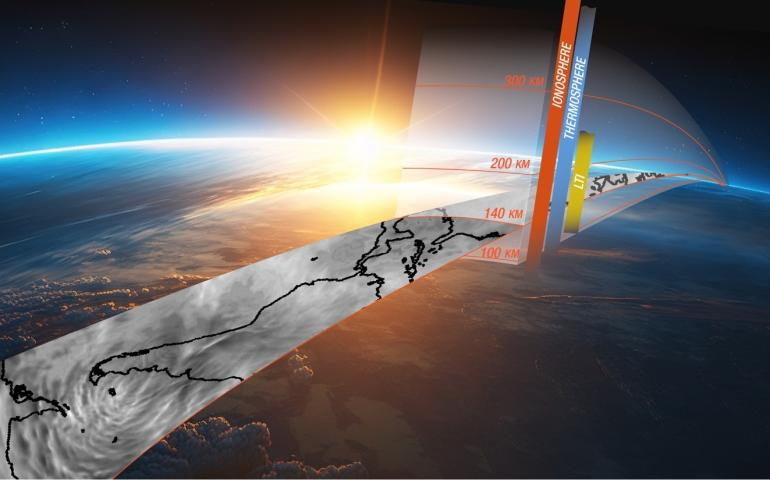
UAF on team in NASA-funded space weather project competition
June 25, 2024
The University of Alaska Fairbanks is part of a team led by the University of Colorado Boulder and Johns Hopkins Applied Physics Laboratory that...
Read more
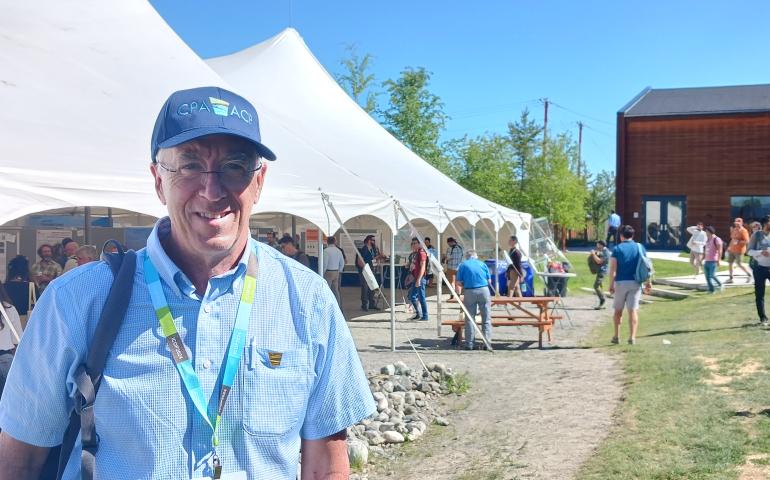
Canadian Permafrost Association president: We need universities such as UAF
June 20, 2024
WHITEHORSE, Yukon — Universities play an essential role in advancing permafrost science, the president of the Canadian Permafrost Association...
Read more
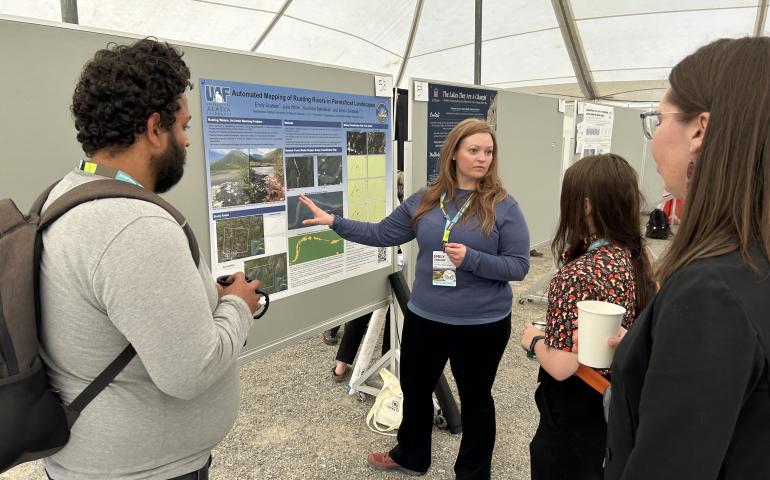
UAF scientists present research at international permafrost conference
June 18, 2024
Nearly two dozen University of Alaska Fairbanks researchers — faculty, technicians and students — are among the several hundred scientists at the...
Read more
UAF scientists heading to international permafrost conference
June 13, 2024
About 20 University of Alaska Fairbanks scientists will present research at the quadrennial International Conference on Permafrost, which opens...
Read more
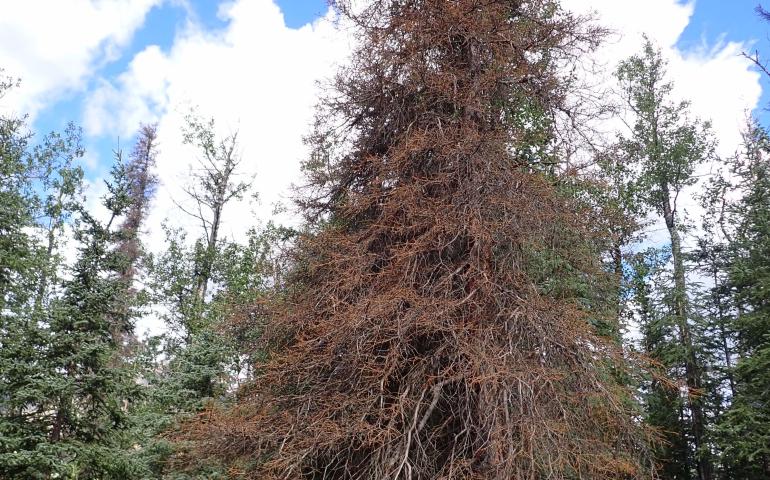
New way to spot beetle-killed spruce can help forest, wildfire managers
June 12, 2024
A new machine-learning system developed at the University of Alaska Fairbanks can automatically produce detailed maps from satellite data to show...
Read more
New research shows flood risk for several Alaska communities
June 10, 2024
Coastal Alaska communities from the Yukon-Kuskokwim Delta northward will see more of their buildings exposed to flooding by 2100 if they continue...
Read more
Alaska Satellite Facility gets $139 million federal intelligence contract
June 6, 2024
The National Geospatial-Intelligence Agency has awarded a $139 million, five-year contract to the University of Alaska Fairbanks for the global...
Read more
Geophysical Institute, Poker Flat offer free summer tours
May 29, 2024
The University of Alaska Fairbanks Geophysical Institute is offering free public tours from Memorial Day through Labor Day. Two different guided...
Read more
Geophysical Institute, Explore Fairbanks offer new summer science series
May 24, 2024
The University of Alaska Fairbanks Geophysical Institute and Explore Fairbanks will host free public Science for Alaska talks this summer at the...
Read more
NASA sounding rocket chief praises first solar flare campaign from Poker Flat
May 14, 2024
The head of NASA’s sounding rocket program called April’s first launches of the space agency’s Solar Flare Sounding Rocket Campaign the “perfect...
Read more
Solar storm – not HAARP – creates intense auroral display
May 13, 2024
Night skies over the weekend erupted with vivid colors and awed people all around the globe as the solar wind from a severe geomagnetic storm...
Read more
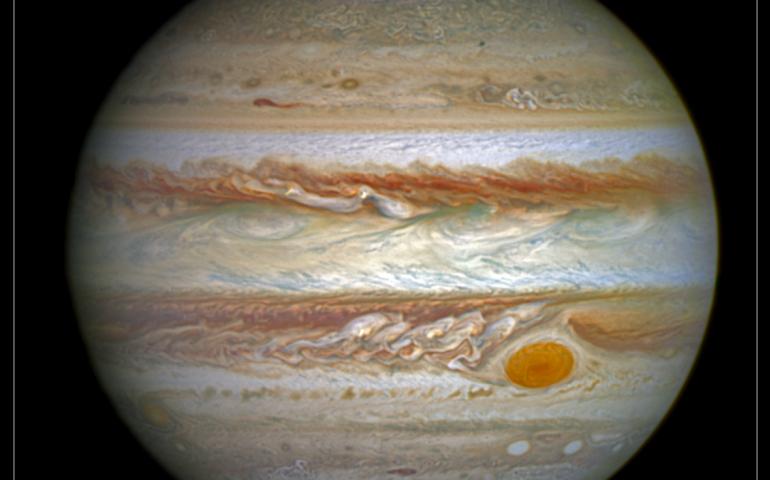
UAF scientist’s research answers big question about our system’s largest planet
May 3, 2024
New discoveries about Jupiter could lead to a better understanding of Earth’s own space environment and influence a long-running scientific...
Read more
Alaska high school students present research at seismology conference
May 1, 2024
Radiation monitoring. Sea ice changes. Floodwater alerts. Coastal erosion. Speeding drivers. Landslide warnings. Thawing permafrost. Weather...
Read more
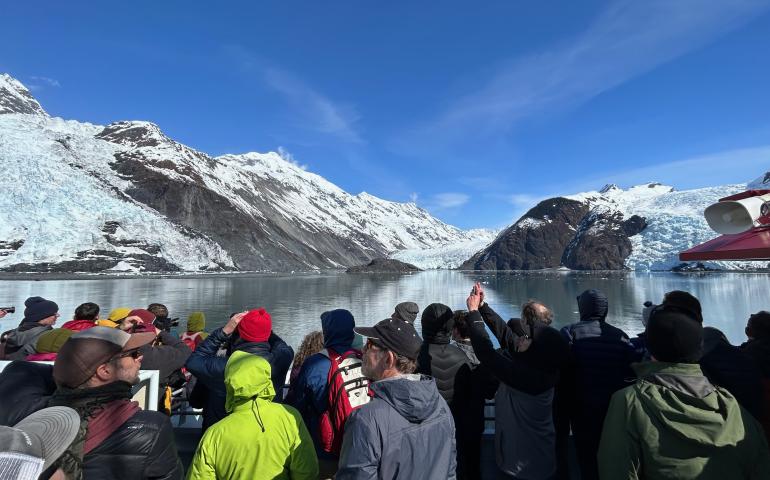
Seismologists get close-up look at hazardous Barry Arm landslide
April 29, 2024
A high point for about 300 seismologists, geologists and other scientists gathering in Anchorage for a weeklong conference came Monday, April 29...
Read more
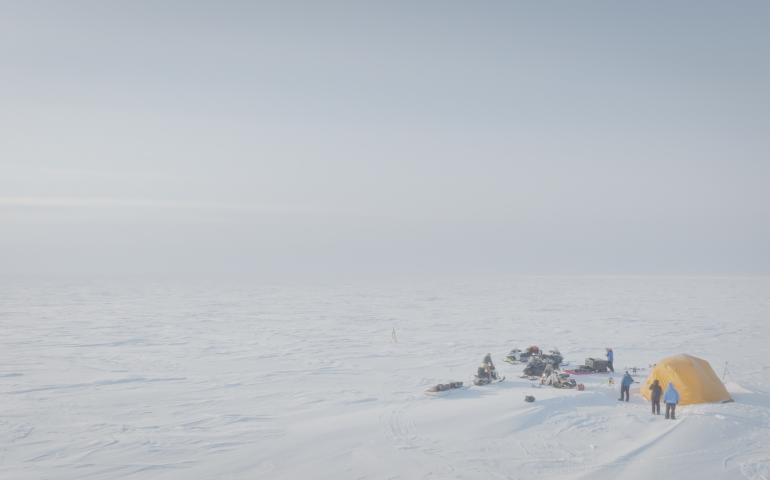
UAF researchers use drones to test new instrument for measuring sea ice thickness and its snow cover
April 29, 2024
BEAUFORT SEA ICE, near Utqiagvik, Alaska — The train of 10 snowmachines snaked slowly across the snow-covered sea ice toward the small tent far...
Read more
UAF researchers head to Anchorage for nation’s largest seismology conference
April 25, 2024
University of Alaska Fairbanks seismologists, staff and students will be in Anchorage next week for the annual national meeting of the...
Read more
NSF director: 'I am grateful to UAF’s partnership'
April 24, 2024
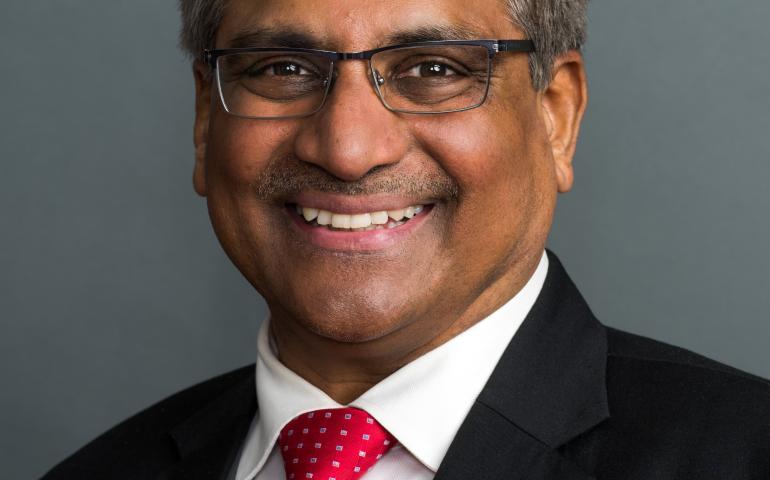
Dr. Sethuraman Panchanathan became the 15th director of the National Science Foundation in June 2020 when the U.S. Senate confirmed his...
Read more
Pagination
Previous page
←
Previous
First page
1
Page
5
Page
6
Page
7
Page
8
Current page
9
Page
10
Page
11
Page
12
Page
13
Last page
31
Next page
Next
→