Flying for science (and the occasional sled dog)
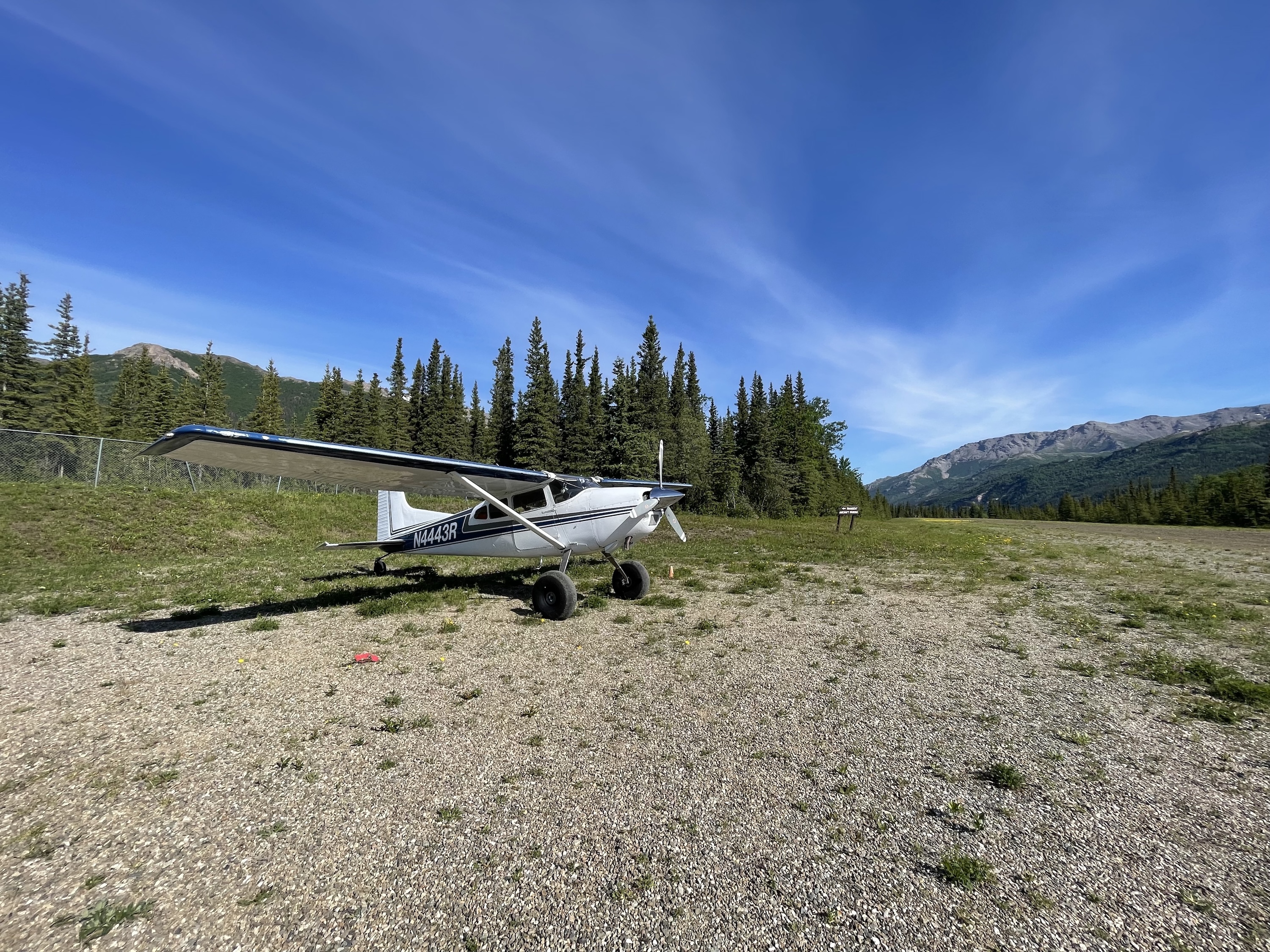
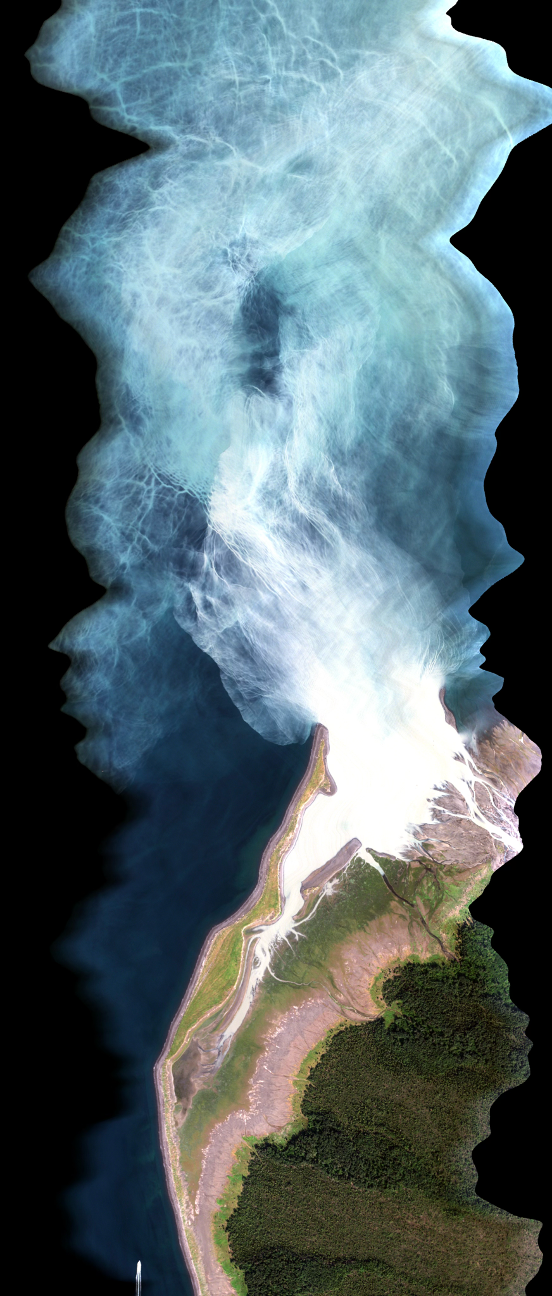
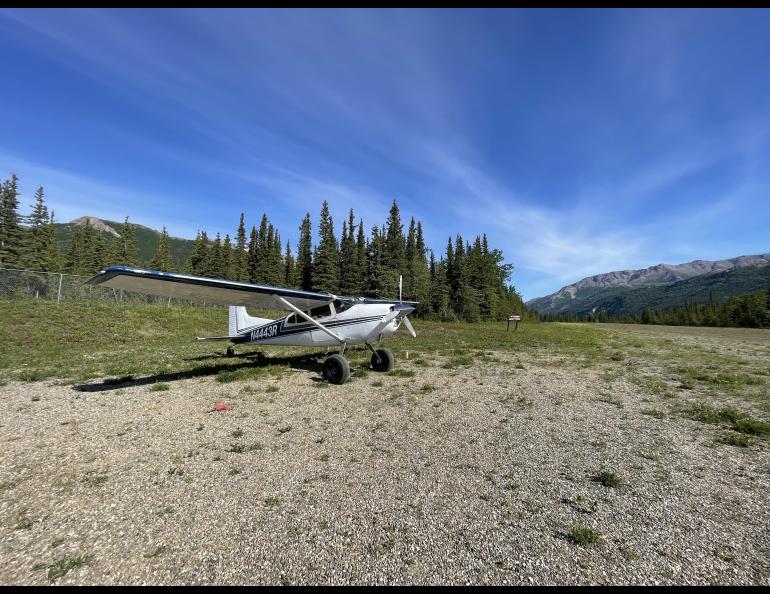
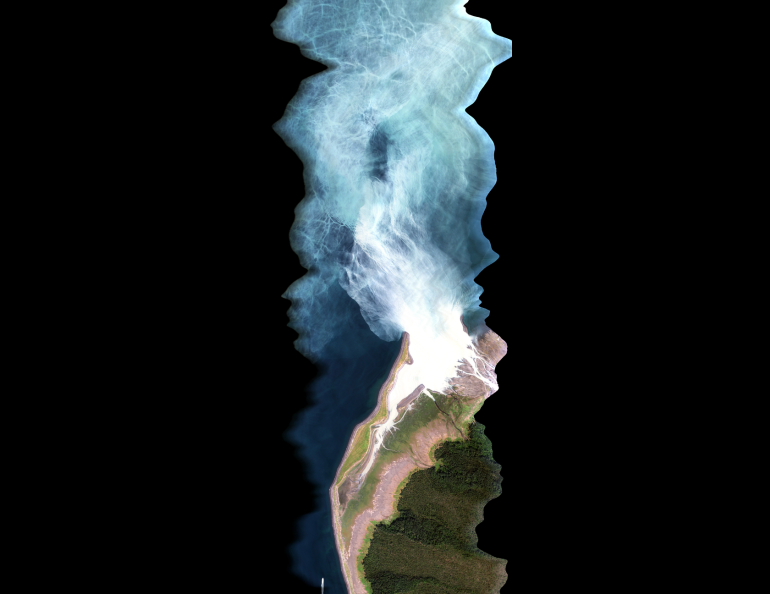
A Cessna 185 zigzagged a tight back-and-forth pattern along Alaska’s southern coast earlier this summer, the pilot intent on his mission to measure the ocean's response to summer glacier melt. Alaska State Climatologist Martin Stuefer gazed down from the belly of the plane via a hyperspectral imaging camera he had mounted there.
Stuefer, the director of the Hyperspectral Imaging Lab at the University of Alaska Fairbanks Geophysical Institute, is one of the few pilot-scientists the university employs. For a decade now, Stuefer has brought together his love of flying with atmospheric science and Alaska adventure.
Stuefer’s ability to fly the precise pattern required for hyperspectral imaging grew from a childhood spent in the Austrian skies. As a teenager, Stuefer joined the Innsbruck Airport gliding community, receiving his gliding license at the age of 15. At age 20, he bought a share in an acrobatic glider, a specialized aircraft designed to perform spins, loops and inverted flights without an engine.
“Even then, I was interested in atmospheric science,” Stuefer said, hands behind his head and leaning back in his office chair in the UAF Akasofu Building. A few minutes before, I had knocked on his door, eager for flying stories.
"I was fascinated by mountain weather. Some days we had beautiful foehn-induced mountain waves, other days powerful thunderstorms,” Stuefer said. (A foehn is a type of air movement over a mountain range that can create distinct clouds.)
“As a young glider pilot, I was always curious about how the atmosphere worked, and I occasionally got closer to those weather systems than was probably wise," he added.
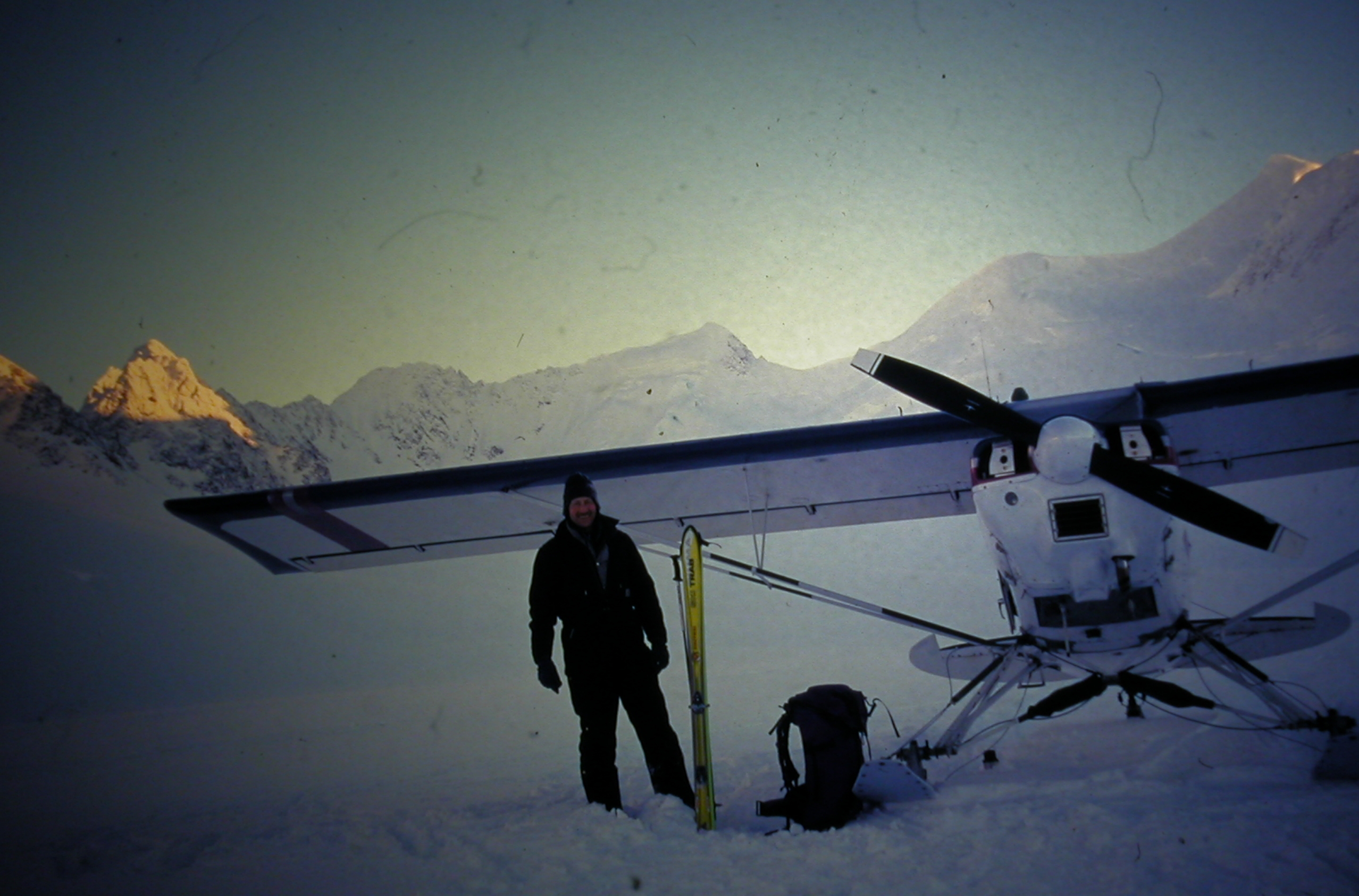
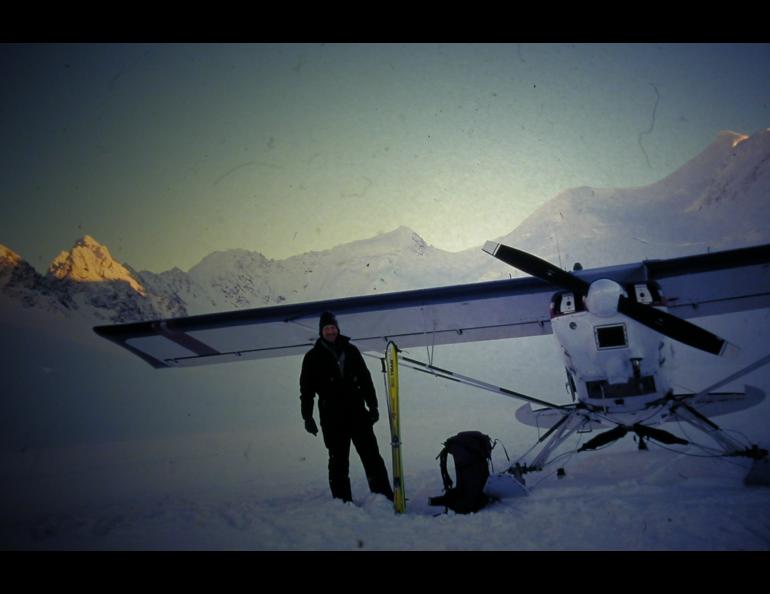
As his research evolved, flying became an integral part of his scientific work, with one person helping to cement that connection: UAF glaciologist Keith Echelmeyer. In 2006, Stuefer purchased a Piper PA-12 from his friend Echelmeyer, who was already battling a brain tumor. The two were still able to fly together several times, with Stuefer at the controls.
Echelmeyer died in 2010 at the age of 56, leaving behind a remarkable legacy as both a pioneering glaciologist and an accomplished bush pilot.
Since 2015, Stuefer and the HyLab team have used airborne imaging to map many aspects of the Alaska landscape. They’ve sought out critical minerals, documented forest composition to inform wildfire management, monitored smoke plume particle concentration and measured snow and ice reflectance.
His special hyperspectral camera records hundreds of narrow wavelengths of reflected sunlight beyond the red, green and blue our eyes perceive, revealing subtle differences in water conditions, vegetation, minerals and snow.
In the summer, Stuefer is constantly checking weather conditions, looking for those perfect two or three days a season when everything lines up for a hyperspectral flight — crystal clear, calm winds and, if he’s heading to the ocean, low tides.
In the winter, he is sometimes called to other projects. In 2011, he joined the Yukon Quest Air Force, a team of volunteer pilots supporting the race by shuttling supplies and veterinarians between checkpoints.
One morning, Stuefer flew to Eagle, Alaska, a village on the Yukon River near Canada. It was 50 degrees below zero, and a musher had decided to scratch there. Seven dogs needed transport to Circle, which has road access to Fairbanks.
"It was brutally cold, but everybody worked together to heat up the plane, just parked outside Eagle on skis,” Stuefer said. “And so we had all kinds of heating devices — blankets over the plane — and tried to heat it overnight and to get it started the next day."
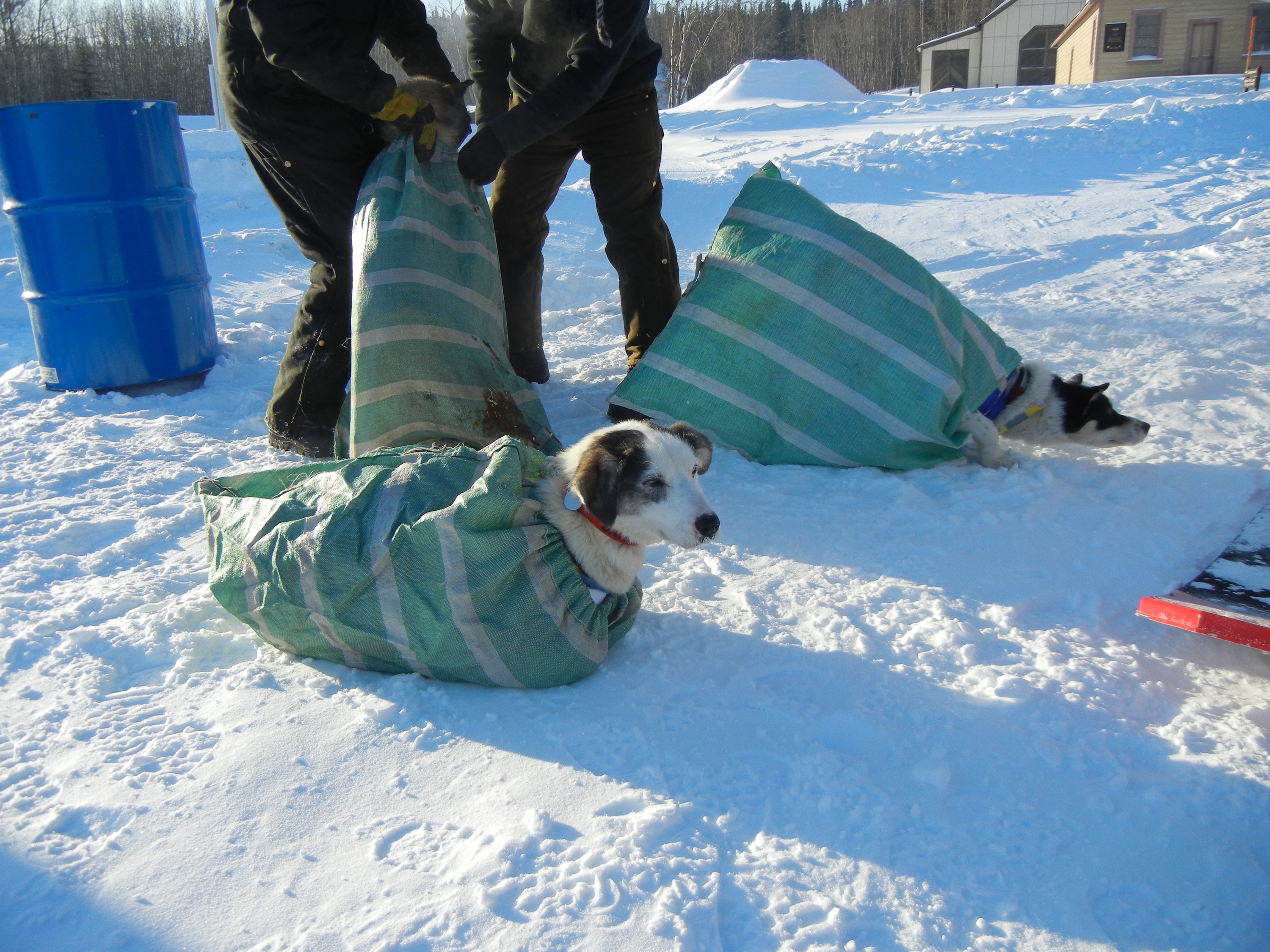
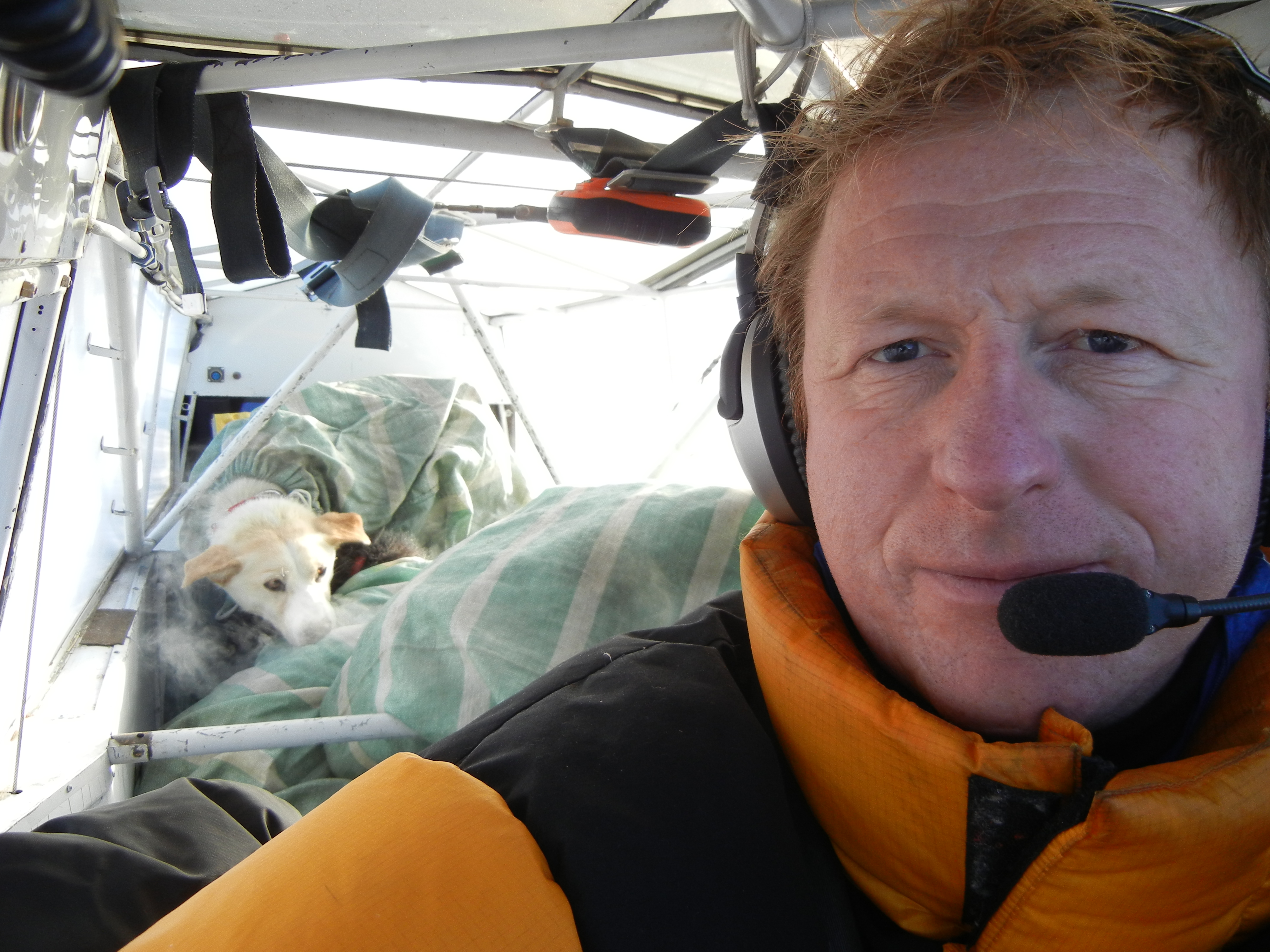
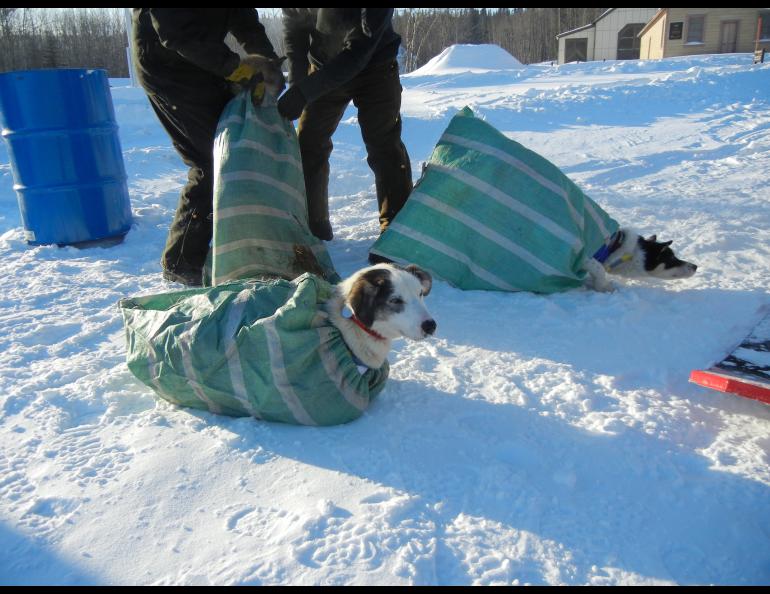
In the morning, seven exhausted sled dogs were tucked into green-and-white burlap sacks and loaded onto Stuefer’s plane. Once secured, only their fluffy heads emerged from the sacks.
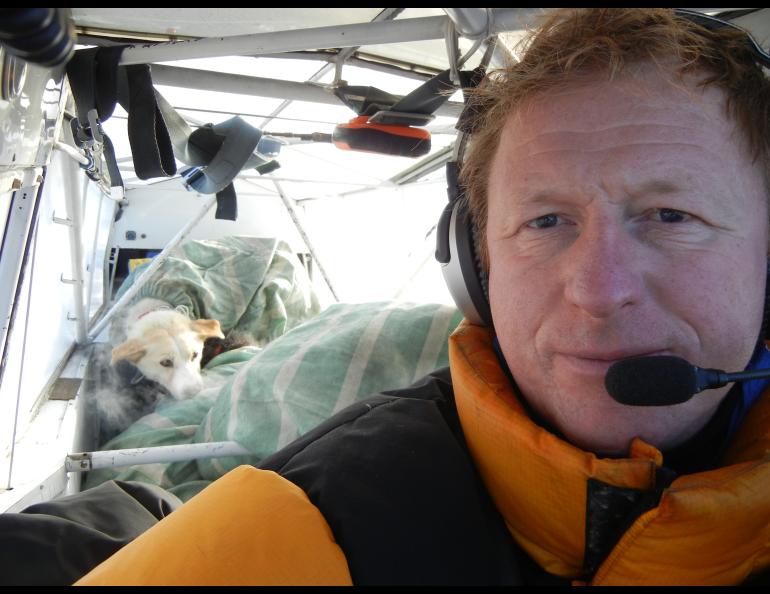
Volunteers helped to gently stack the dog team into Stuefer’s plane. He was surprised at how quiet they were.
“They were very happy. They were unbelievable, peaceful…there was not one bark, nothing.
“But there was also a scary moment, when the whole inside of the plane iced out because of the dogs’ breathing. But I managed to bring everyone safely to Circle.”
As it always does, the cold winter eventually gave way to the strengthening sun, and a couple of perfect summer days of clear skies and calm winds appeared in the forecast. Stuefer once again took advantage of that short window to fly his plane for science, his camera silently recording subtle changes in the coastal ocean as glacier melt flowed into the sea.
Since the late 1970s, the University of Alaska Fairbanks' Geophysical Institute has provided the Alaska Science Forum column free in cooperation with the UAF research community. Sara Wilbur is a communications coordinator for the Geophysical Institute public information office.