
AGU: Building the booth
The UAF booth at the annual American Geophysical Union Fall Meeting is the result of many hours’ work by many people.
Planning for the booth each year starts months in advance. Decisions must be made about how much space the booth will need, where it will be located in the exhibit hall and what furniture needs to be rented from the exhibit contractor. Those decisions are led by the booth manager — for the last couple of years Kelly Eagan of GI Communications has held that post. She collaborates with others, including GI Communications Director Lynda McGilvary and representatives of other UAF units that help with the cost and staff the booth.
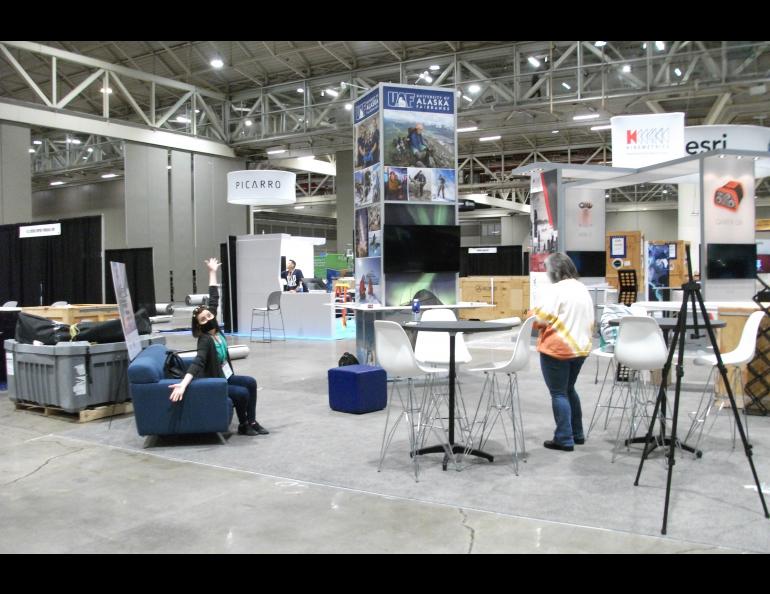
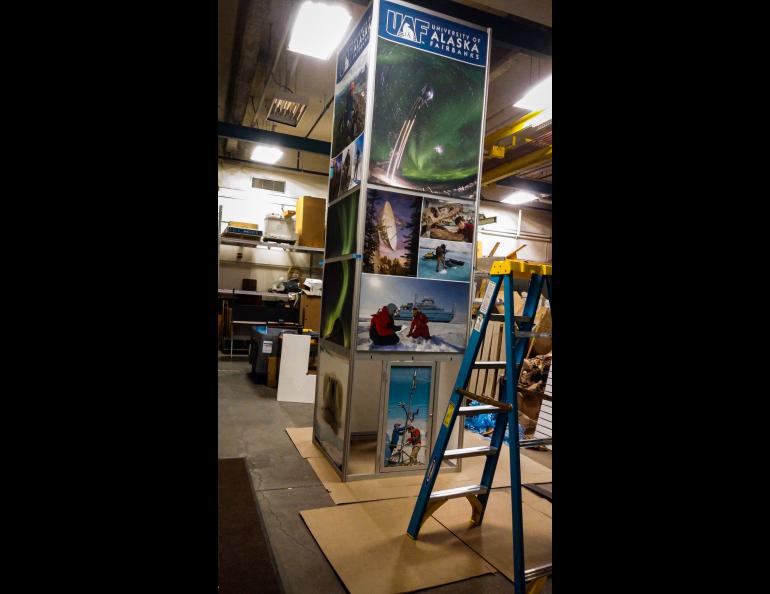
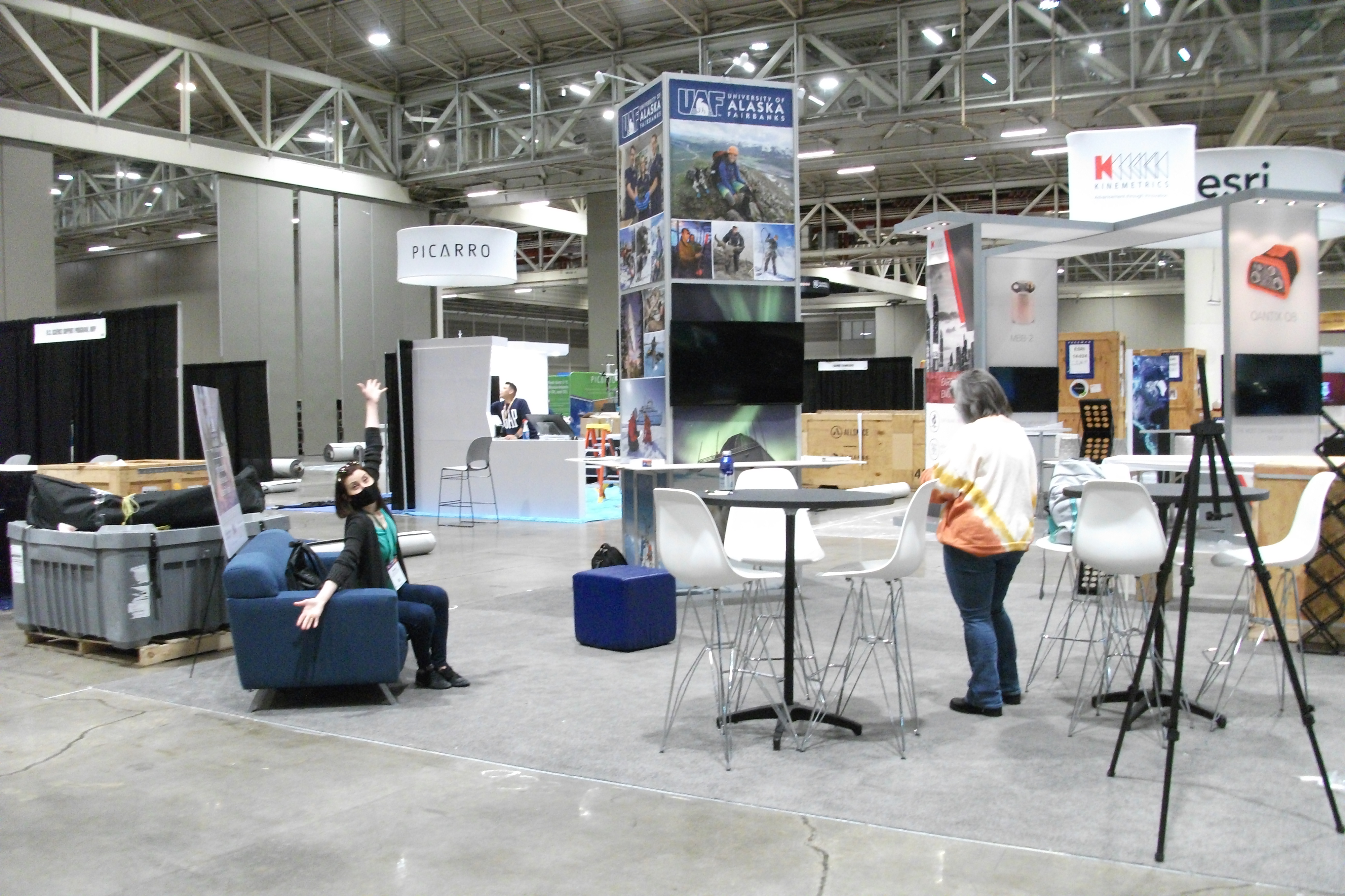
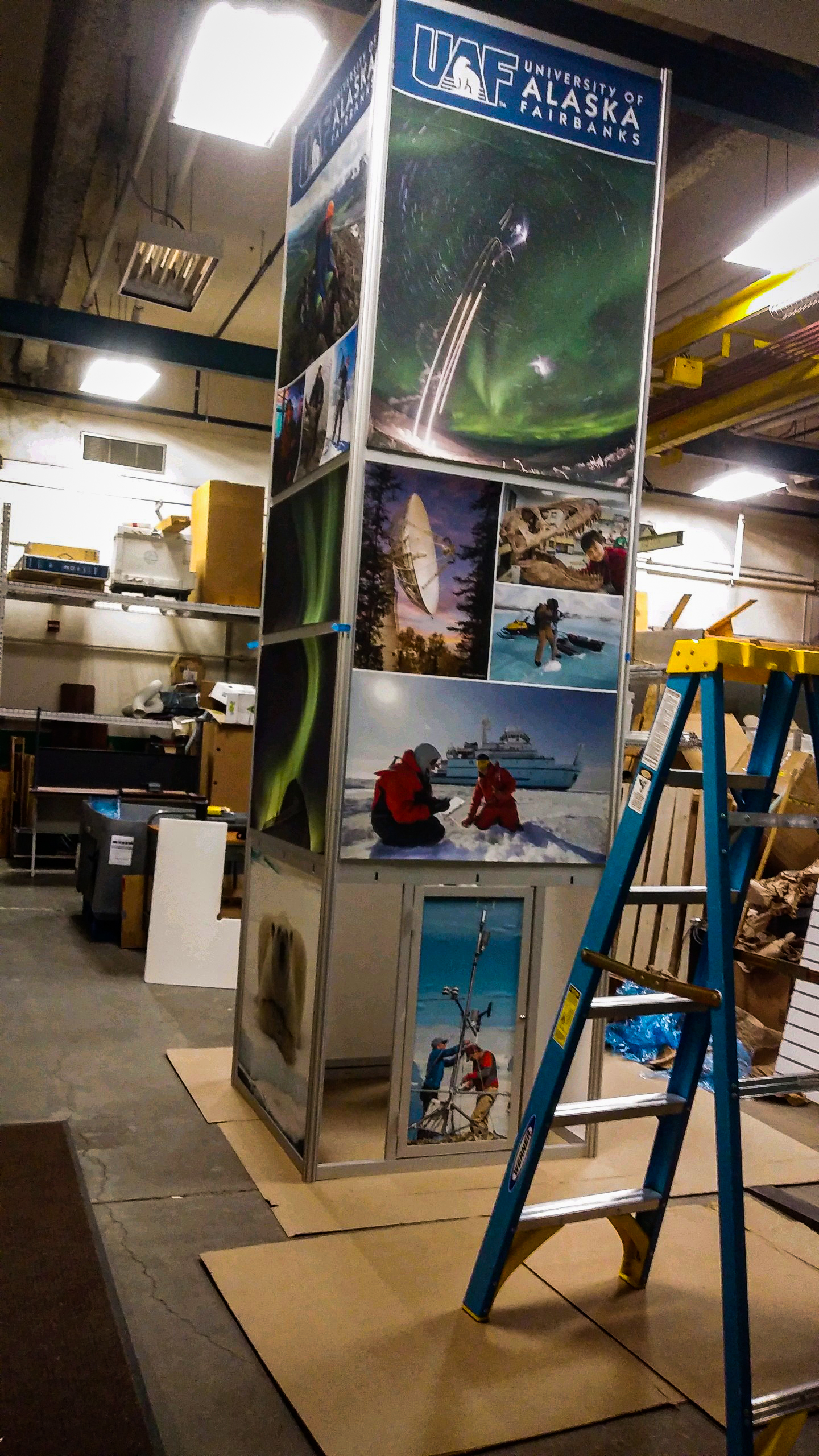
At the booth’s heart stands the tower.
Selection and then design and production of the graphics for the tower, made of aluminum and currently the main element in the booth at 13 feet tall, took place in 2018 in preparation for AGU’s first appearance in Washington, D.C.
“We wanted to make a good impression,” said Sue Mitchell, former manager of the GI Public Information Office.
Senior Graphic Designer Vicki Daniels and other staff from GI Design Services decided how the tower should look, selecting photographs for display to represent research undertaken by scientists in the different units at UAF, including the GI, that participate in AGU. These might be replaced with new photos to represent changing priorities in some years. Handouts, brochures and inexpensive giveaways must be designed and printed or purchased. The Alaska Satellite Facility calendar is always a hot item at AGU; many people come to the booth specifically to ask for a copy.
Before AGU begins, everything that needs to go to the conference site — the tower, the two screens that are part of the display, handouts, educational materials, supplies — must be crated and shipped. Since AGU is always scheduled the second week of December, the crate must head out just before Thanksgiving, GI Shipping and Receiving Manager Brian Lu said. Kelly Taylor and Daniel Walker of Design Services were kept busy leading up to shipping day to ensure that everything that needed to go to the conference — this year in New Orleans — was collected and ready to go.
Because two years had elapsed since the last time the tower was assembled, Lu put it all together in the Elvey garage to make sure everyone involved would know how the pieces fit together when in the exhibit hall. Lu also built a new shipping crate because the old one was damaged from prior years’ use, he said.
“Lynda and I talked about a new booth crate that would serve two purposes — storage and tabletop,” Lu said. “I found a pallet that had the basic layout I needed and built up from there. I wanted one end to be accessible so that we could store things in it if need be, hence the sliding door.”
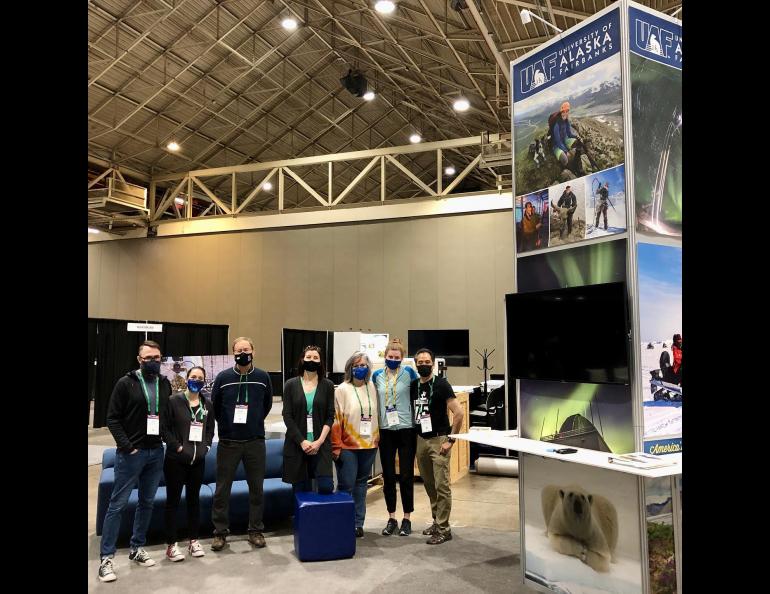
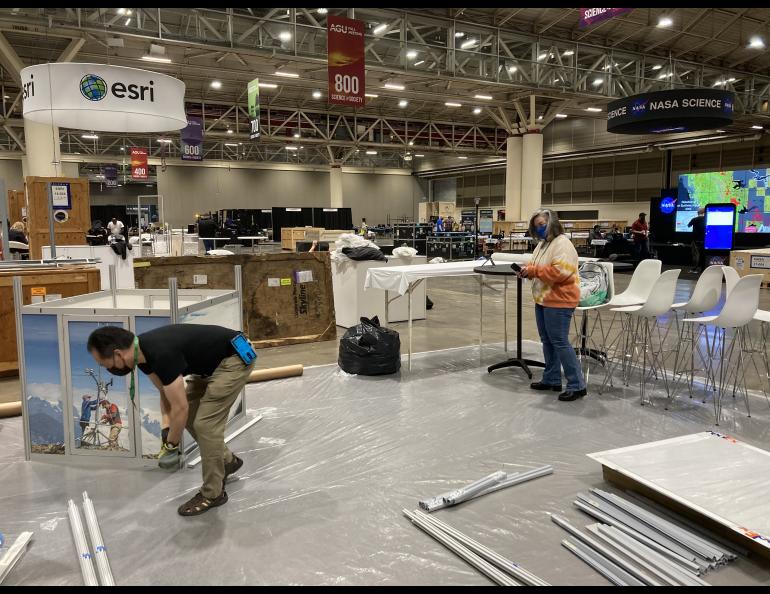
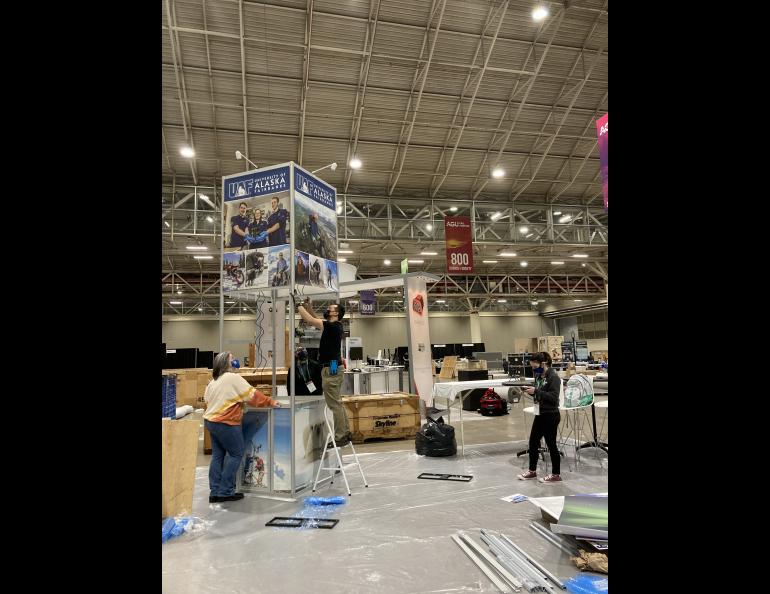
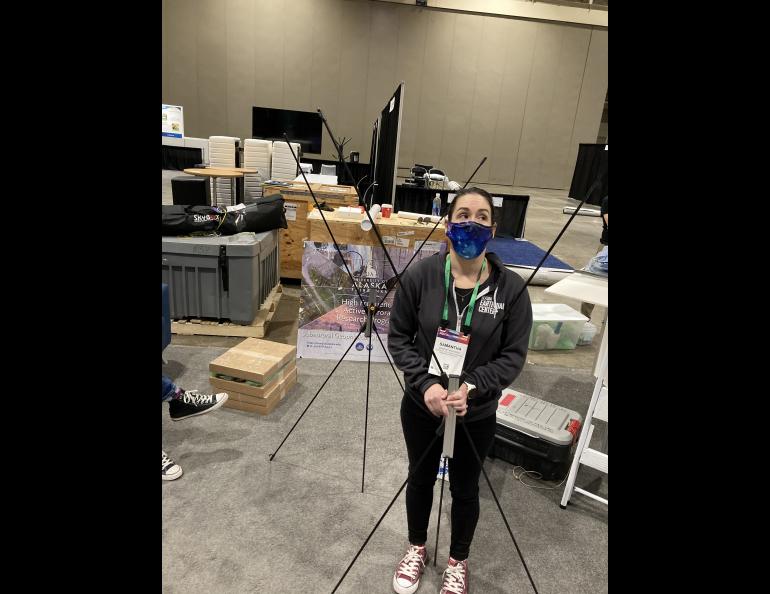
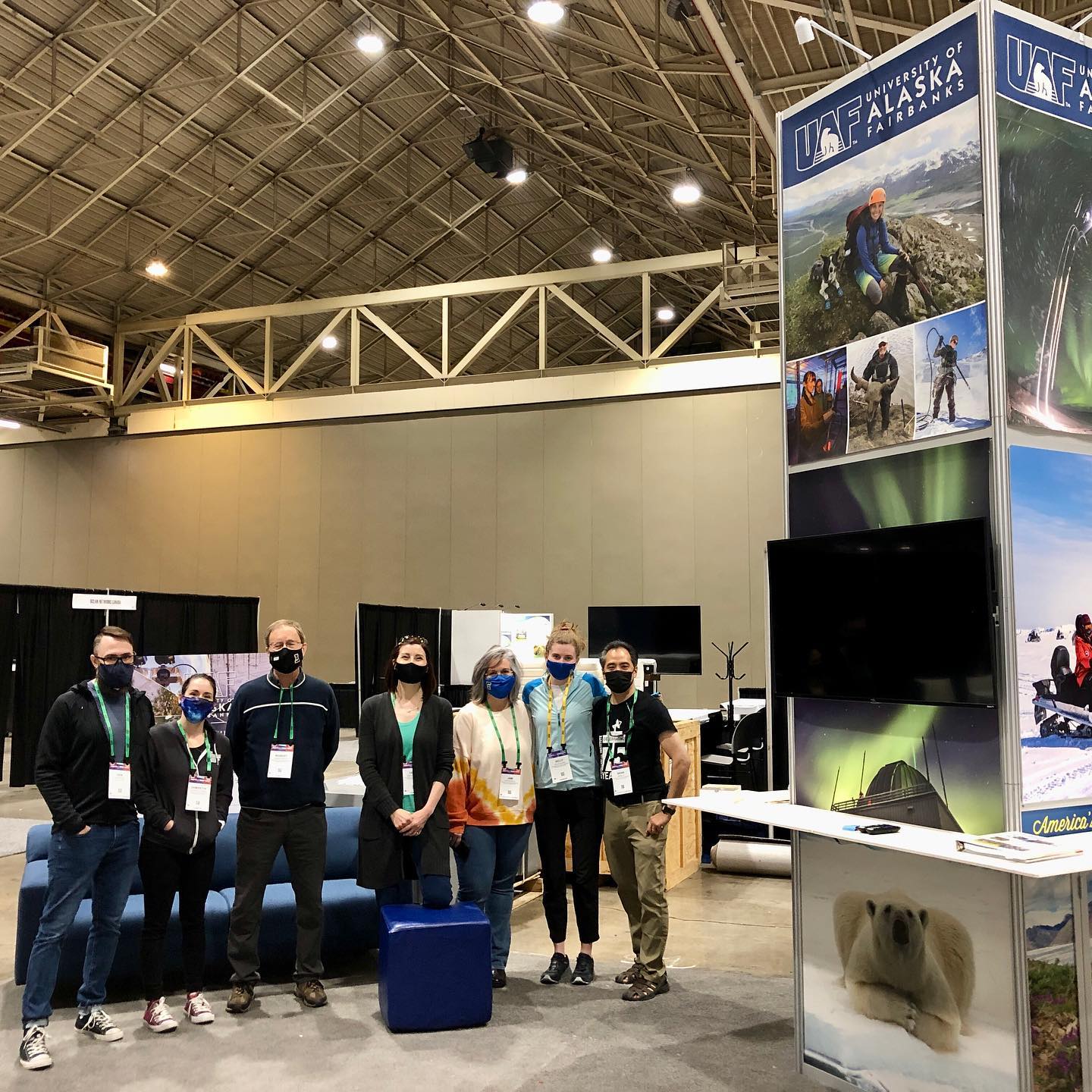
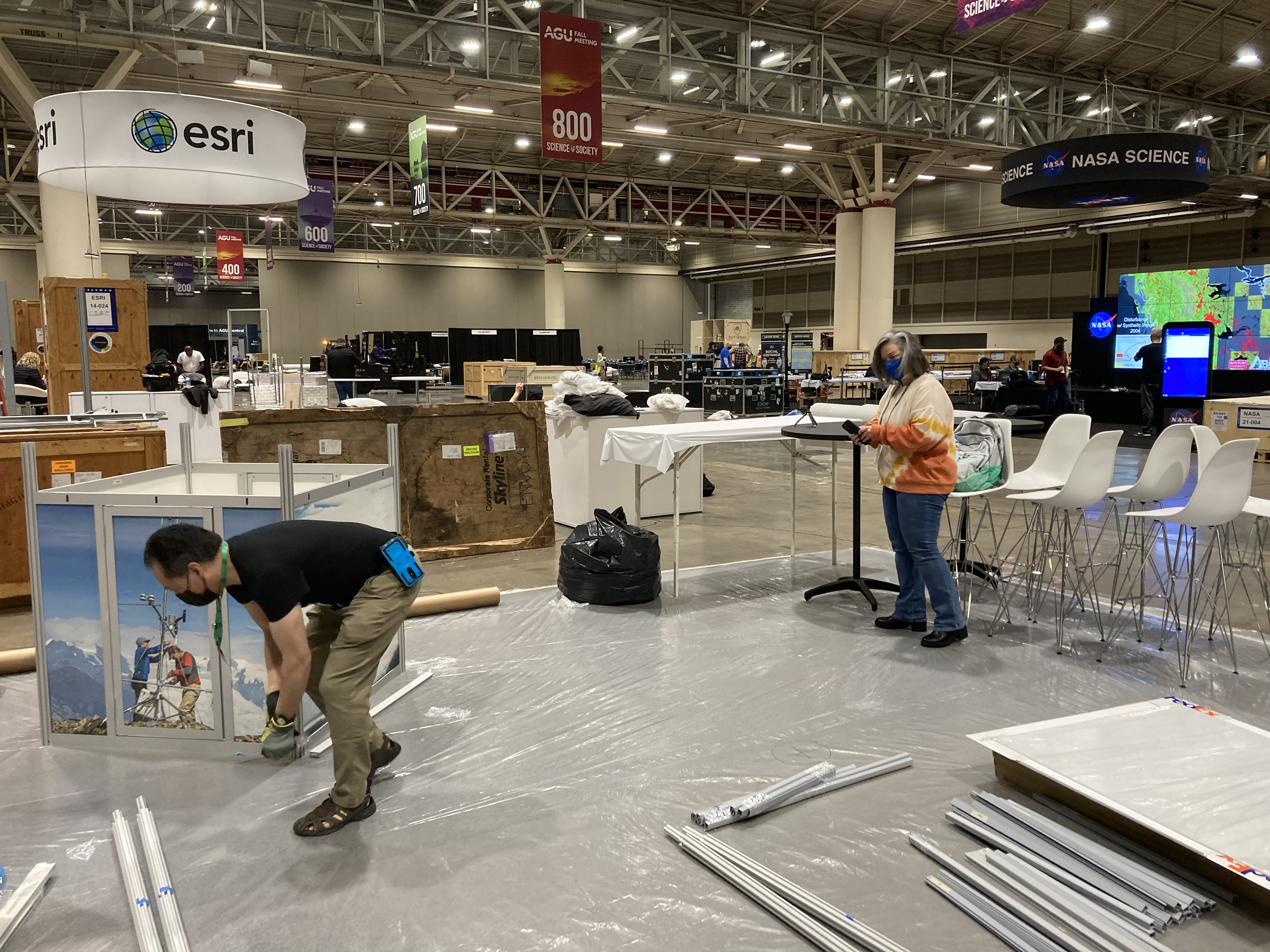
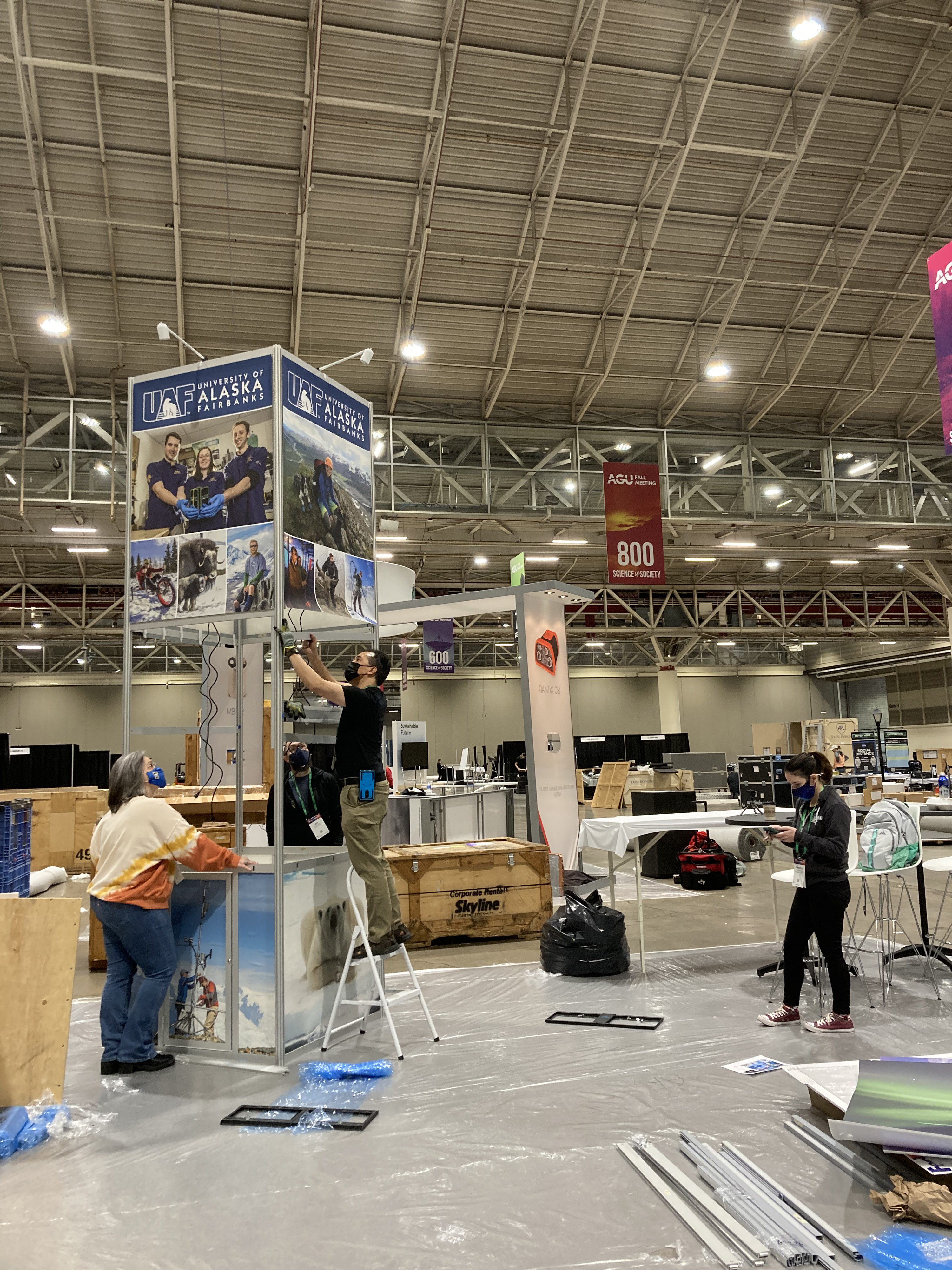
There are limits on how much time booth assembly is allowed to take and the number of people who can be involved. This year the booth builders were Kelly Eagan, Brian Lu, Jami Warrick, Samantha Wiser and her fiancé Ken Austin, and GI Director Bob McCoy. Tanya Clayton of the College of Natural Science and Mathematics and Heather McFarland of the International Arctic Research Center also helped with taking the booth down at the end of the conference. They were both also stalwarts of staffing the booth during the exhibit hall hours. This year Bob McCoy came to the conference a day early and stayed late to help with putting up and taking down the booth.
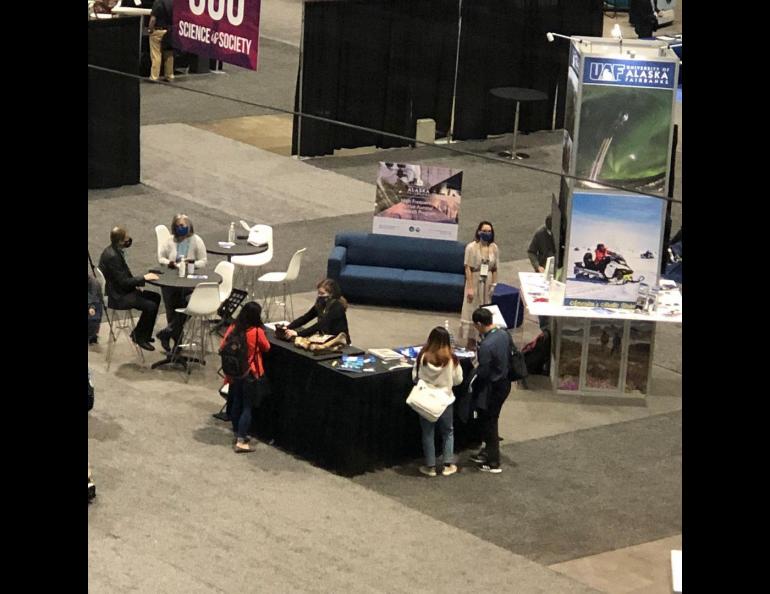
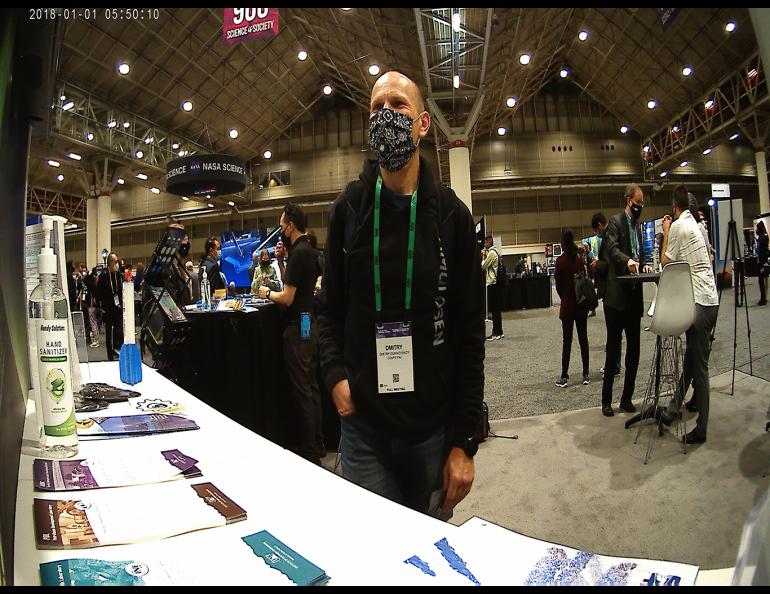
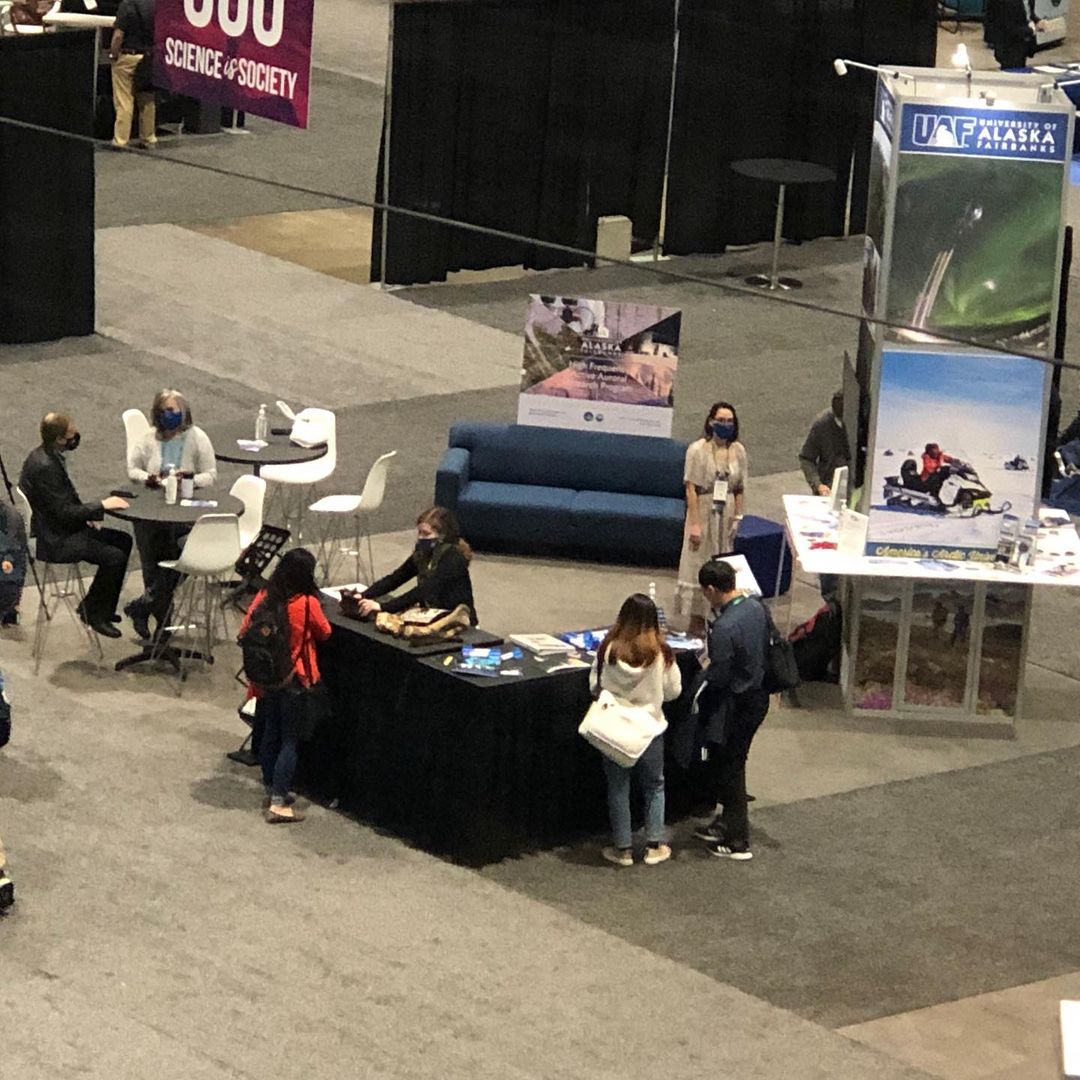
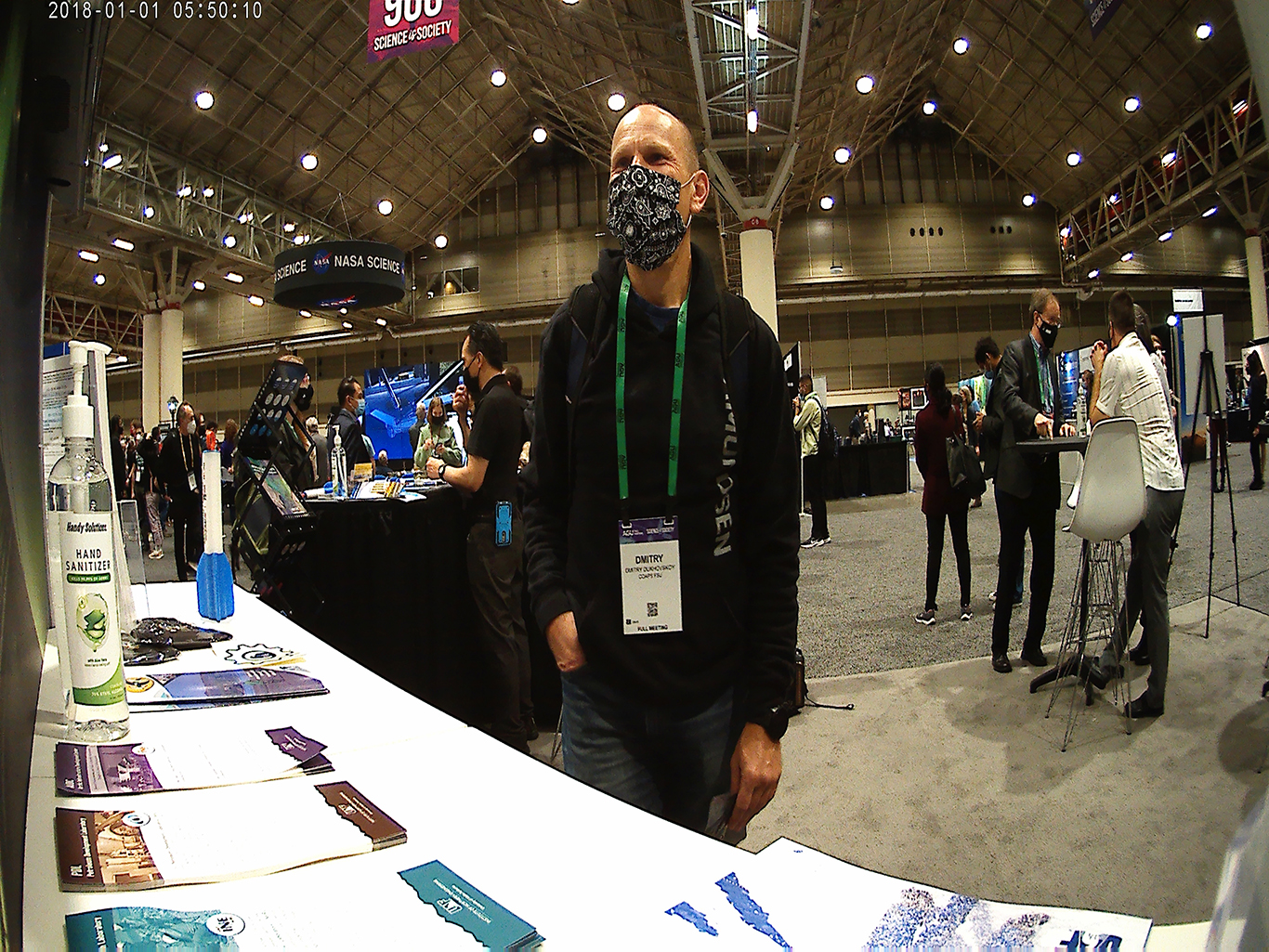
During the conference the booth is staffed at all times the exhibit hall is open. Some of the people already mentioned are there, but researchers and other staff members who attend the conference also take shifts. Booth staffers answer questions from passersby about UAF research, recruit students and provide information about any open positions. Overall, their mission is to represent UAF research in a positive light. They also field many questions about Alaska in general. The last couple of years one of the displays has been a small collection of bones and fossils donated by the University of Alaska Museum of the North for this purpose, and many people stop by to touch the bones and ask questions.
The exhibit hall closes a day before the presentation sessions are over. The team reassembles in the booth to take the tower apart and pack it away, stow any leftover handouts and supplies in the crate, and it is all sent back to the garage at Elvey, ready to be pulled out to use again next year.