




Bringing a conference booth to life
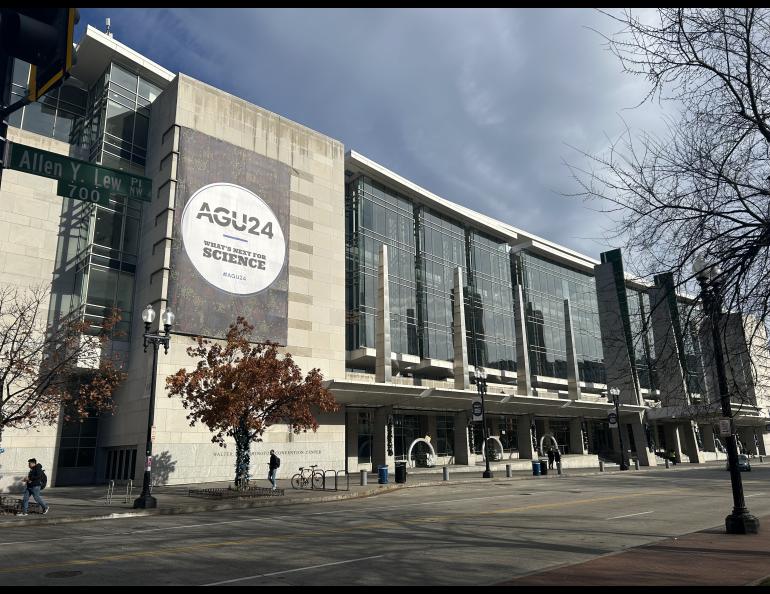
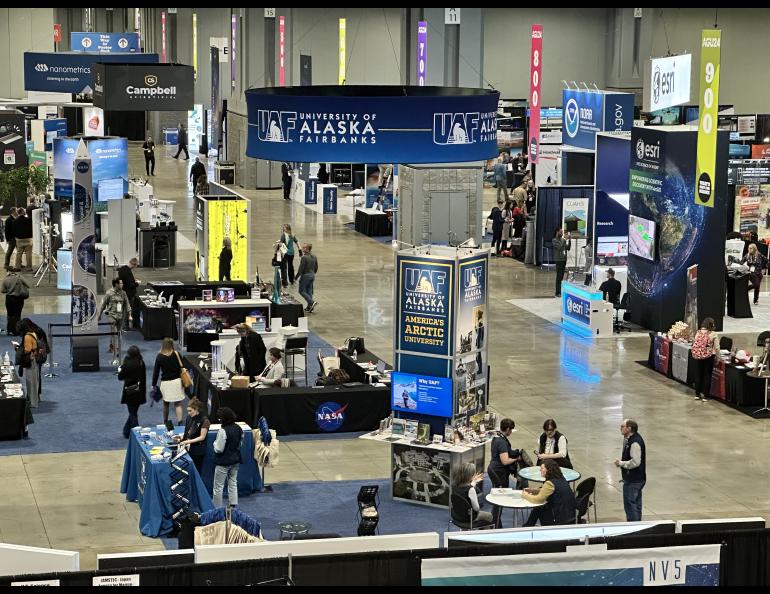
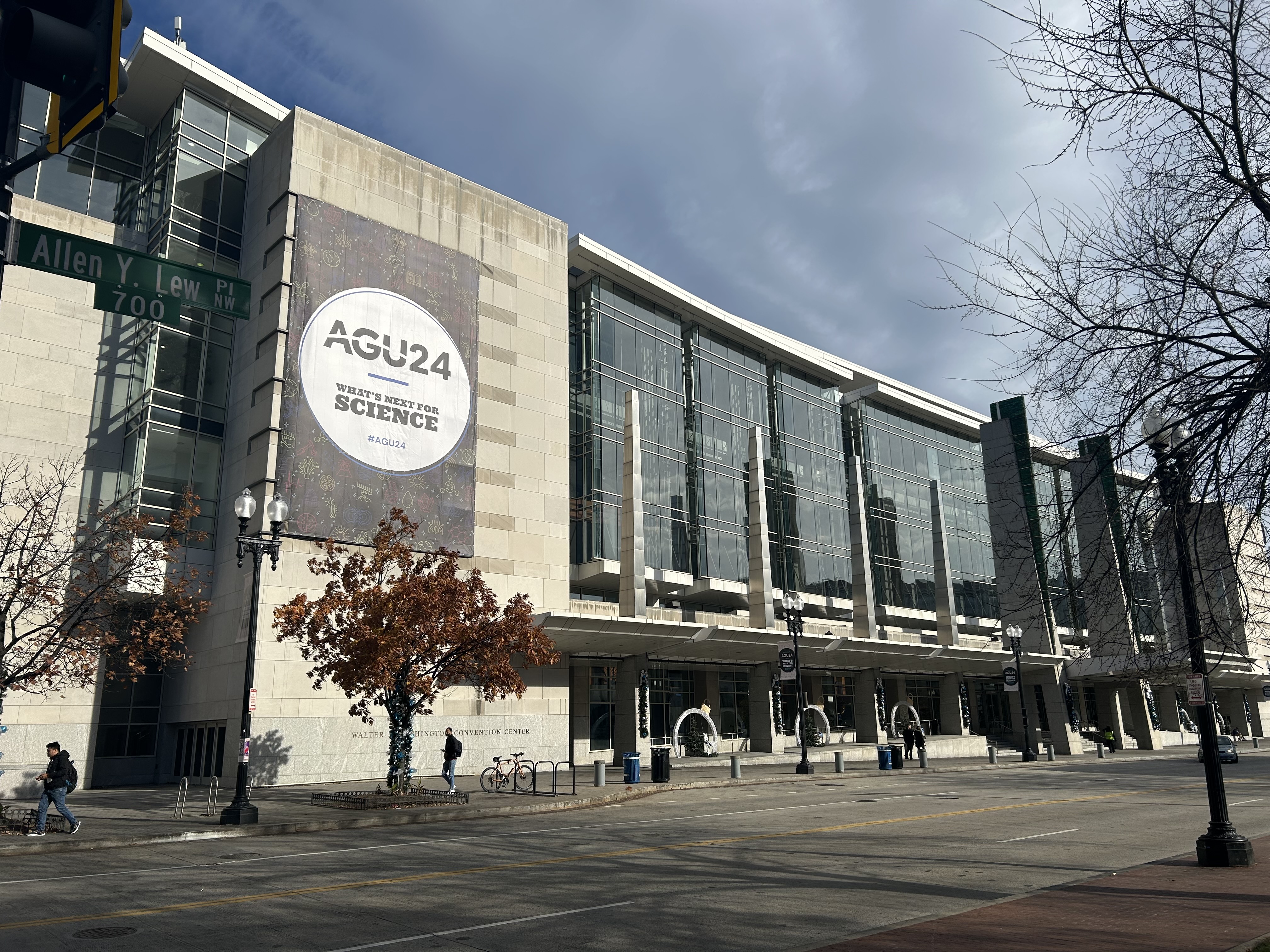
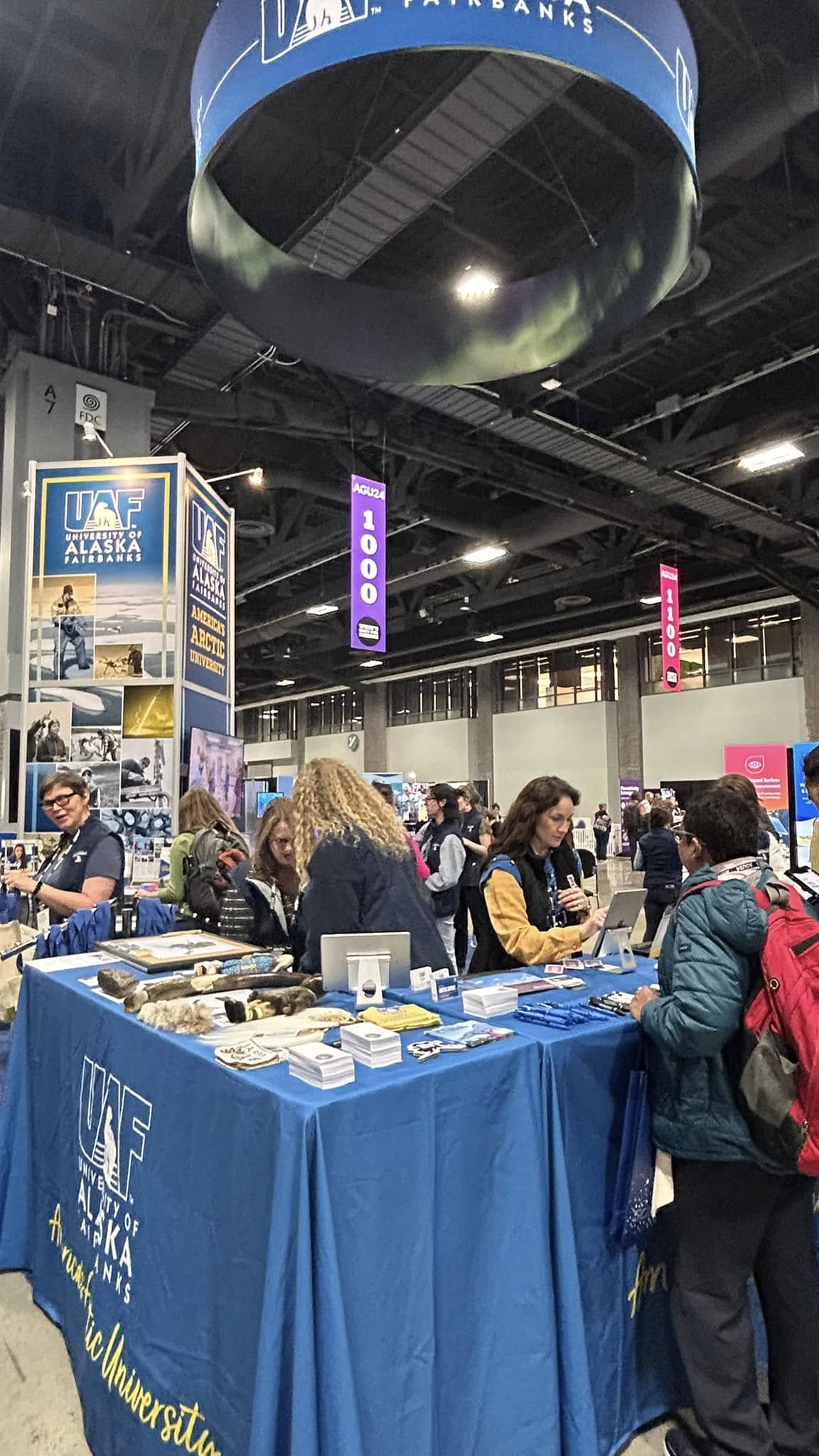
The UAF booth at the annual American Geophysical Union Fall Meeting is the result of many hours’ work by many people.
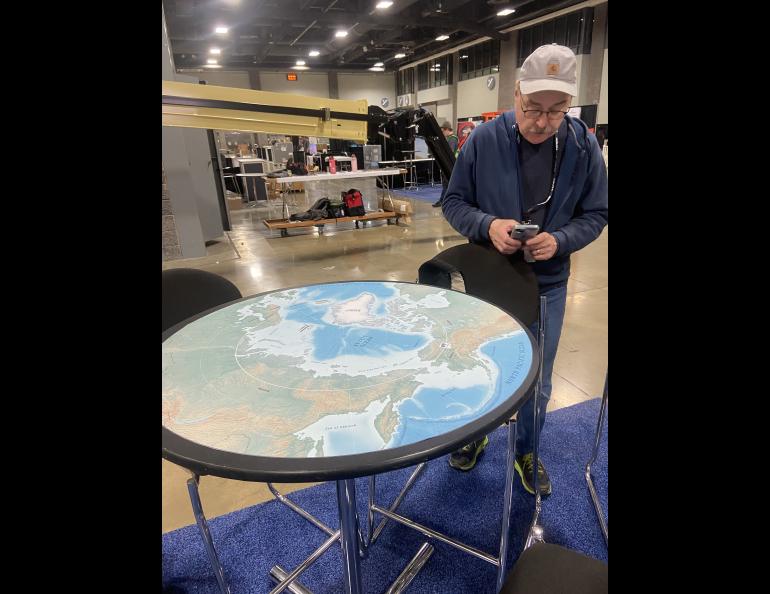
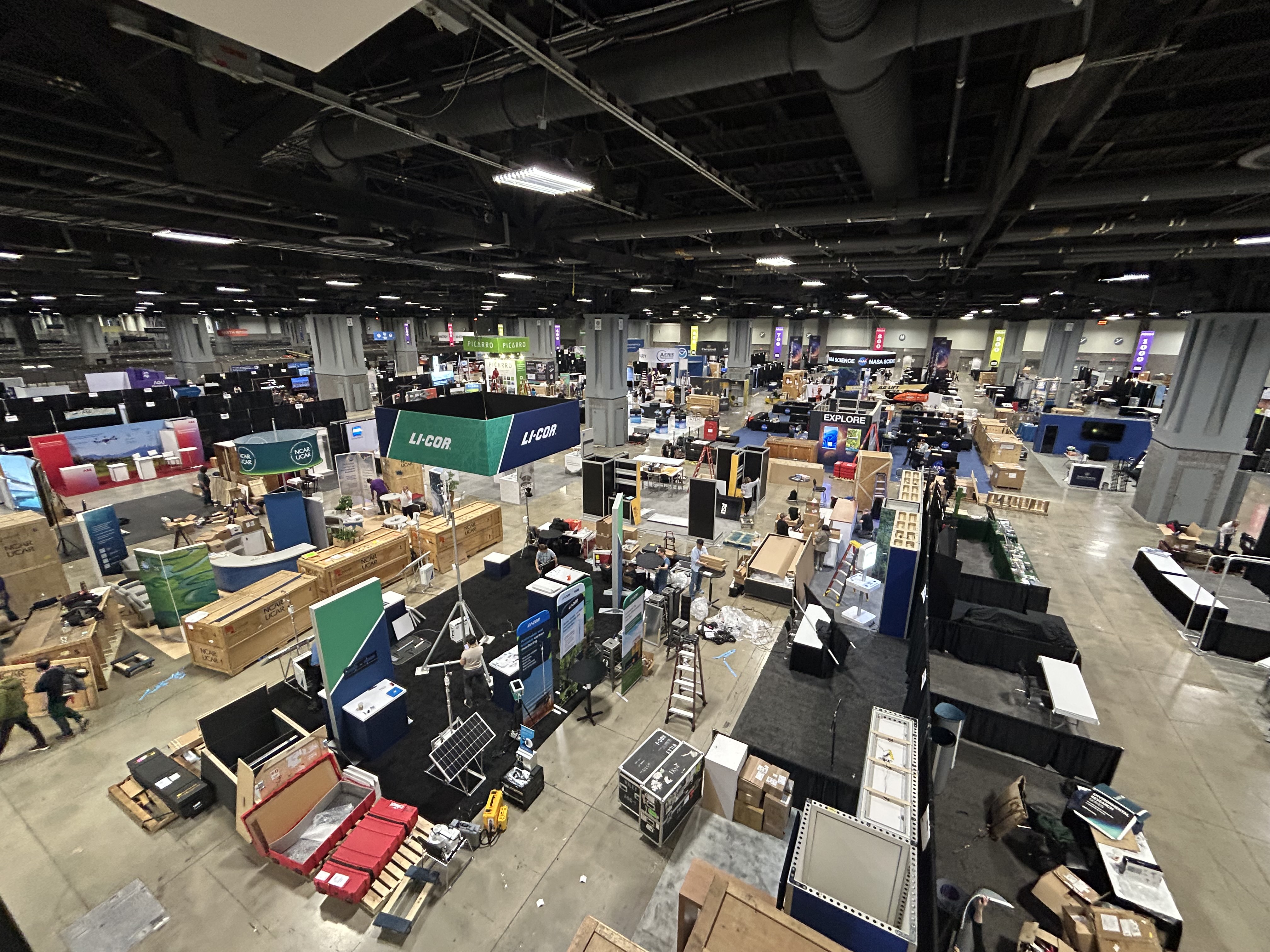
Planning each year starts literally as soon as last year’s conference ends, when a reservation is made for next year’s booth space. Booth planners make decisions about how much space the booth will need, where it will be located in the exhibit hall and, later in the year, what furniture needs to be rented from the exhibit contractor.
Those planning decisions are led by the booth manager — for the last several years Kelly Eagan of GI Communications has held that post. She works closely with many others, including GI Communications Director Becky Lindsey, Communications Coordinator Sara Wilbur, and representatives of other UAF units that support and help staff the booth.
AGU planning committee meetings take place at regular intervals, beginning roughly six months before the conference. Participants include representatives of university units who support UAF's presence at the conference: Vice Chancellor of Research, UAF Alumni Association, Center for One Health Research, International Arctic Research Center, College of Natural Sciences and Mathematics, Alaska EPSCoR, College of Engineering and Mines/Institute of Northern Engineering, UAF Graduate School and University Relations.
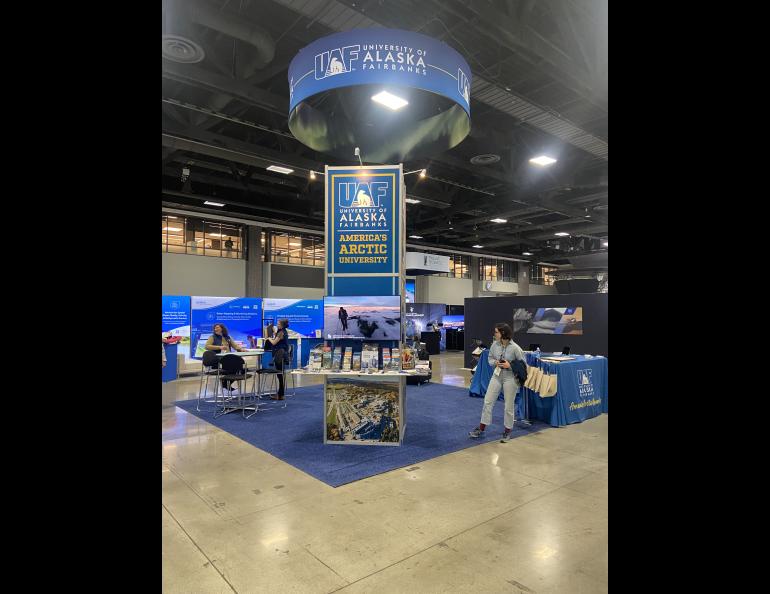
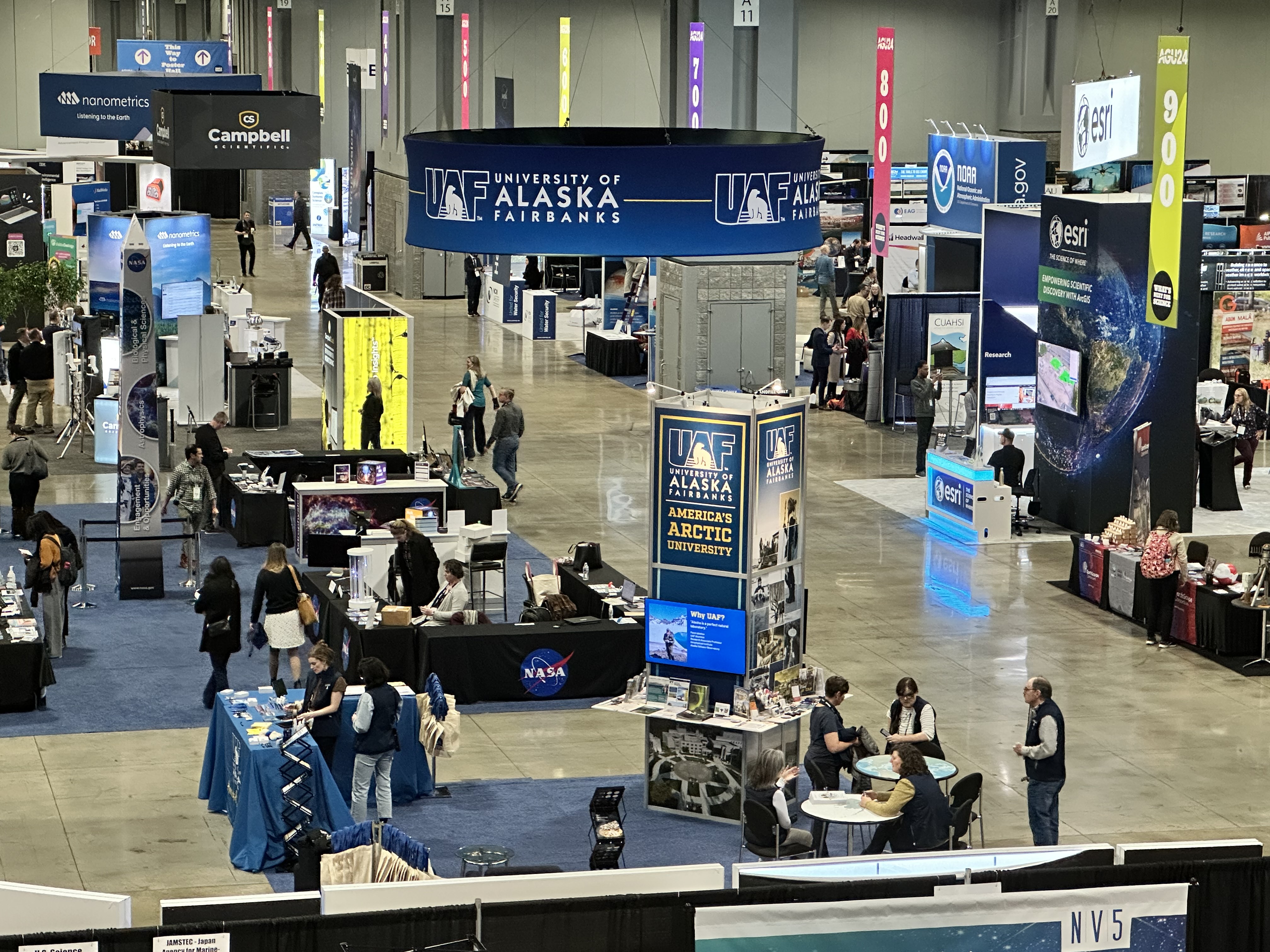
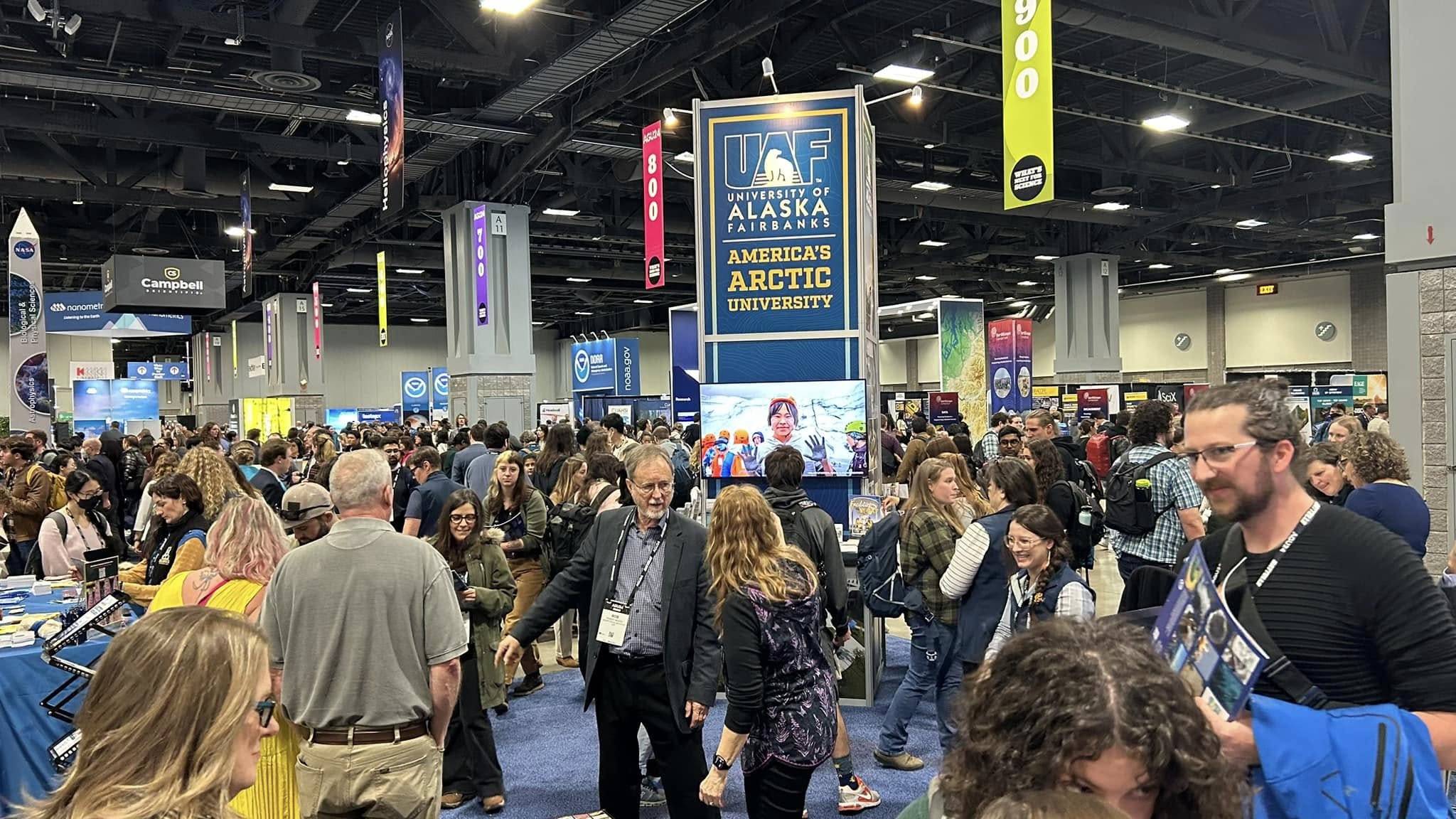
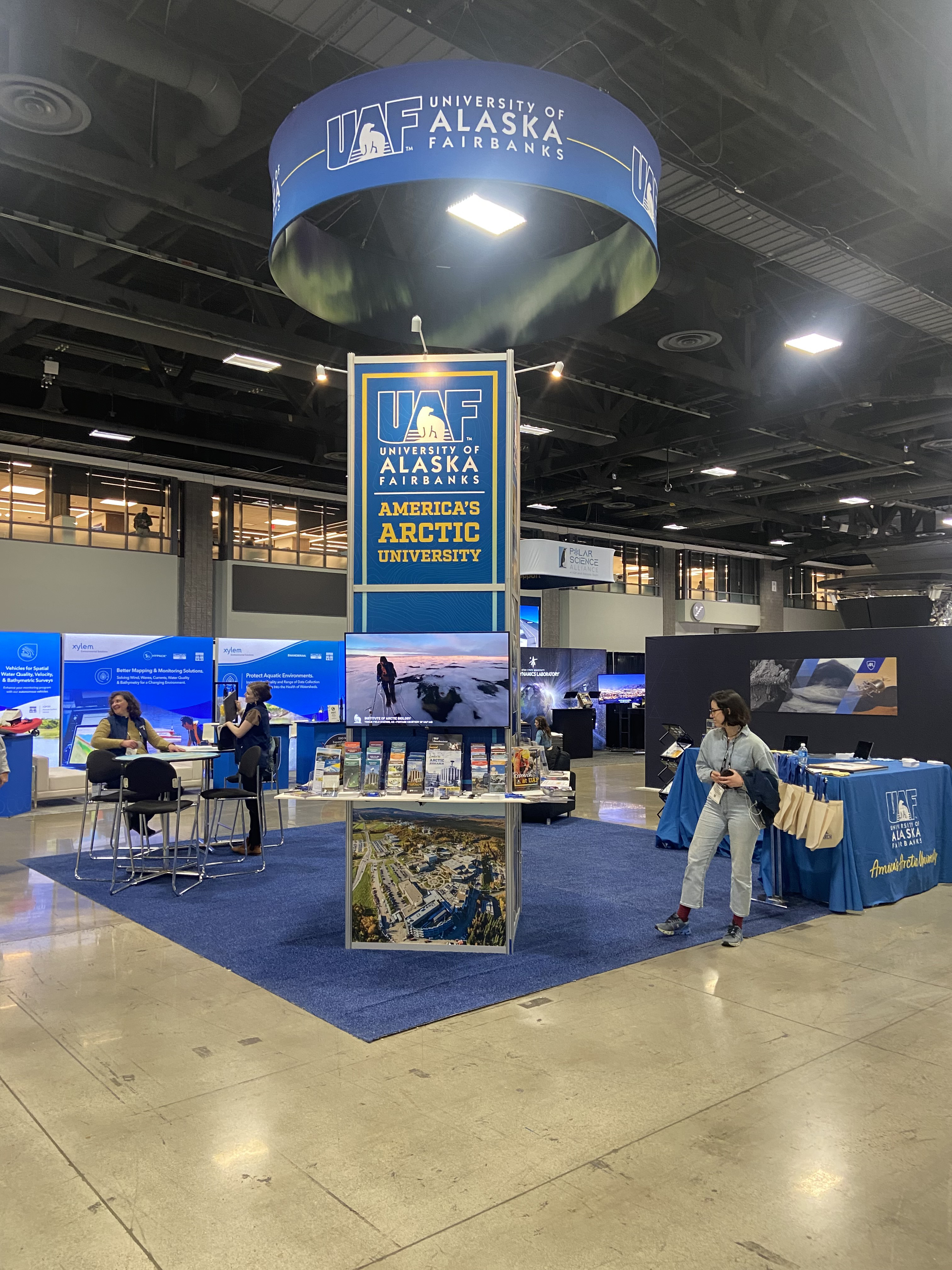
At the booth’s heart stands the tower
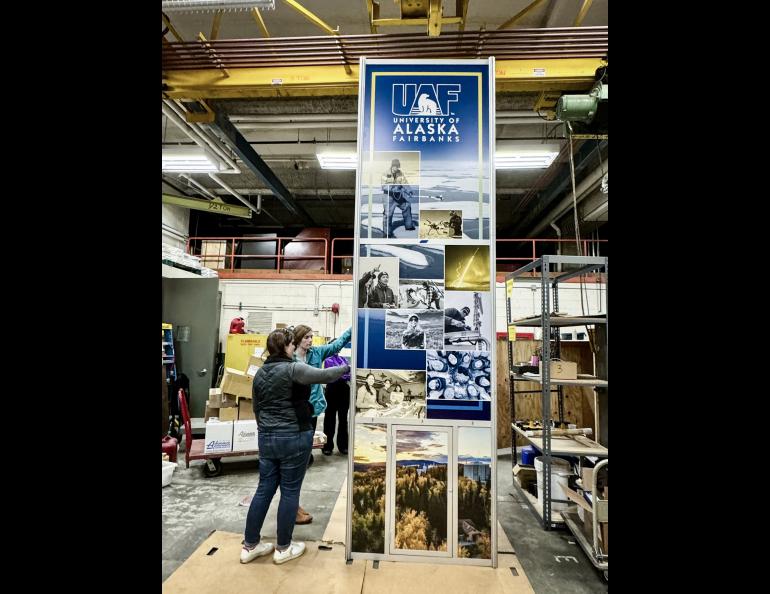
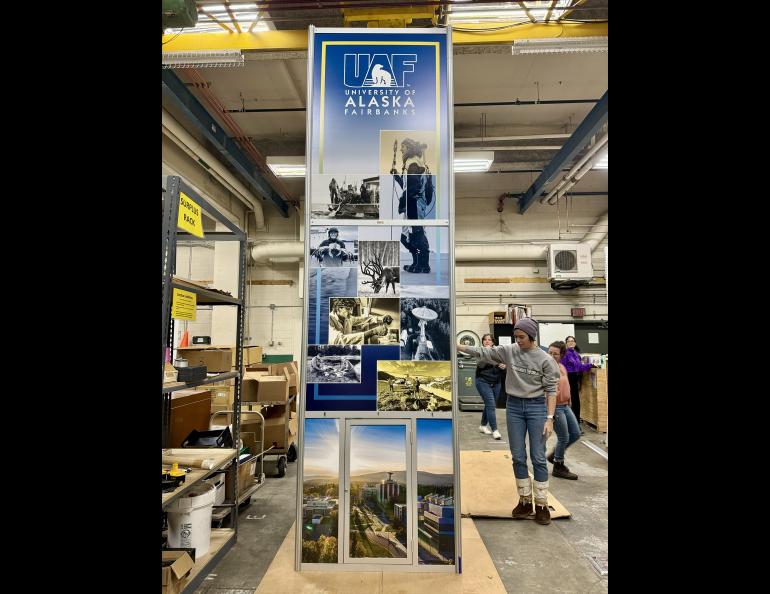
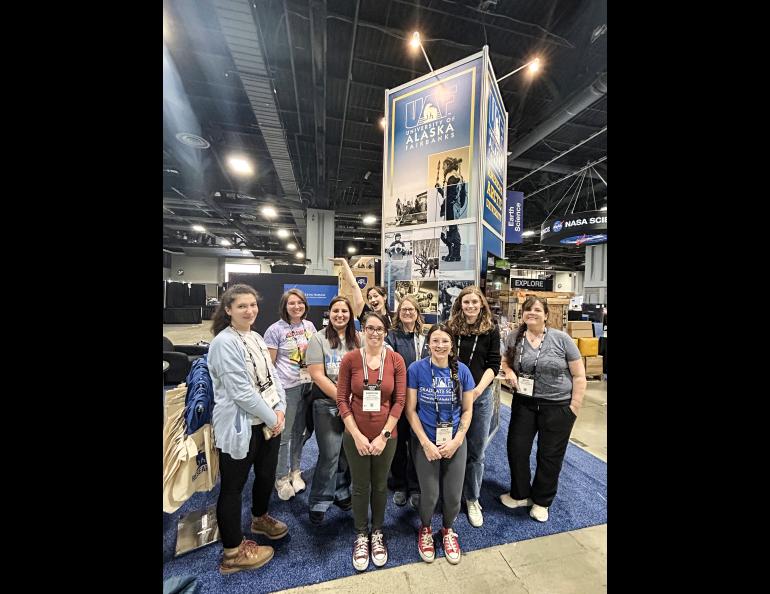
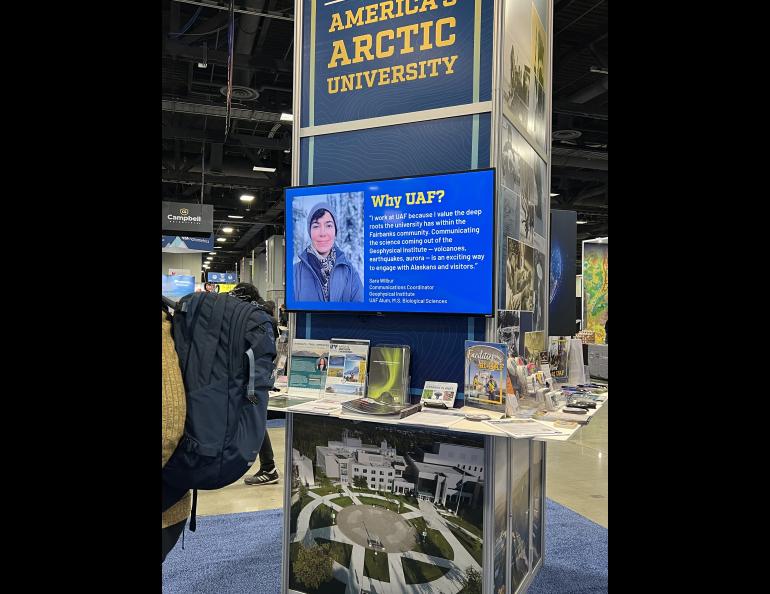
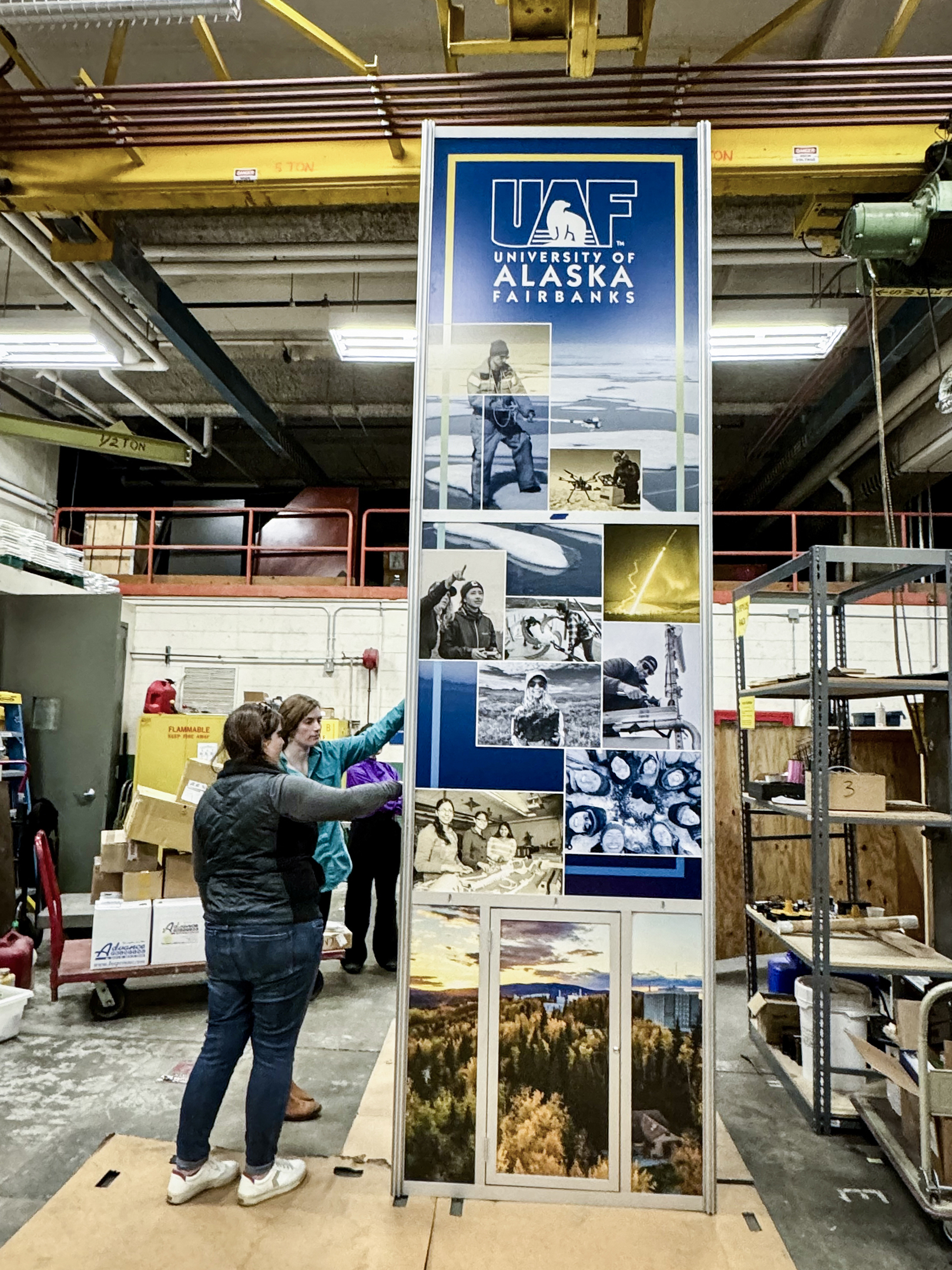
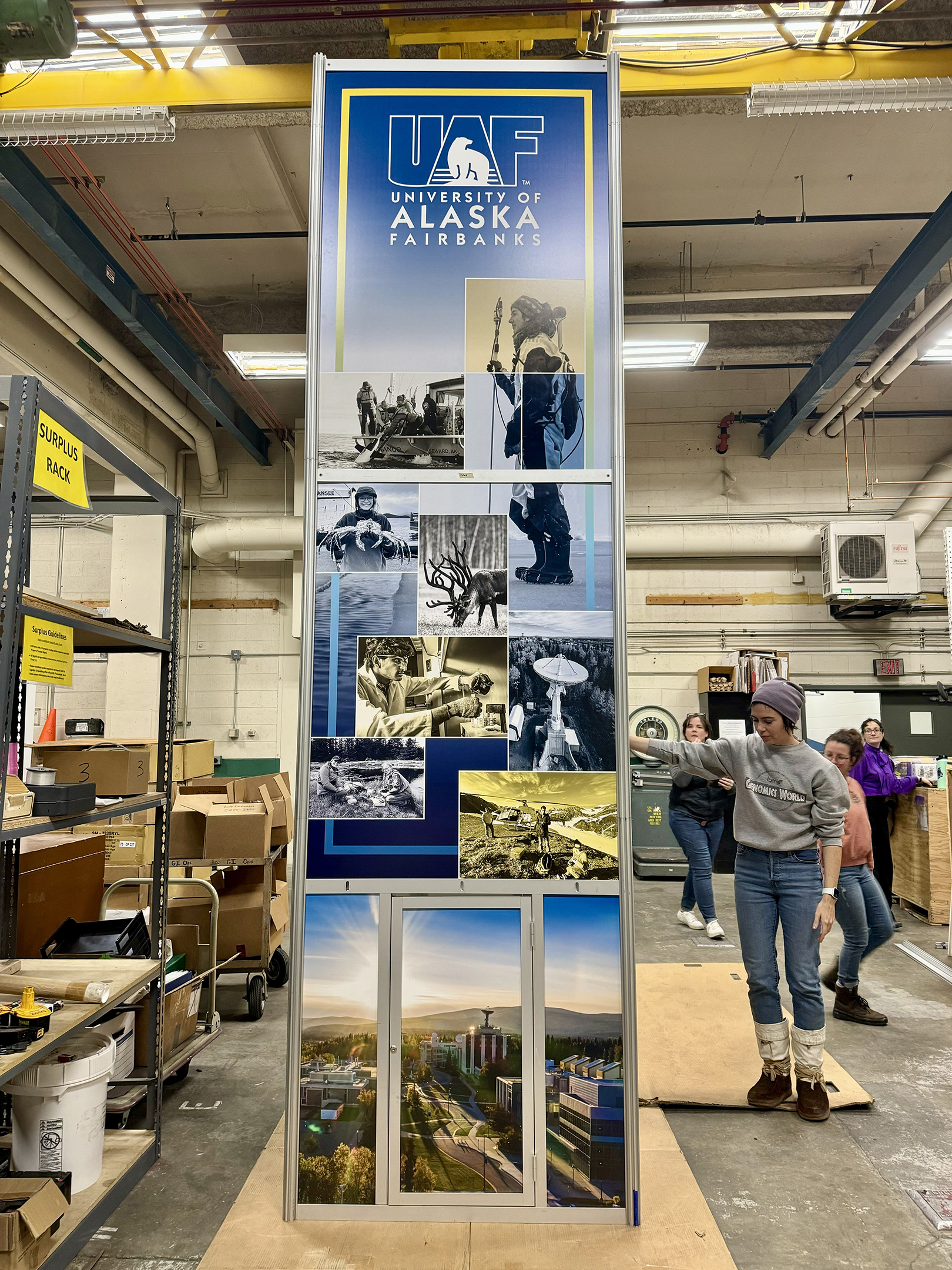
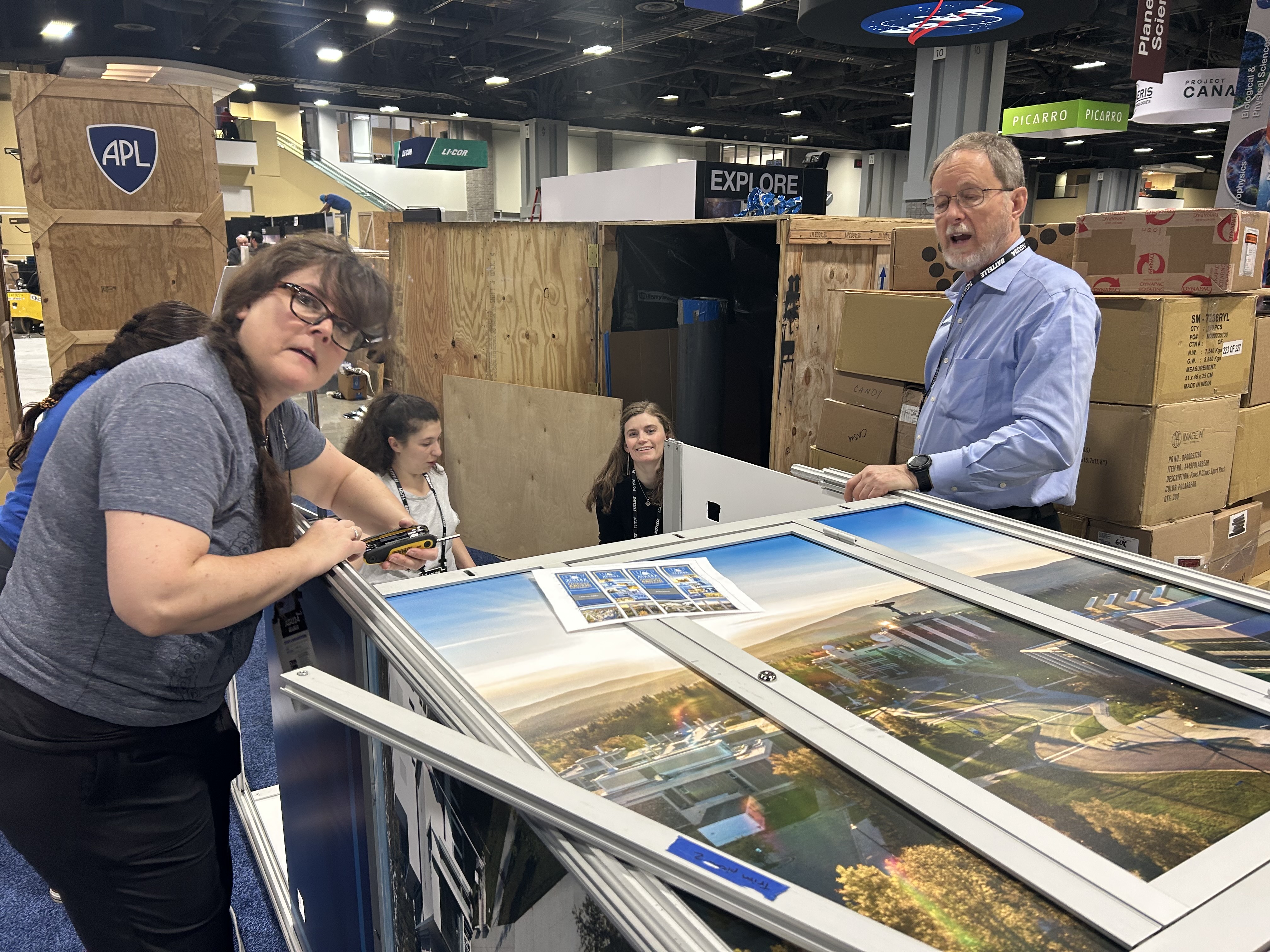
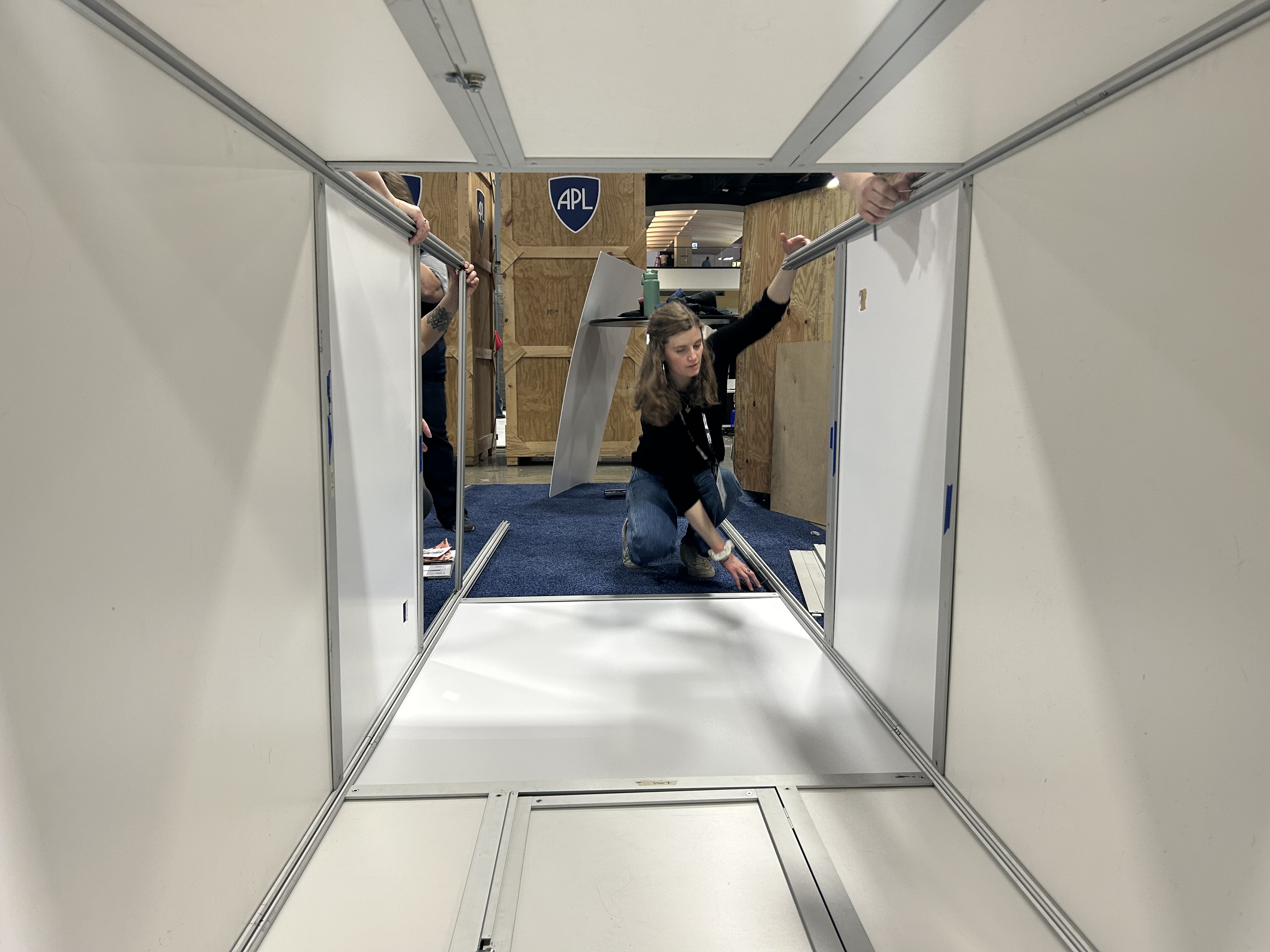
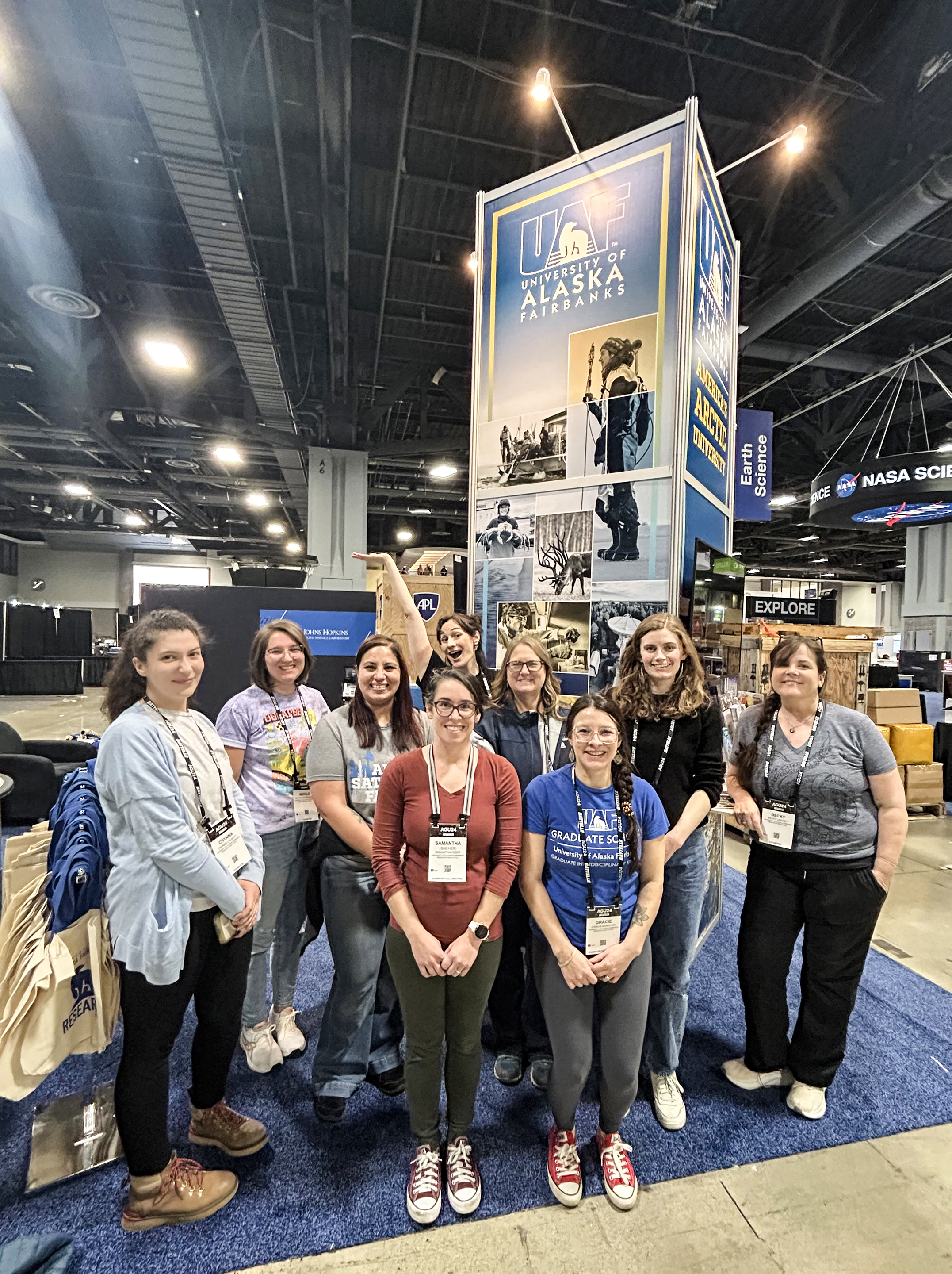
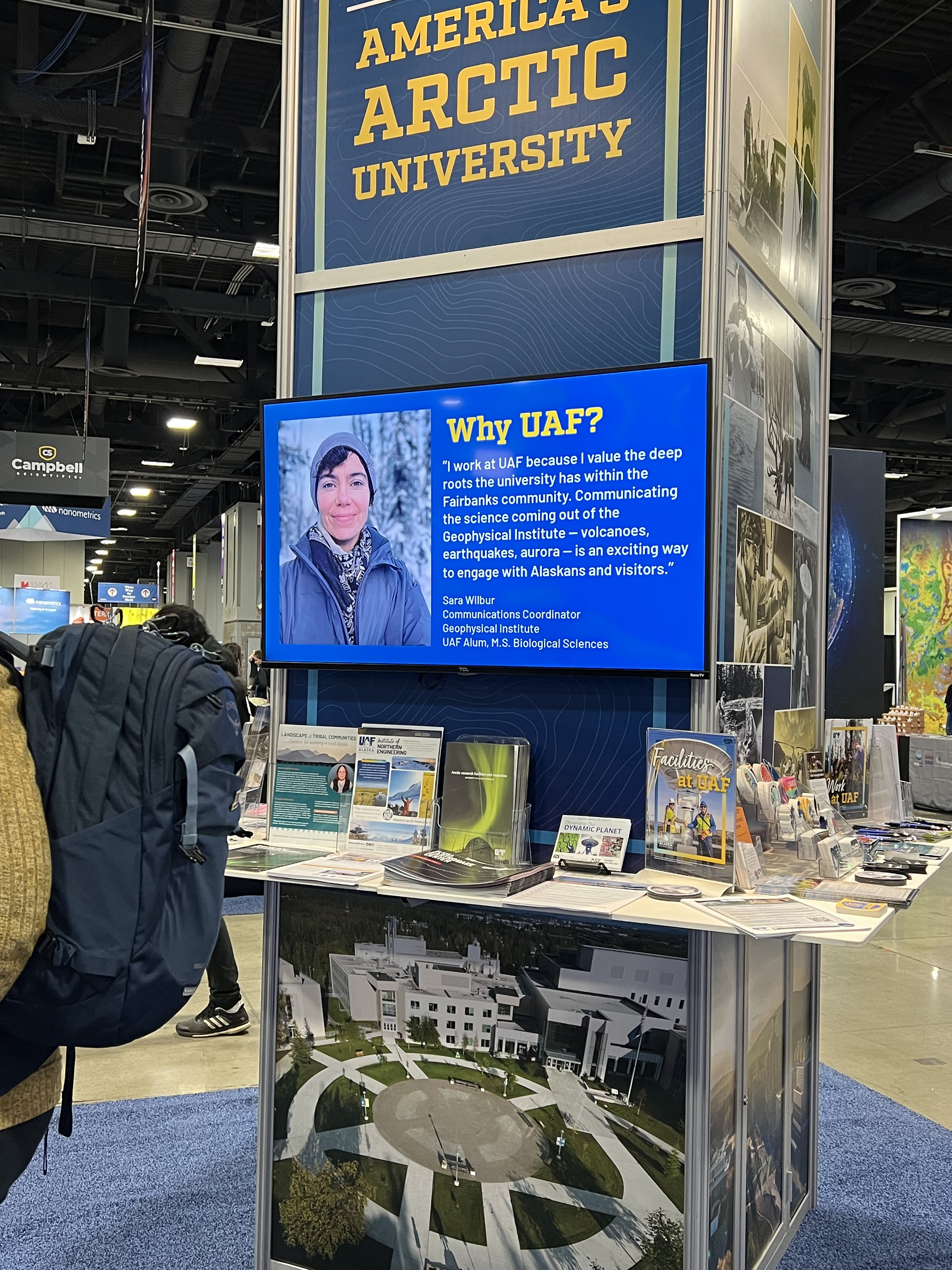
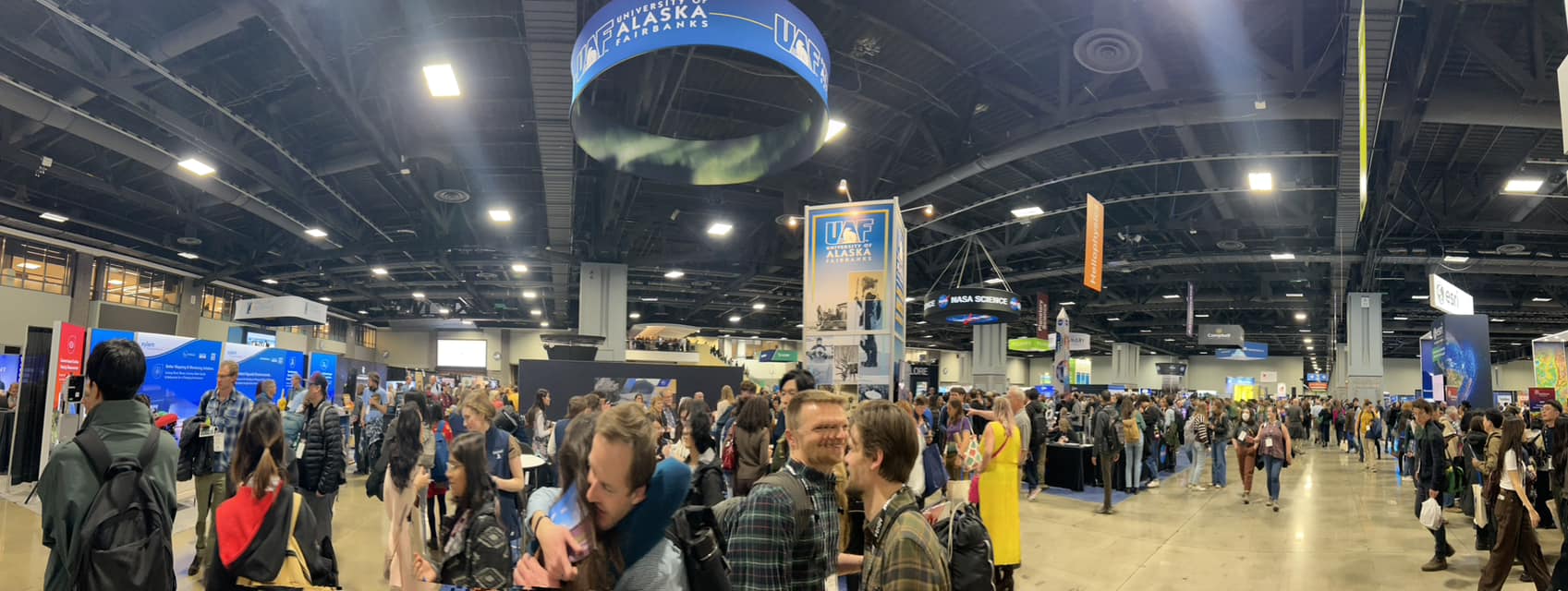
Selection of the tower, made of aluminum and currently the main element in the booth at 13 feet tall, took place in 2018 in preparation for AGU’s first appearance in Washington, D.C. Creative Director Vicki Daniels and other staff from GI Design Services came up with a plan for how the tower should look. They worked closely with the GI Communications team and UAF AGU booth partners to select elements to represent research undertaken by scientists in the different units at UAF, including the GI. Design Services staff refresh elements of the tower every year with new photos, graphics and videos to reflect changing priorities and state-of-the-art research.
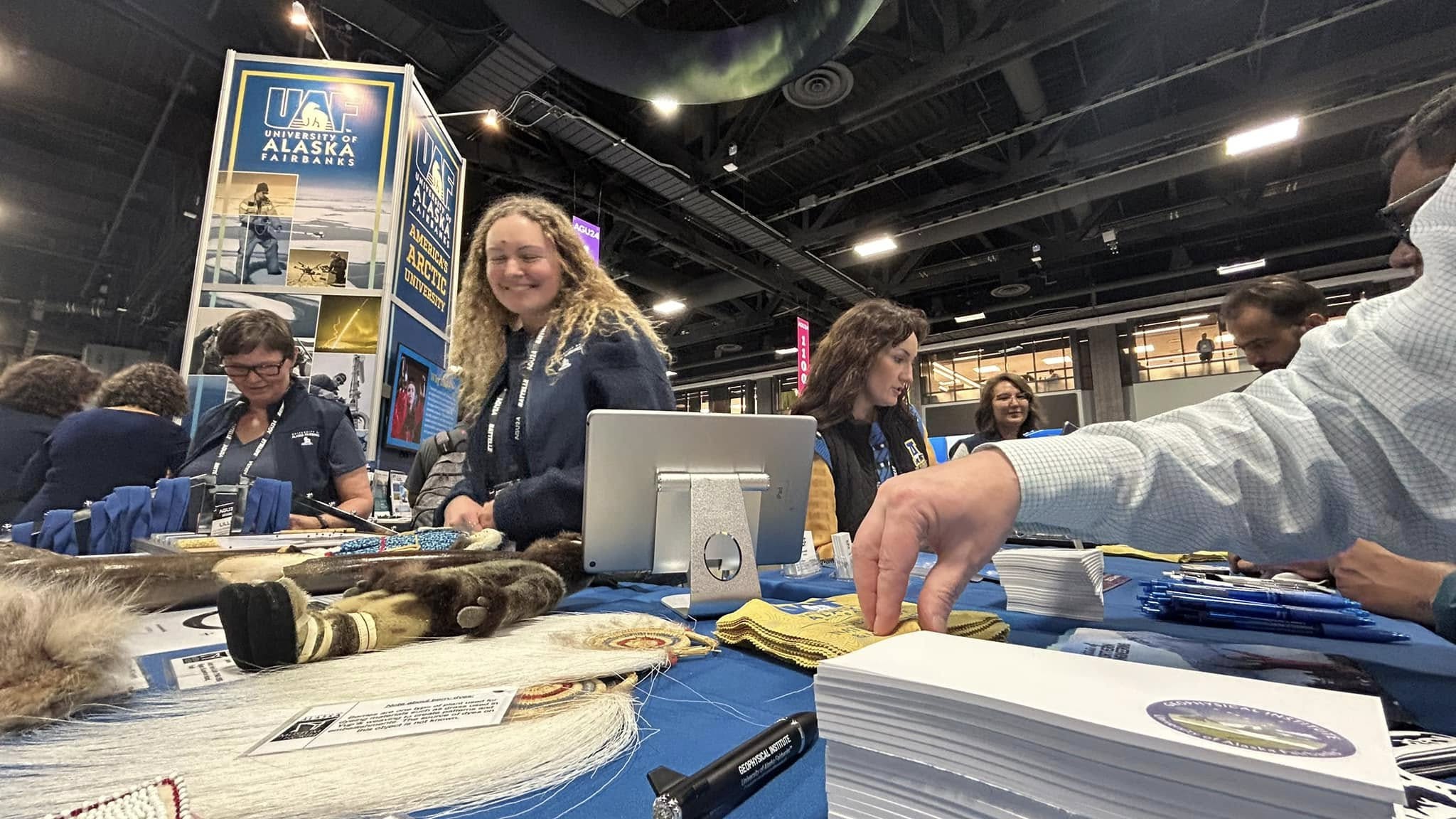
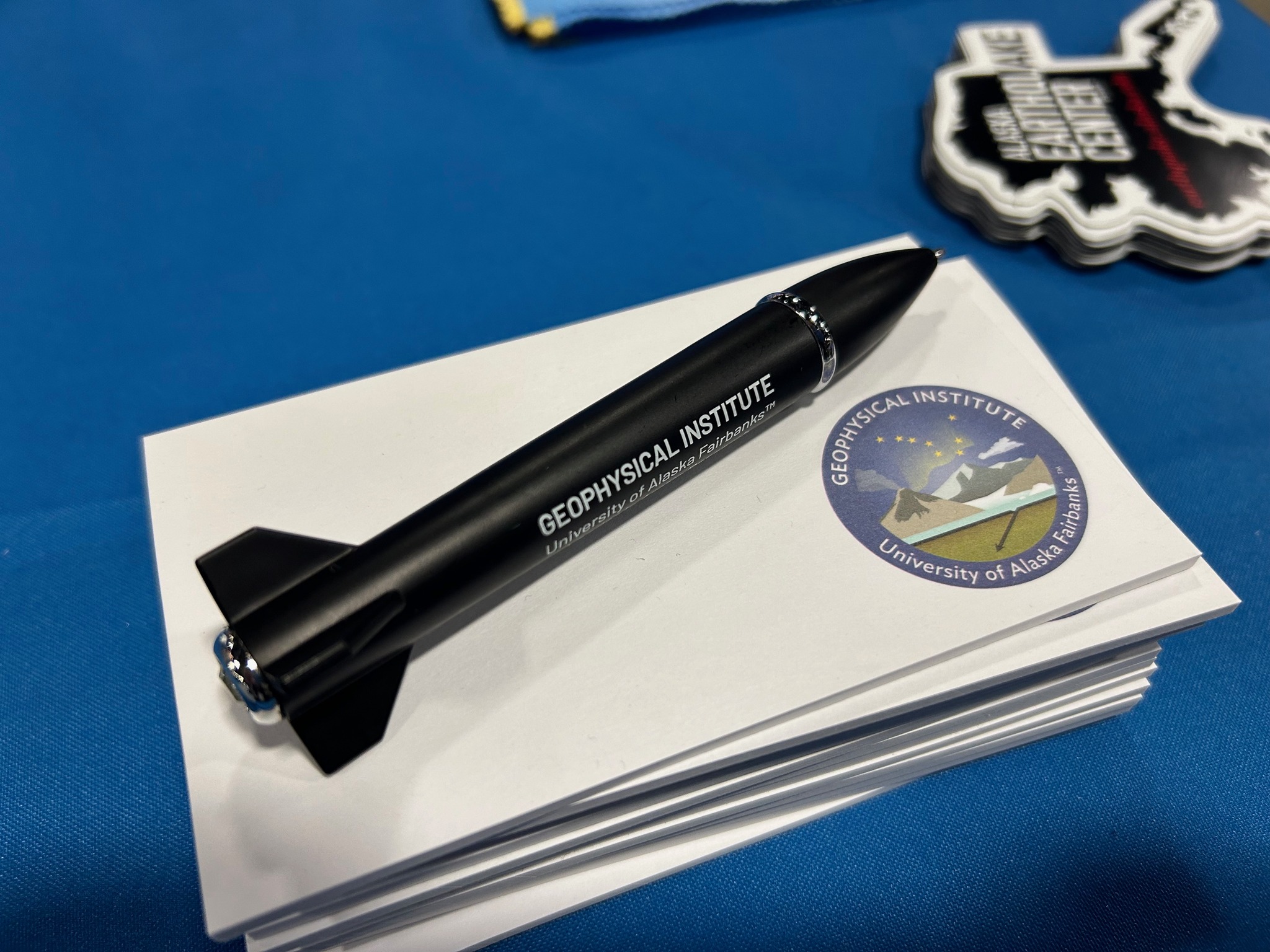
Handouts, brochures and inexpensive giveaways must be designed and printed or purchased in adequate time to ship in the crate with the tower. The Alaska Satellite Facility calendar is always a hot item at AGU; many people come to the booth every year specifically to look for their copy.
Adding a halo and slides
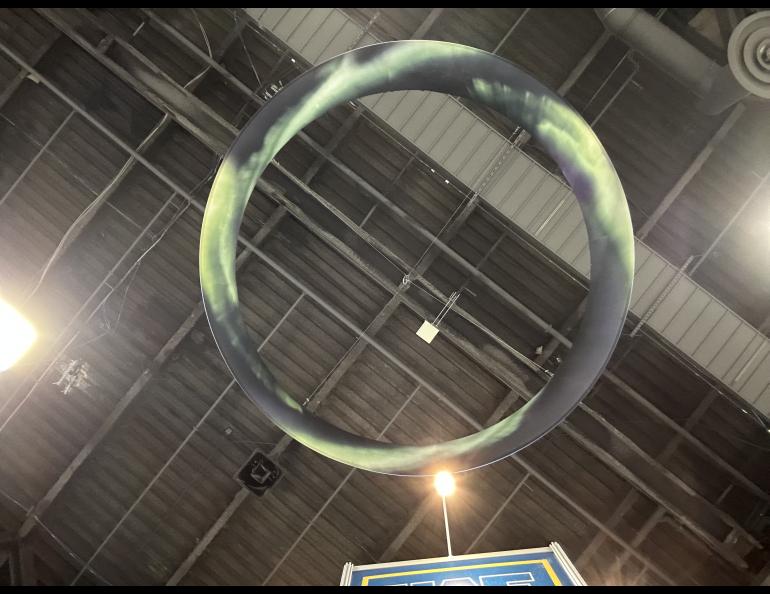
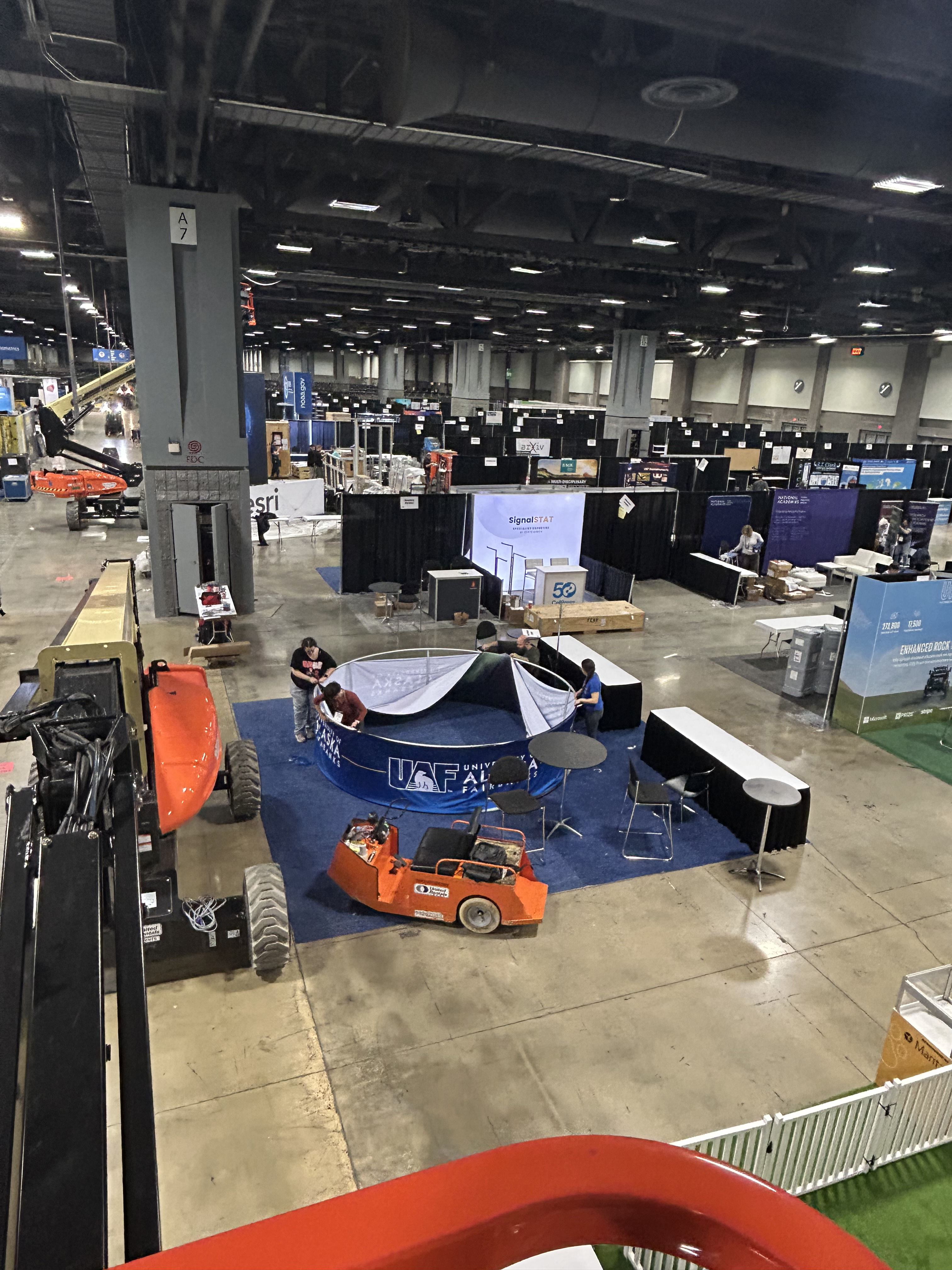
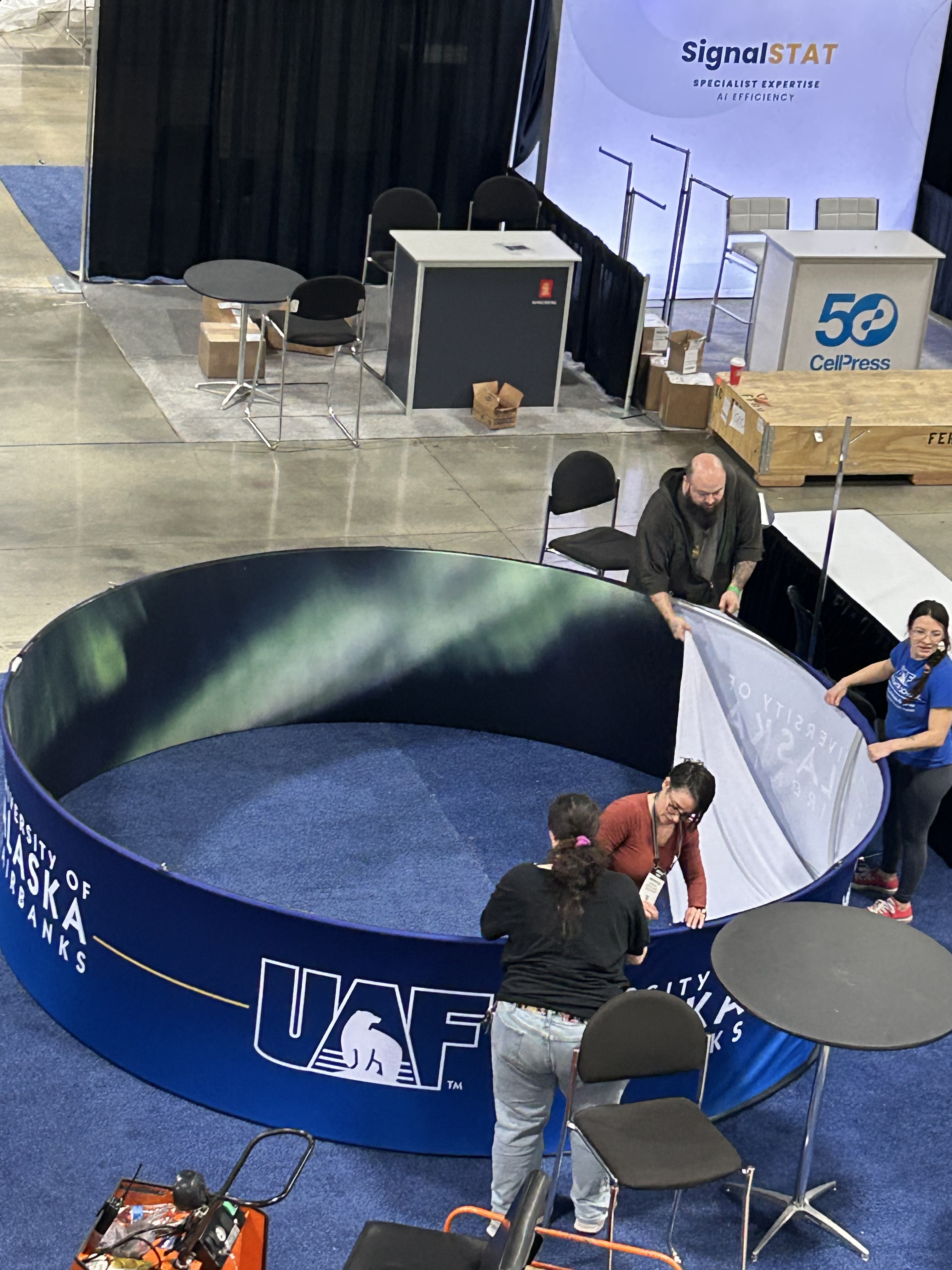
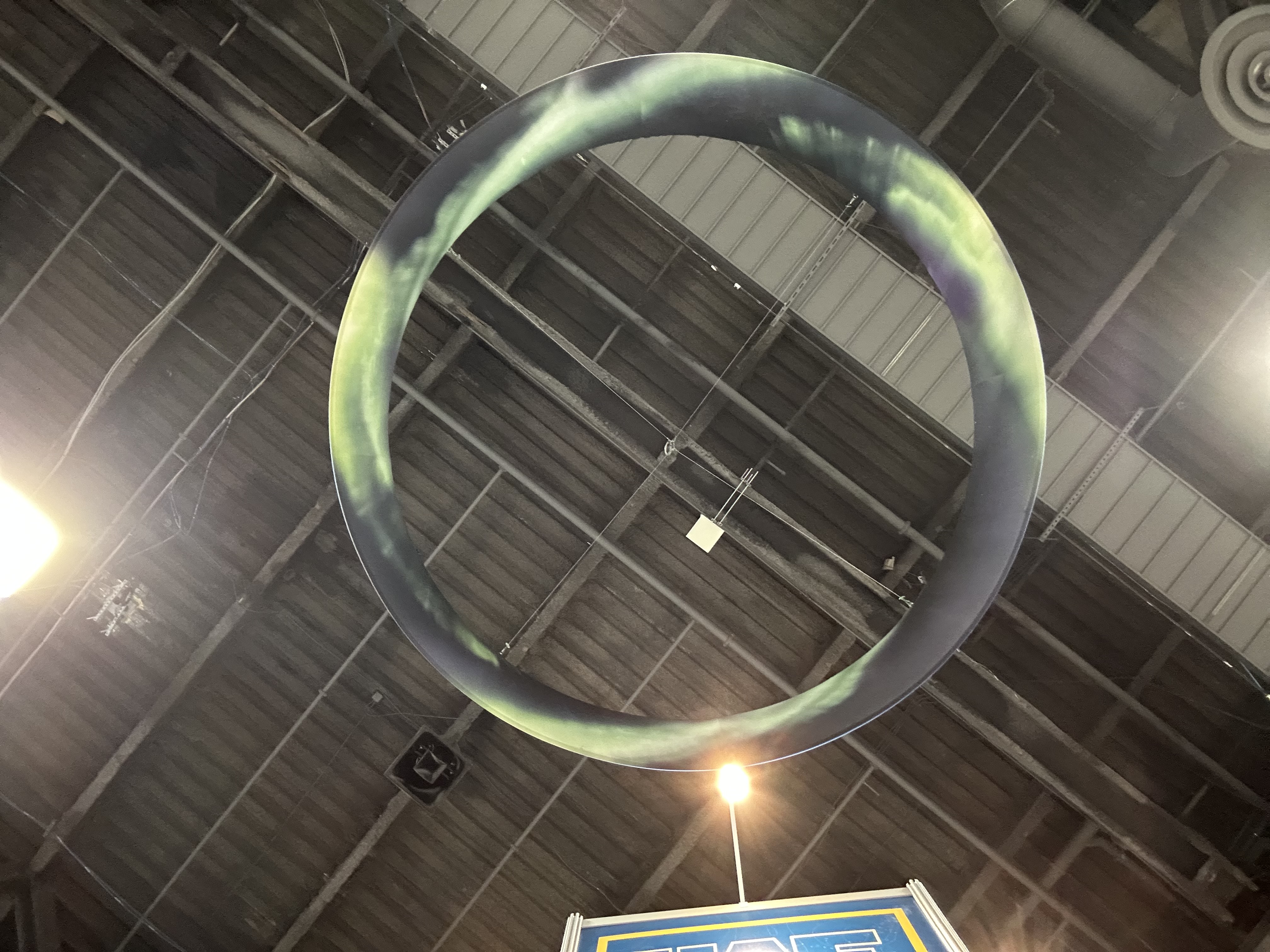
A major addition this year is a new circular element hanging over the booth, a rotating fabric circle 12 feet in diameter roughly 20 feet above the floor of the exhibit hall. The halo features the UAF logo and colors on the outside, and a repeating image of a spectacular Alaska auroral display on the inside.
Another new element in the booth is a series of slides rotating on one of the large screens on the tower sides highlighting a number of grad students, faculty, staff and alumni answering the question “Why UAF?” One of the booth missions is to recruit students, post docs, faculty and staff to come to UAF to study or work. That week at AGU provides a potential audience of thousands of attendees to be intrigued by our recruitment materials and to have an opportunity to ask questions in person and meet potential advisors, colleagues and employers. Download a pdf of the entire set of Why UAF? slides here. The slides were designed and compiled by Design Services staff member Eric Marshall.
From the bottom up
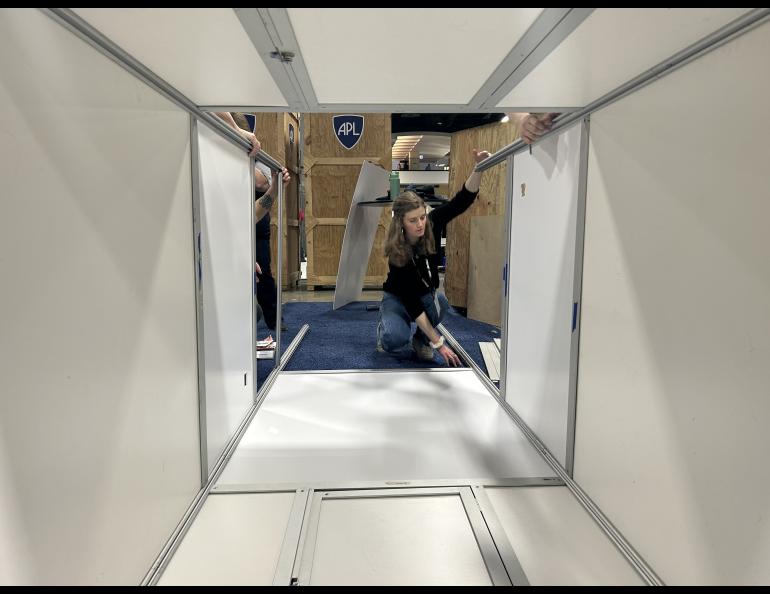
As has become standard practice every year, staff from Design Services and Public Info put the tower together in the Elvey garage ahead of time to make sure everything fits properly and to make sure everyone involved knew how the pieces fit together when in the exhibit hall.
About a month before AGU begins, everything that needs to go to the conference site — the tower, the video screens that are part of the display, handouts, educational materials, various supplies — must be crated and shipped. Staff in the GI Public Information Office, Design Services and GI Operations were kept busy leading up to shipping day to ensure that everything that needed to go to the conference — in D.C. again this year — was collected and securely packed in the crate. Grady Baumfalk in Operations practiced packing and unpacking the crate at least a couple times to make sure everything would fit snugly and arrive in perfect condition.
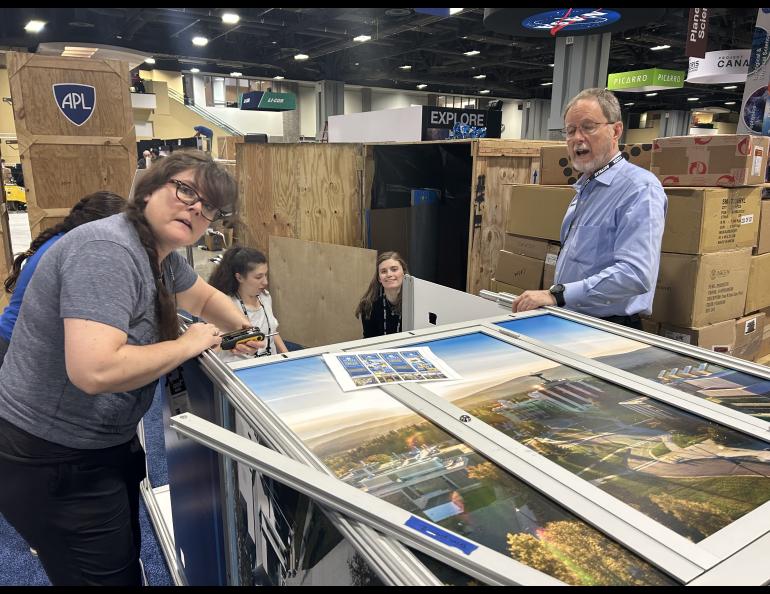
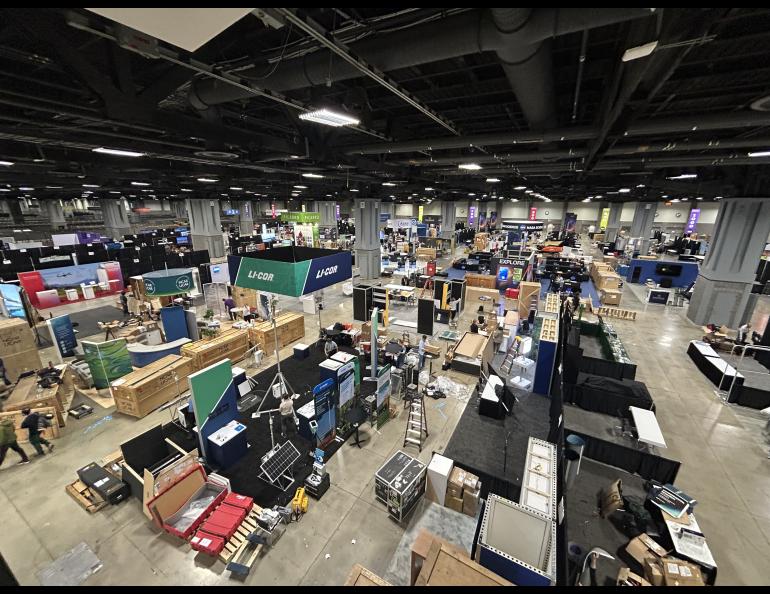
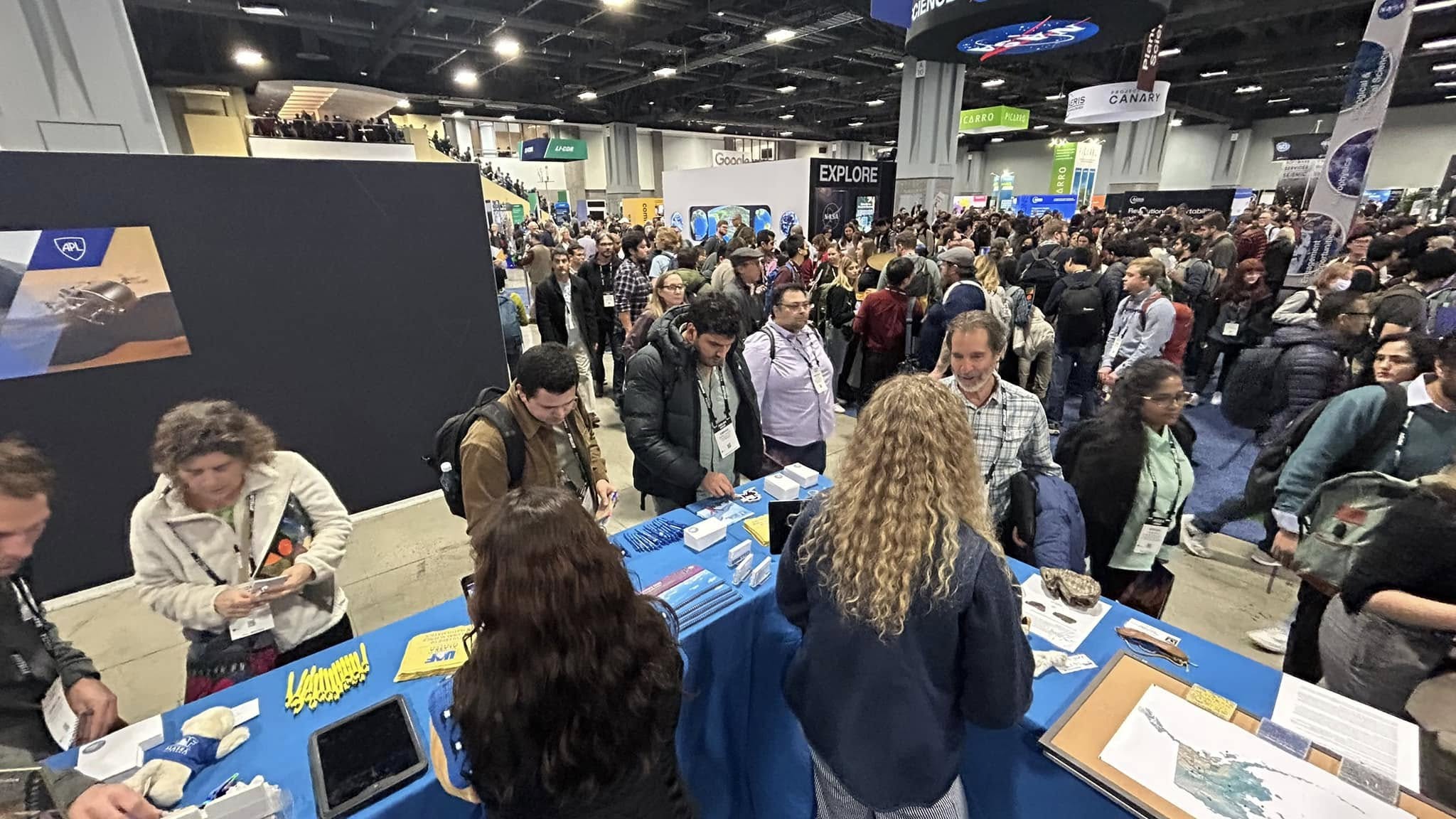
There are limits on how much time our team can take in the exhibit hall for booth assembly and the number of people who can be involved. The booth was assembled on Sunday, it must be ready before the exhibit hall opens at 3 p.m. Monday afternoon and hordes of conference attendees are allowed in to peruse the exhibits, snag some swag and nibble on appetizers.
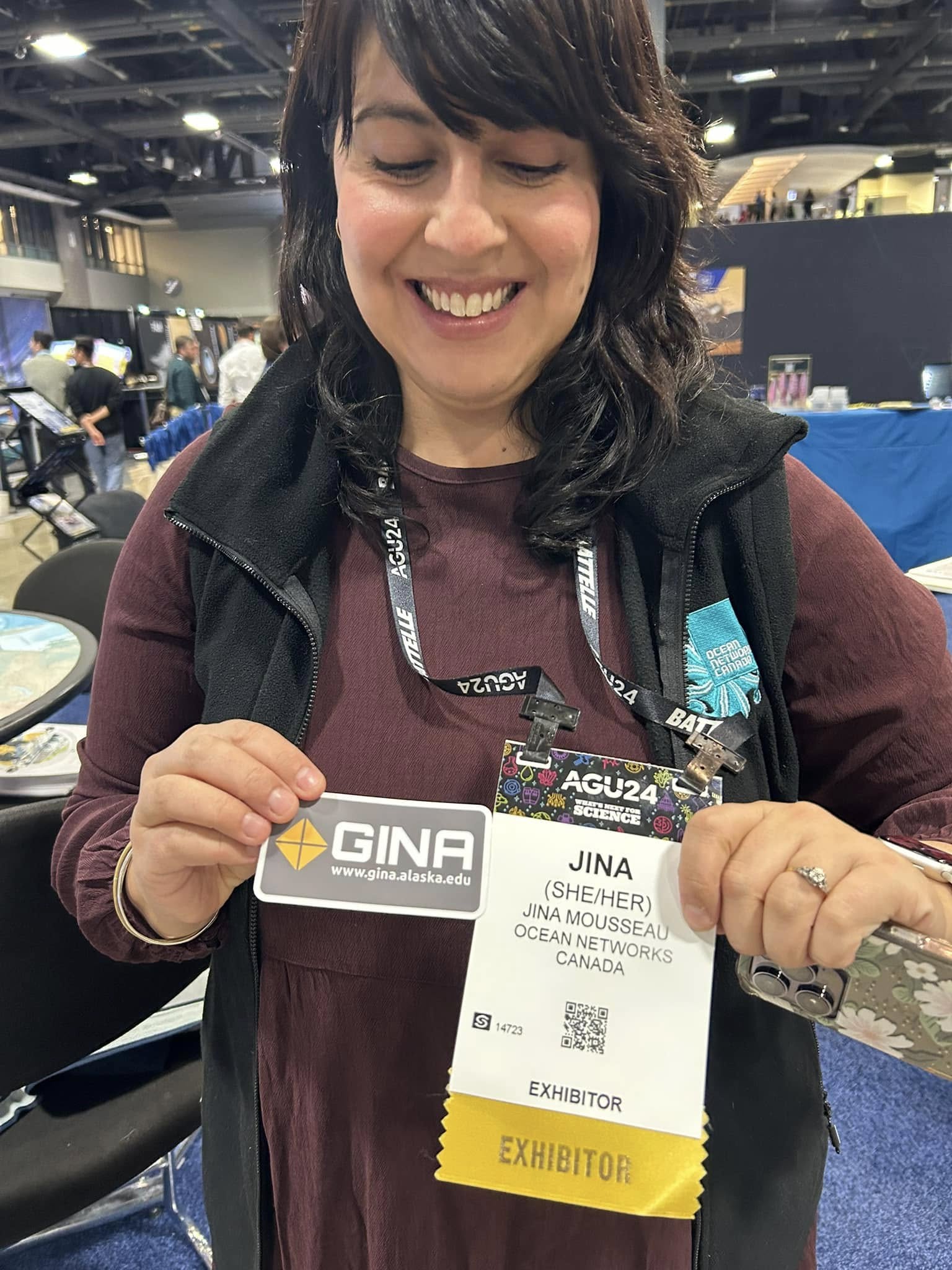
During the conference the booth is staffed at all times the exhibit hall is open. Some of the people already mentioned are there, but researchers, other staff members who attend the conference and representatives of the other supporting UAF units also take shifts. Booth staffers answer questions from passersby about UAF research, recruit students and provide information about any open positions. Overall, their mission is to represent UAF research in a positive light. They also field many questions about Alaska in general.
Planning for next year starts all over again
The exhibit hall closes a day before the presentation sessions are over. This year that will be at 1 p.m. Thursday. The team reassembles in the hall to take the tower apart and pack it away, stow any leftover handouts and supplies in the crate, and it is all sent back to the garage at Elvey. It will be stored but ready to pull out next year to be updated, freshened up and used again.
View numerous posts and videos about goings-on at AGU at the GI's Facebook, Instagram and LinkedIn pages.