Fire sprinklers versus no sprinklers?
By Tracy Durnan
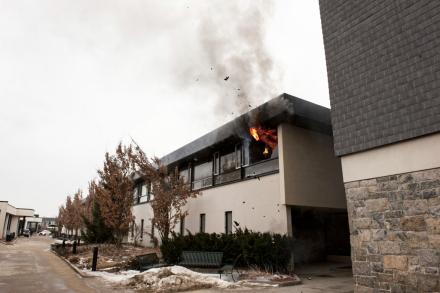
The fire on the sixth floor of the Elvey building that occurred last week makes this an excellent time to remind everyone of the importance of making sure there are 18 inches of clearance around all fire sprinklers to allow them to function properly in the event of a fire. Thankfully, all fire sprinklers on the 6th floor were clear and they did their job. Let's all ensure our workspaces comply with this fire code to keep us all safe.
In my years of experience in disaster preparedness for research, I have often been asked by research staff whether the water damage that can occur when fire sprinklers deploy is worse than the fire itself. In fact, the risk of damage and injury from a fire without sprinklers present is far greater than the minor loss from sprinklers going off.
In 2012, a fire broke out in a laboratory at the University of Maryland when a fan in the lab’s ceiling caught on fire and set the entire ceiling ablaze. The fire sprinklers in the room contained the fire, preventing extensive damage. Lab staff were allowed back into the lab within three hours of the fire.
In contrast, another 2012 fire, this time at SUNY in Canton, NY, occurred in a chemistry lab which did not have sprinklers. The fire was caused by a chemical reaction in the lab, and because of the lack of sprinklers, damage was extensive. Due to the environmental impact caused by toxins from the fire, the entire campus had to be evacuated for a week. Better advance planning, including installing sprinklers, could have prevented such a poor outcome.
The Michael H. Minger Fire Safety Foundation produced a documentary film about nine fires that occured on college campuses across the country in 2012, including the two just discussed. Here is a link to an article summarizing information about each of the fires and another link to the Nine Fires video.
Here is an article I wrote last year with more information about fire safety in labs: Laboratory Fire Safety Checklist Every Lab Needs | Lab Manager.
Let's all stay safe!