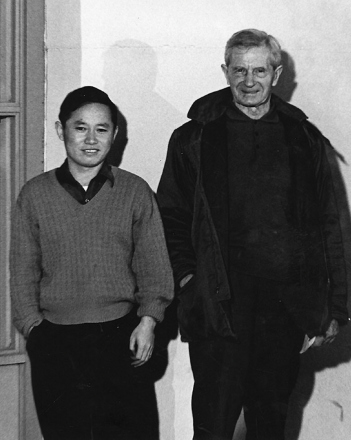
EARTH: Evolving Academics Raising Tiny Humans
EARTH: Evolving Academics Raising Tiny Humans will meet from 2–3 p.m. Wednesday, Oct. 28 in Mather Library, 202 Akasofu.
Are you a faculty member, staff scientist, postdoctoral researcher or a graduate student in geosciences who’s working hard to balance your academic career with raising young children? The Mather Library invites you to join your colleagues in the library for coffee and camaraderie. We can explore the literature, share ideas and support each other on this journey of juggling science careers and parenting.
Check out the Family Workstation! Mather Library is a research library, but researchers come in all shapes and sizes and sometimes that includes having littles ones in tow. As such, we have a family work station with a small attached playpen equipped with sensory toys and a mirror. Located just inside the library's main entrance on the way to the coffee machine. Please feel free to use this space when you need a…
read more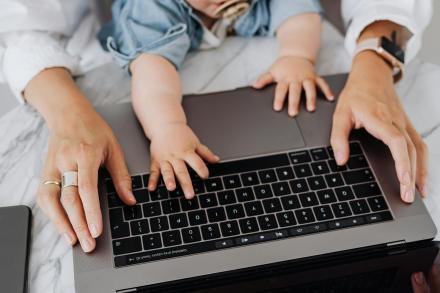
McCoy's Chili Smackdown is tomorrow!
Bring your best chili to compete against the great chefs of West Ridge. Not cooking? Buy samples and vote for the knockout chili!
Bring your friends, coworkers, and students to taste-test the chili and vote for your favorites 11 a.m.-1 p.m. Wednesday, Oct. 14 in the Elvey Building Globe Room.
Please enter your chili in the contest by signing up here or emailing Crystal Ruerup, ceruerup@alaska.edu right away to secure your spot — the earlier the better!
Five bucks buys you chili heads five chili samples and three votes. Buy additional votes for $1 each. All proceeds will support the new GI Grad Student Research Fund.
This year, we're also celebrating Bob McCoy’s 15th anniversary as director of the GI. Come enjoy a cup of chili with Bob while supporting a great cause!
…
read more
Chris Cook M.S. defense
11 a.m. Wednesday, Oct. 14
Available only via zoom
In partial completion of the M.S. in Geosciences from the University of Alaska Fairbanks College of Natural Science and Mathematics, Department of Geosciences
Thesis title: Multi-Temporal Machine Learning Approaches for Rockfall Detection Using High-Resolution Drone-Based Imagery and Topography
Abstract: Unstable slopes, particularly in mountainous areas adjacent to roadways or other infrastructure, present a significant rockfall hazard to communities and human life. State Department of Transportation (DOTs) need to manage, prioritize, and remediate many such slopes which is difficult to do with limited resources. Remote sensing, and specifically high-resolution drone-based remote sensing, offers a safe method for imaging known…
read more
Joshua Hostler Ph.D. defense
10 a.m. Wednesday, Oct. 14
401 Akasofu Building
Also available via Zoom
In partial completion of the Ph.D. in Atmospheric Sciences from the University of Alaska Fairbanks College of Natural Science and Mathematics, Department of Atmospheric Sciences
Dissertation title: Seasonal Prediction of Lightning for Alaska’s Wildland Fire Season
Abstract: While lightning-ignited fires account for 97.5% of the burned area in Alaska, seasonal forecasts critical for planning fire management resources do not include a lightning component. Long-range dynamical forecasts are not capable of resolving the physical processes that are commonly used to parameterize lightning and the observational lightning record is too short to support a statistical outlook. Large-scale weather patterns, identified with the self-organizing map (SOM), are…
read more
“Listening To Alaska” film premiere and talk series at the UAF planetarium
Join the University of Alaska Museum of the North and the Geophysical Institute for the exciting premiere of a new 20-minute film, “Listening to Alaska,” at the Walt & Marita Babula Planetarium. The showing will be paired with a talk and Q&A with a scientist on one of the topics featured in the film. Watch as Arctic scientists launch rockets into the aurora, track seismic activity, and explore ancient secrets in frozen permafrost.
The Wednesday, Oct. 7 premiere features Michael West, Alaska state seismologist and director of the Alaska Earthquake Center.
This series is in-person only. All presentations in the series are on Wednesdays starting at 7 p.m.
Oct. 7: Seismology: Michael West
Oct. 14: Launching Rockets at Poker Flat: Don Hampton
Oct. 28: Permafrost: Dmitry Nicolsky & Colby Wright
Nov. 4: Paleontology: Pat Druckenmiller
Nov. 11: Archaeology/Ethnology & Bus 142: Angela Linn & Josh Reuther
Tickets are $16 for…
read more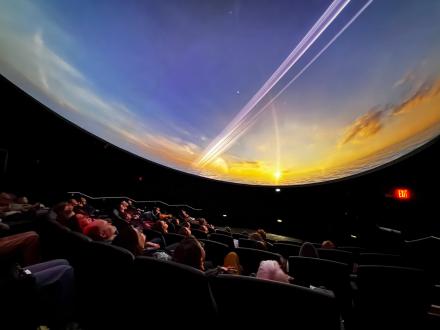
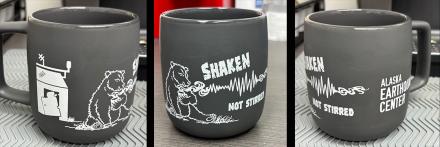
New Alaska Earthquake Center mugs
Start your mornings right with Alaska Earthquake Center's new 14-ounce ceramic mug! This dark grey cup features one of our seismic monitoring stations, “modified” by a bear who is dozing in front with a seismically steaming cup.
Earthquake Center staff Anthony Erickson came up with the art concept, and Beth Grassi created the artwork.
Purchase your mug here for $16, available for pickup at the Alaska Earthquake Center in Elvey 301. (Please note we are unable to ship mugs at this time.)
Headshot portrait opportunity
All GI-affiliated faculty, graduate students and staff are invited to have updated headshot portraits made at one of three open sessions in September. The portraits are sponsored by the GI director’s office and are available at no charge. They will be used to update GI websites and directory. The GI Design Services photo team will make portraits from 12-4 p.m. Monday, Tuesday and Wednesday, Sept. 21, 22 and 23 in the Elvey lobby in front of the Globe Room. Click here to reserve a time to have your photo made.

Scheduling meeting spaces
Are you looking to reserve a meeting space? Following is a list of the spaces GI Operations can schedule for you. Contact Ops at uaf-GIOperations@alaska.edu.
Auditorium – 214 Elvey
Stage, podium, projector, screen, whiteboard. Seats 92
Globe Room – 215 Elvey
Users must clean up tables, chairs, floors, and empty trash cans. This is GI's showroom to the public and is used often; therefore, the room must be left in good condition.
Set up, cleanup, and returning the room to a standard arrangement must be considered in scheduling requests.
Our receiving team will set up and reset the furniture in the Globe Room.
Please let us know in advance if any specific setup is required so we can schedule accordingly.
Conference Room – 616 Elvey
Zoom capabilities. Owl is available for use. Seats 12
Lactation and Wellness Room…
read moreUAF and GI logo downloads available
Please make sure you use the correct GI and UAF logos on all your research posters. You can download the logos at these websites:
For assistance with GI and UAF logos, contact Design Services at x7146.
GI history nugget: The Geophysical Institute comes into being
We often see references to the Geophysical Institute’s official founding date as a July 31, 1946, act of Congress. But it turns out that is actually the date when the bill, HR 7486, was signed by President Truman, thereby becoming Public Law 580. The process that led to the creation of the GI actually started long before that day.
The University of Alaska Board of Regents unanimously approved, on Oct. 6, 1936, a resolution calling for the university to provide the federal government a site on which to build a research facility. The resolution approved by the regents was to offer a site for “a structure suitable for branches of research, including, anthropology, archaeology, astronomy, atmospheric electricity, aurora ethnology, formation and testing of soils, geology, geophysics, ionosphere, meteorology, natural history, paleontology, plant photosynthesis, seismology and terrestrial magnetism.”
The 1946 act establishing the Geophysical Institute authorized the…
read more Download a facsimile of the bill creating the GI from the 1946 Congressional Record (72.15 KB)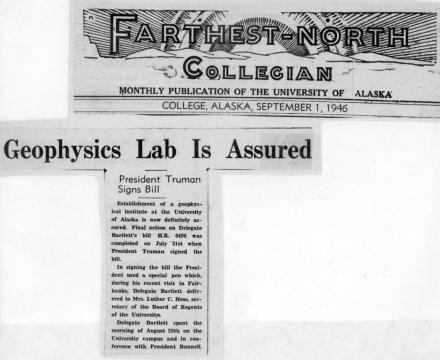
Shun-Ichi Akasofu publishes paper about Sydney Chapman
Syun-Ichi Akasofu's paper, “Sydney Chapman: A Biographical Sketch Based on the Book ‘Chapman Eighty, From His Friends,’” was published Dec. 3, 2020, in Perspectives of Earth and Space Scientists, an AGU journal.
Akasofu’s biographical sketch is about Sydney Chapman, one of the greatest geophysicists of the last century. The Chapman Building on UAF's campus, the original home of the Geophysical Institute, was named for him.
In his early days, Chapman devoted his studies to the transport properties of gases and wrote “The Mathematical Theory of Non‐Uniform Gases” with T. G. Cowling. In the field of geophysics (geomagnetism, ionospheric physics and auroral physics), Chapman made fundamental contributions in each field on the basis of rigorous mathematical physics and deep insight. Chapman also wrote the book “Geomagnetism” with J. Bartels. These efforts helped establish the…
read more Akasofu-2020CN000135.pdf (3.08 MB)