
GI history nugget: Sputnik another GI first
During the late 1950s, the Geophysical Institute focused on preparing to participate in the important International Geophysical Year, a worldwide 18-month coordinated project to measure Earth's physical characteristics which ran from July 1, 1957 through Dec. 31, 1958. Sydney Chapman, GI's advisory scientific director from 1951 – 1970, had participated in the earlier International Polar Year research in 1932 and was instrumental in launching the IGY.
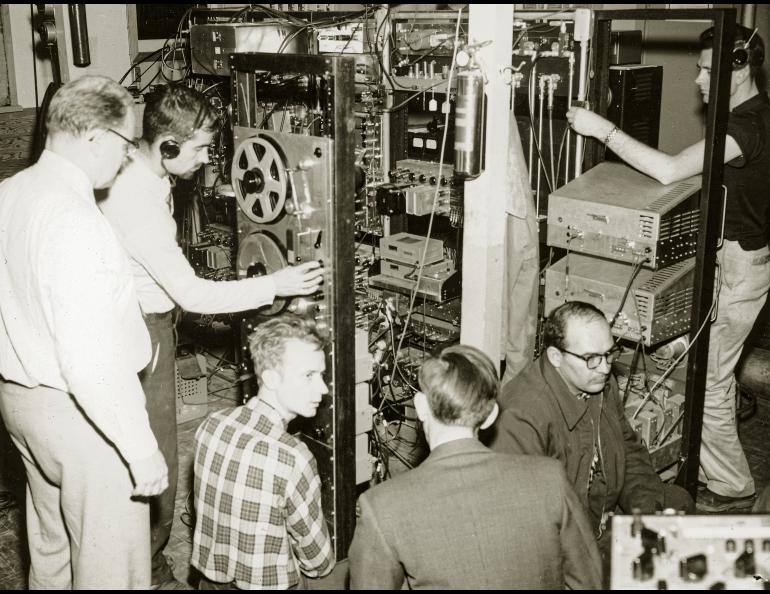
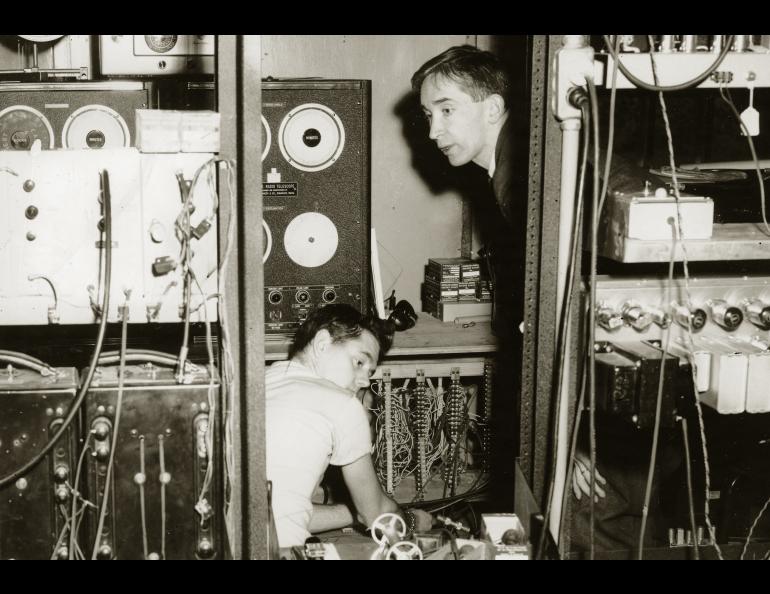
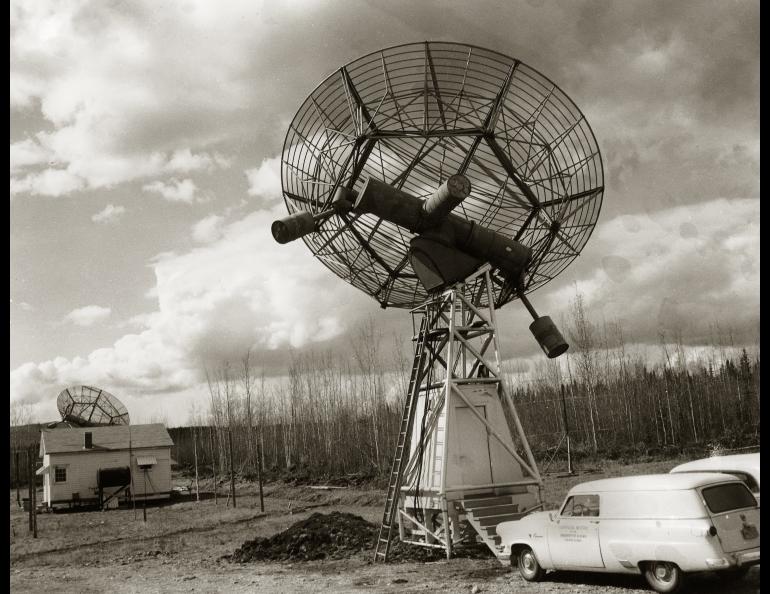
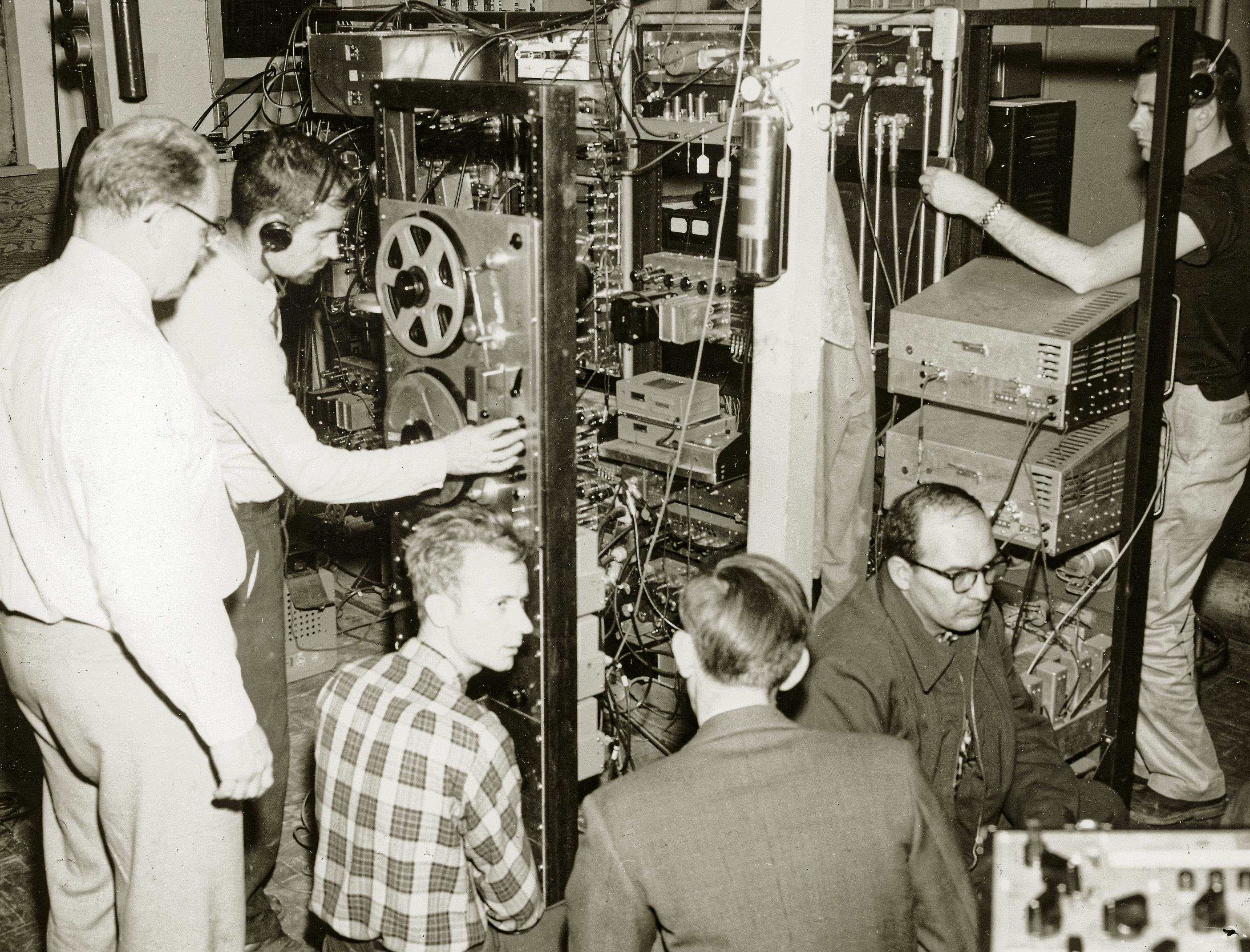
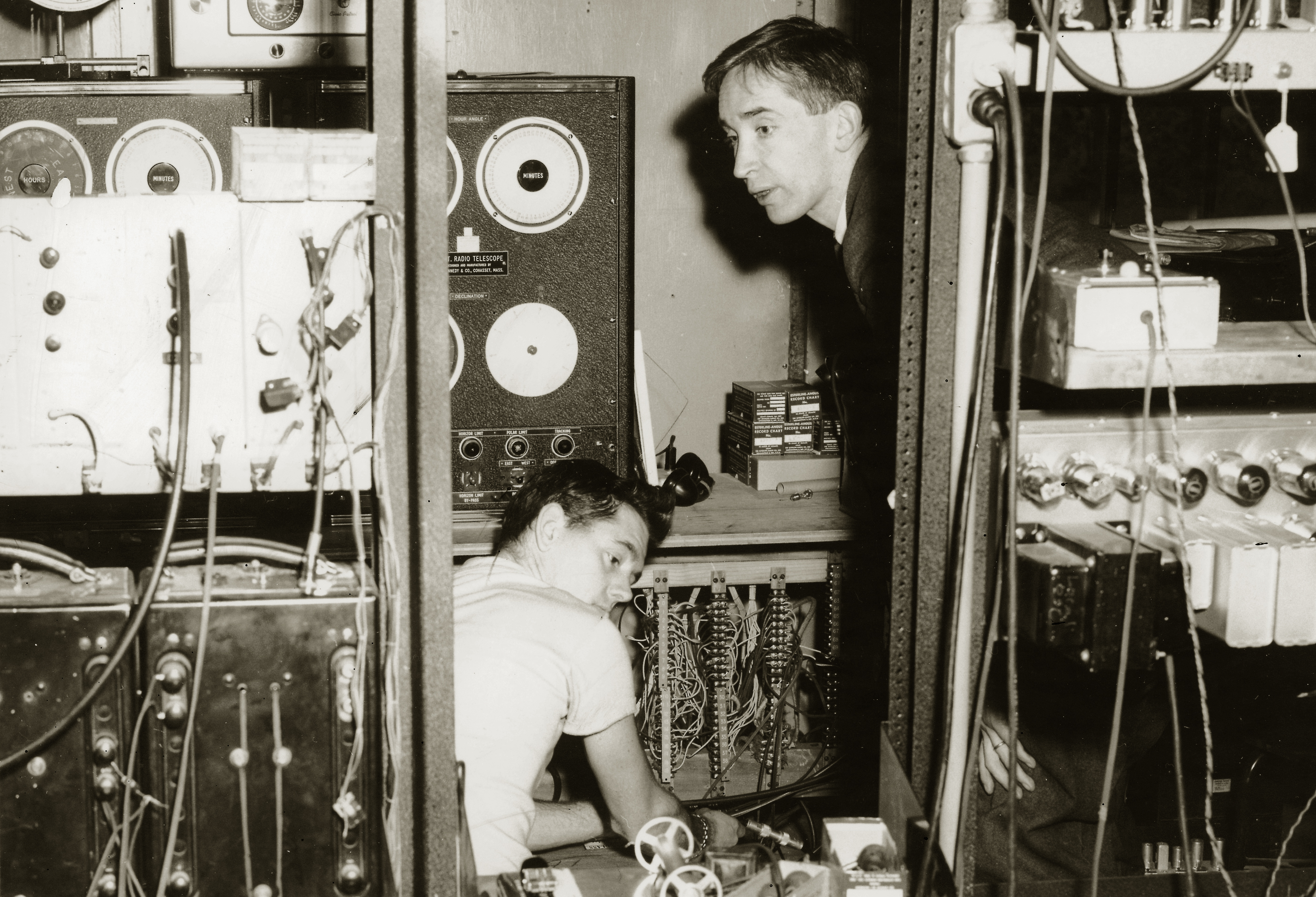
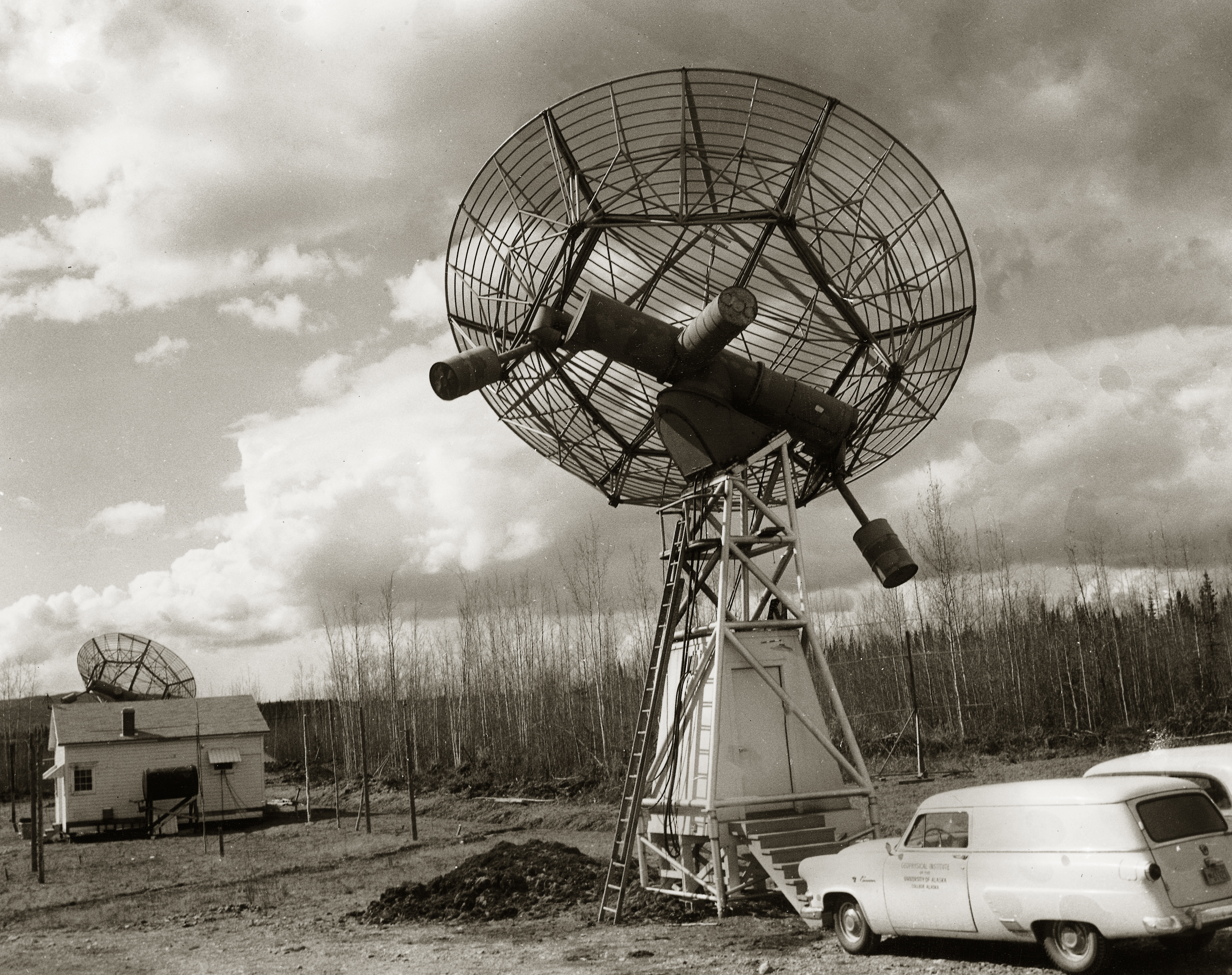
Just as the IGY was starting up, the institute played an unexpected role in a technical coup by the Soviet Union. The Oct. 4, 1957, launch of Sputnik was the most exciting event of the 1950s, the beginning of the space age! The eyes of the Western World turned skyward. The first scientists to see the new object were Geophysical Institute graduate students Robert Leonard and Joseph Pope, using the interferometer (radio-telescope) converted to a satellite receiver, at the Ballaine Lake Mini-Track Station.
Listening in along with the graduate students were Robert Merritt, Pete Michelow, Gordon Little, Glenn Stanley and Ernest Stiltner. According to T. Neil Davis in a 1977 Alaska Science Forum column, at least one other person saw the first satellite before any local scientists. As Davis also reports in his book "Alaska Science Nuggets," Dexter Stegemeyer was the first North American known to have seen Sputnik just clearing the western horizon, when it entered the view through his open outhouse doorway.
Carla Helferrich and Ned Rozell have also written Alaska Science Forum columns about the GI’s connection to Sputnik. Helferrich's Sputnik: A Forgotten Alaska First was published in 1997 and Rozell's The first satellite's Alaska connection in 2007, each of them reporting additional details. A now defunct Sewer History website supposedly claimed a plaque was placed on Stegemeyer’s outhouse commemorating the historical event.
Sputnik circled the earth every 95 minutes at almost 20,000 miles per hour 500 miles above the Earth. The Sputnik (meaning "companion" or "fellow traveller") was launched from Kazakhstan. It stayed in orbit for about three months. Sputnik fell from the sky on Jan. 4, 1958. The 184-lb satellite had transmitted a radio signal picked up around the world.
Two audio files linked below are from recordings made by the GI team.