
Planet_Walk_Uranus.mp3
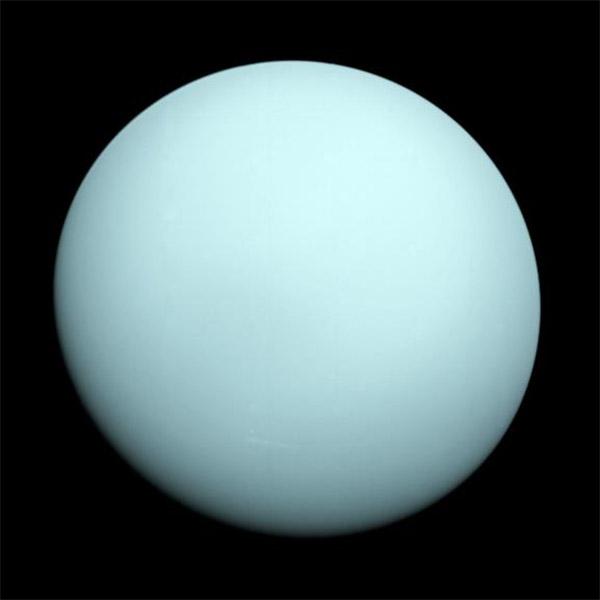
Uranus, the seventh planet from the sun, is very cold and windy. Scientists would like to know more details about Uranus and due to advancements in technology this is becoming a reality. Next-generation radiometers with thermopile sensors are being developed that could provide answers about Uranus’ atmosphere and cloud layers.
Like its neighbor Neptune, Uranus likely formed closer to the Sun and moved to the outer solar system about 4 billion years ago.
Facts about Uranus:
Uranus is one of the ice giants. It has the third largest diameter of the planets in our solar system. Only Jupiter and Saturn are larger.
Uranus is mostly fluid. Trace amounts of methane in the atmosphere give the planet a blue color.
Uranus has 13 known rings and 27 small moons. It has auroras that are not aligned with the poles because of its lopsided magnetic field.
Uranus statistics:
-
Distance from the sun: 3.1 billion km (1.9 billion mi)
-
Diameter: 4.01 x Earth
-
Mass: 14.5 x Earth
-
Time for one full orbit ("year"): 84 Earth years
-
Time for one full rotation ("day"): 17.2 Earth hours
-
Rotates clockwise and on its side