The scent of barren ground grizzly
Unlike most of us, Jordan Pruszenski has held in her arms the following wild animals: wolves, caribou, beavers, muskrats, musk oxen, emperor geese and moose.
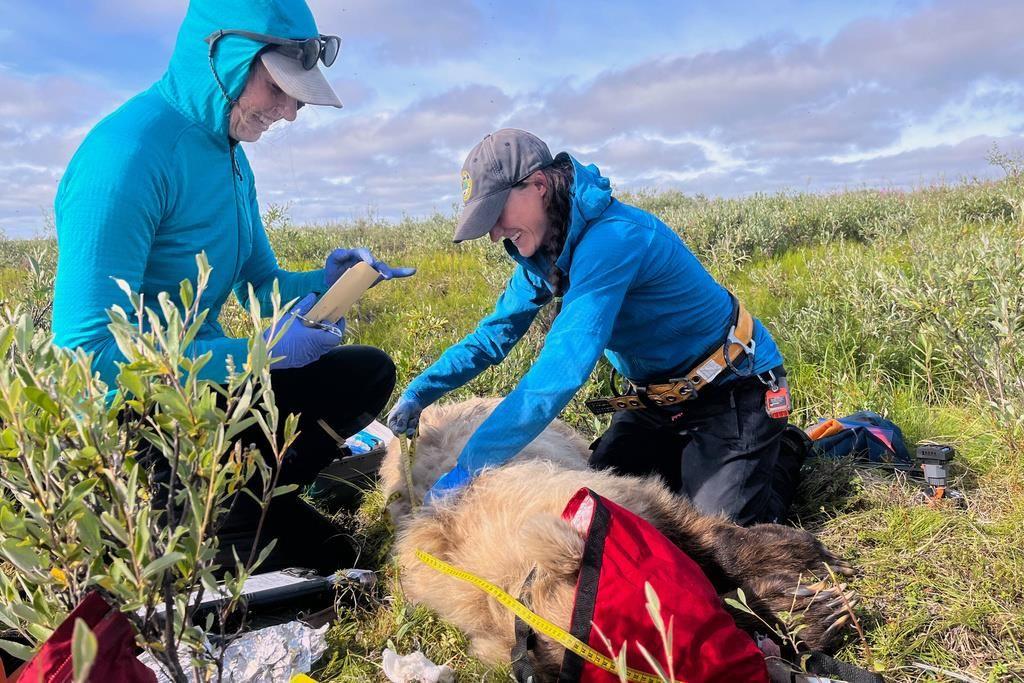
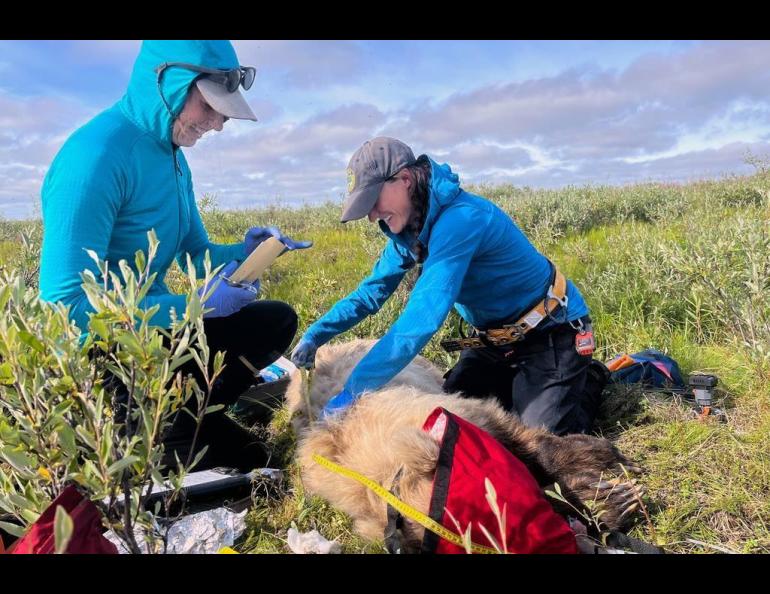
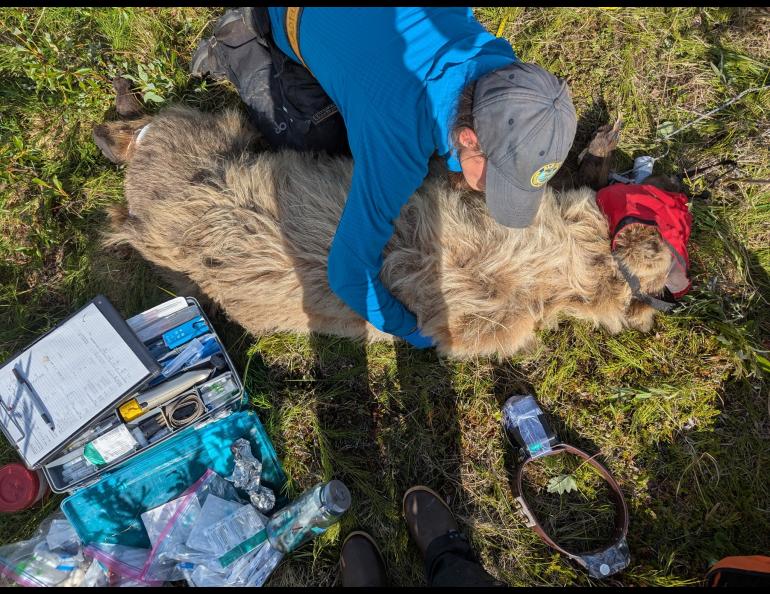
Also, as part of her job, she a few times each year wraps one of Alaska’s farthest-north grizzlies in her arms, stretching a tape measure along its ribs, her chin sinking into its blond fur.
Pruszenski is an assistant area biologist for the Alaska Department of Fish and Game in Fairbanks. She and her coworkers are responsible for monitoring a chunk of northeastern Alaska as large as some states — from the Dalton Highway and Yukon River over to the Canada border and the Arctic Ocean.
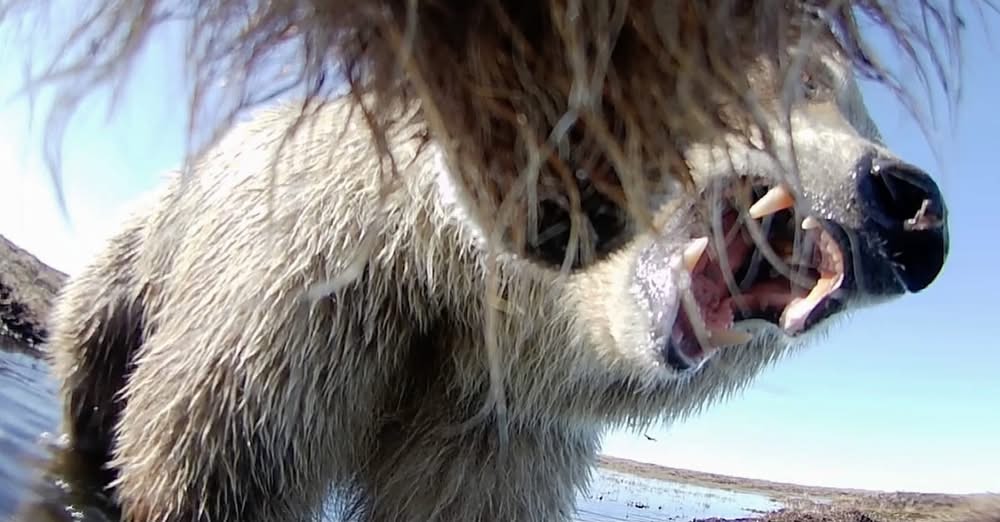
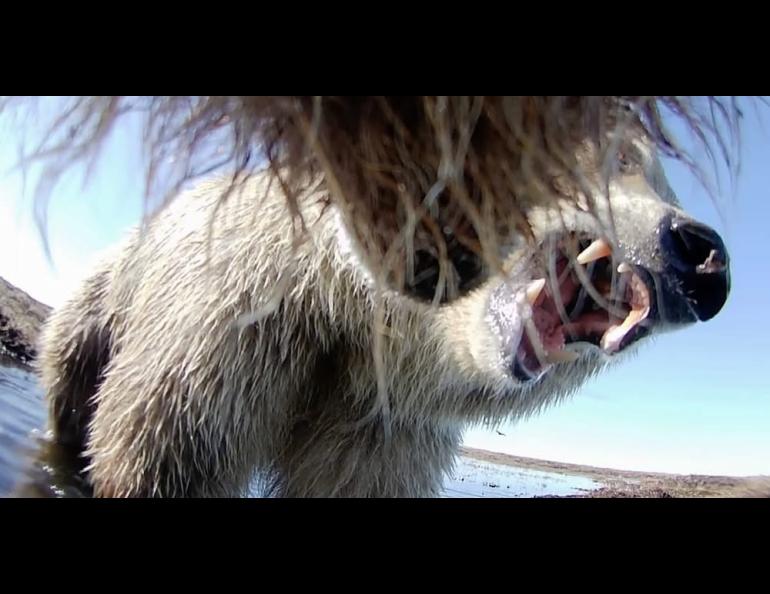
A current project is finding out more about barren ground grizzlies, the smallest of Alaska’s grizzly bears, which live north of the Brooks Range. Pruszenski works with graduate student Ellery Vincent of Washington State University placing cameras on the necks of female grizzlies to answer basic questions about the animals.
“How many are there? We don’t have a good population estimate,” Pruszenski said. “We (also) want to get a better understanding of how they are interacting with their environment during the short summer season.”
To get closer to the goal, Pruszenski darts bears from a helicopter with a tranquilizer gun. She aims for the rump in the spring, the shoulder in the summer (when the rump is too fat to allow proper penetration).
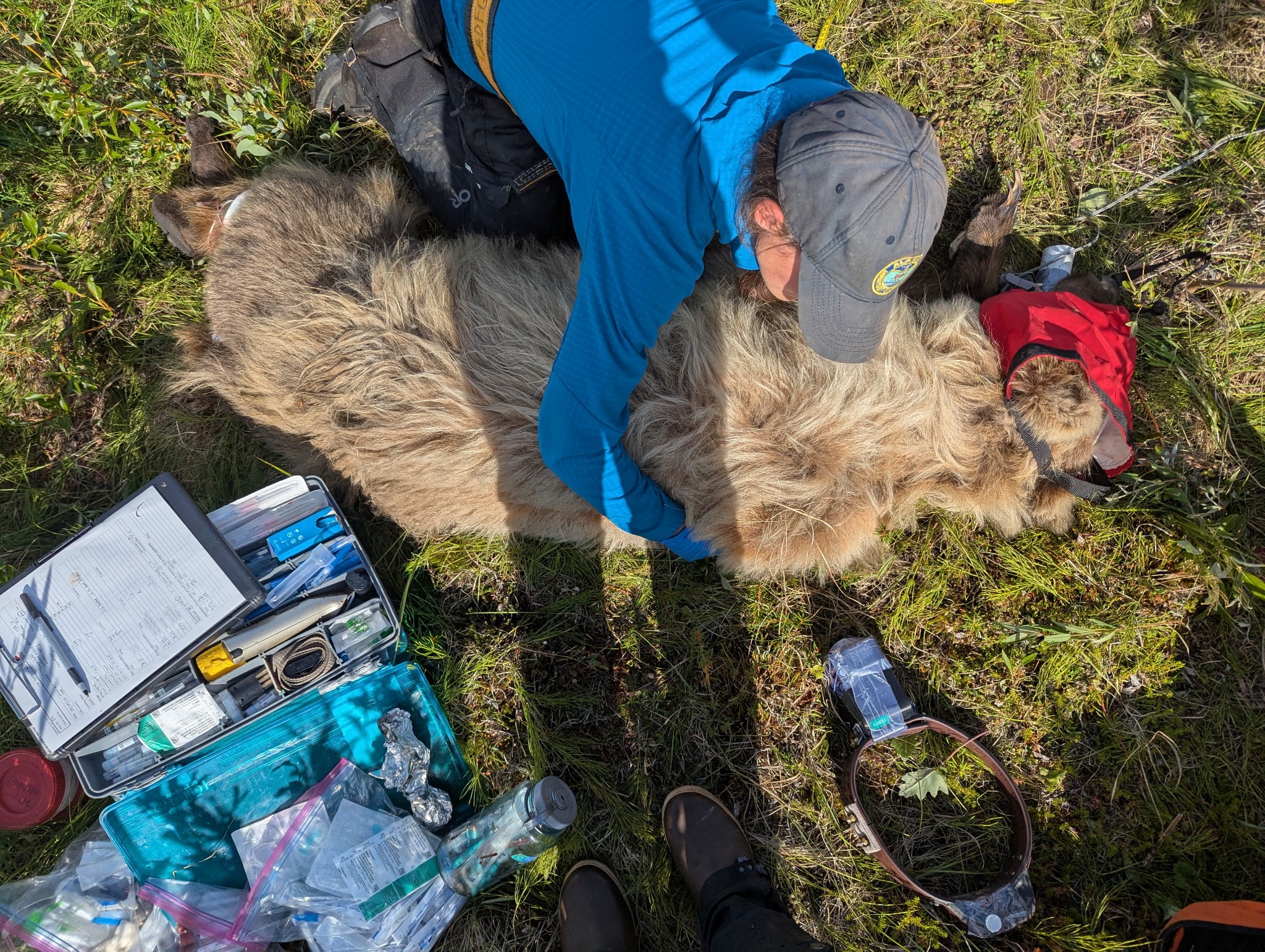
After the bear stops moving, the helicopter pilot lands. Pruszenski and Vincent step out, install a GPS collar with a video camera and then perform measurements of the animal.
“The kind of work we do involves spending large amounts of time in confined spaces and high-stress situations together, and Jordan is able to get the job done and still make me laugh through all of it,” Vincent said.
Pruszenski said she appreciates working with a team that cares about the animals’ health.
“It’s pretty amazing, but we all realize the responsibility for the well-being of that bear,” she said. “Everyone is willing to take a step back — like if they see an animal is too hot, they will let it cool down before taking data. There’s no reason to rush.”
“When you are doing this kind of work you are ultimately responsible for that animal's well-being while you are handling it,” Vincent said. “So, I am primarily focused on the seriousness of that responsibility.”
While operating smoothly and slowly, Pruszenski pulls a tape measure from her vest. A bear’s girth is one of the desired measurements. It requires Pruszenski to apply a true bear hug for a few seconds.
“They smell pretty good,” she said. “A little musty. Kind of like dry tundra.”
As a girl dad, I imagined what it must be like to have a daughter who knows what a live grizzly bear smells like.
“She’s hanging out of an R44 helicopter darting moose and bears,” her father Stan Pruszenski said over the phone from Arizona. “That’s unique for anyone, especially a woman. Her mother (Mary Jo) and I are extremely proud of where’s she’s come and how she’s gotten there.”
Stan Pruszenski spent 30 years busting game-law violators as a plain-clothes criminal investigator for the U.S. Fish and Wildlife Service. He was twice stationed in Anchorage, where Jordan and her sister grew up, as well as in California and Washington, D.C.
“A lot of people know the name, but I think (Jordan)’s gotten where she is in spite of me,” he said. “She shines on her own.”
Jordan Pruszenski’s uncommon closeness to a variety of animals began with a wolf-monitoring project in Idaho. That led to her completing a master’s degree at the University of Minnesota on the wolves of northern Minnesota. That experienced helped her land her current job.
“I always really loved animals and being outside,” she said. “I really lucked out getting to be part of the wolf world.”
Stan Pruszenski said Jordan had a turtle when she was 8 (she remembers a toad named Hopper), but he and Mary Jo didn’t see the spark to become a biologist until she enrolled in a high school biology class with an influential teacher.
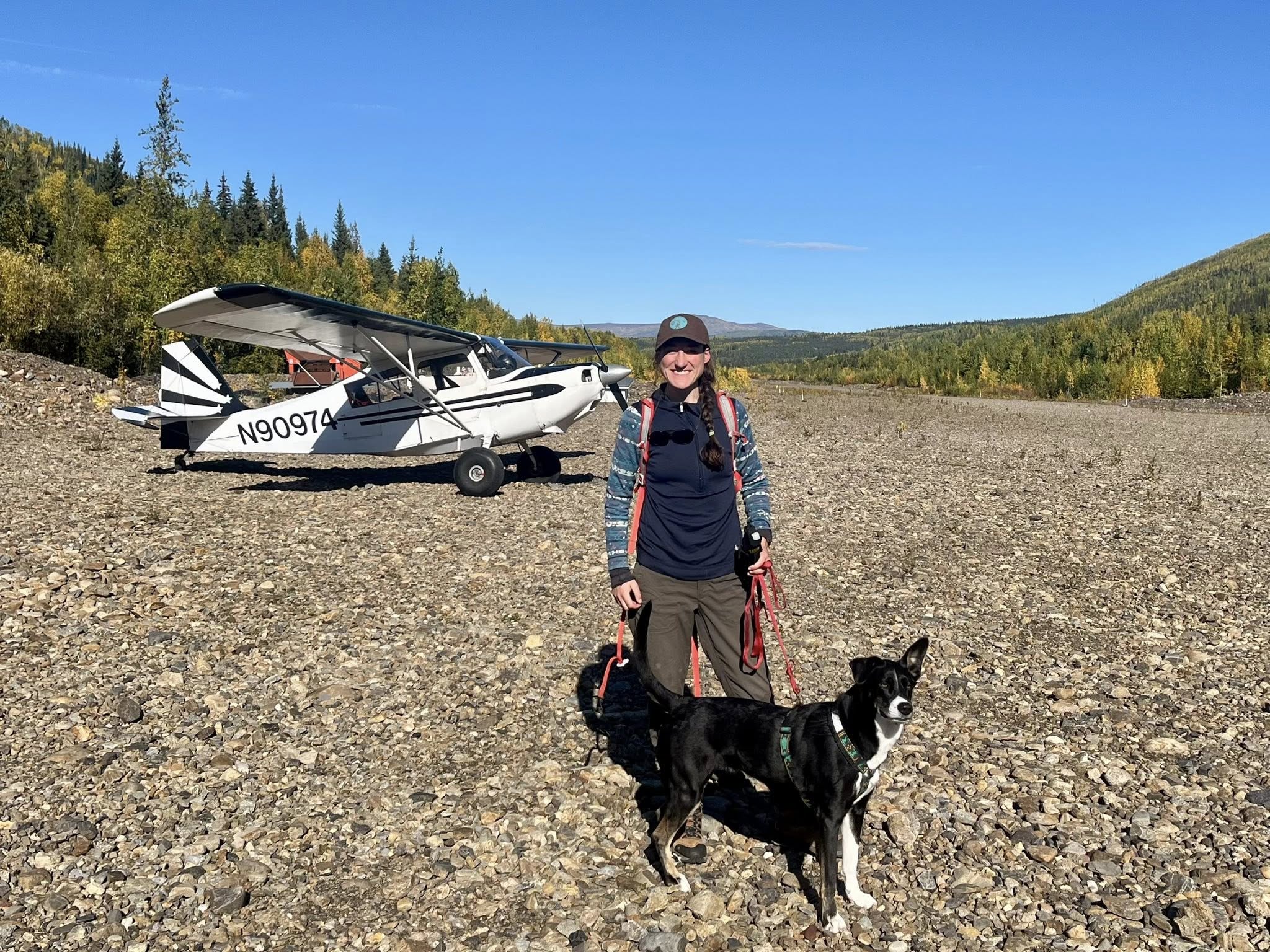
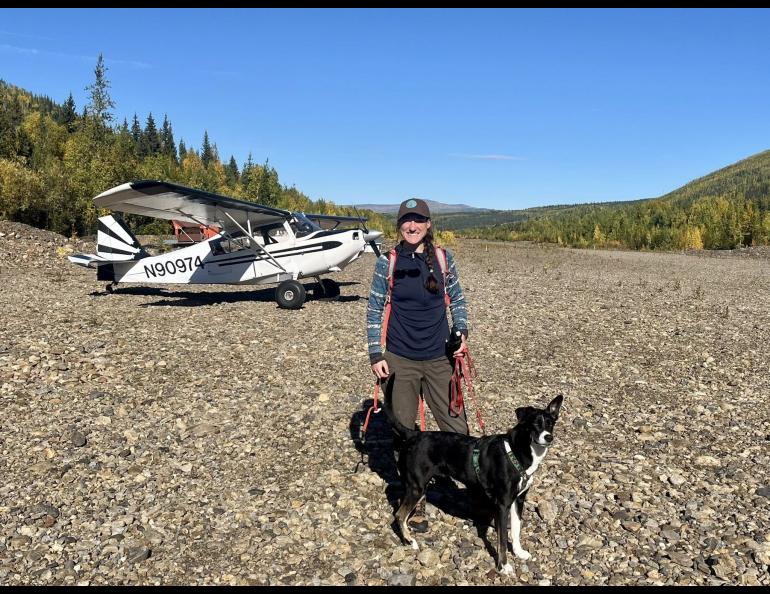
Following the example of her father, a pilot for more than 35 years, Pruszenski is also now a “baby pilot” for the department in Fairbanks. To earn the many flight hours necessary to fly for a state agency, Pruszenski rented aircraft at flight school in Arizona while visiting her parents.
“The upper management up there encouraged her,” Stan Pruszenski said. “Anything you can do to make yourself a little unique in a competitive environment is a good thing to do.”
“She has been avid in her pursuit of the necessary hours and accomplishments needed to begin flying state aircraft,” said Alaska Department of Fish and Game Regional Supervisor Lincoln Parrett. “It seemed like every time I was in the air for work or personal flying this summer, she was too.”
Being a biologist pilot will allow Jordan Pruszenski to more efficiently study the sheep, musk oxen, grizzlies and the caribou that roam northeastern Alaska by the thousands.
It will allow her to get up close and personal with creatures few of us will ever sniff.
“We’re impressed every day,” Stan Pruszenski said of he and Mary Jo. “To hug these animals and smell their breath — I can’t even imagine.”