
Recent Posts

Black aurora mission launches from Poker Flat
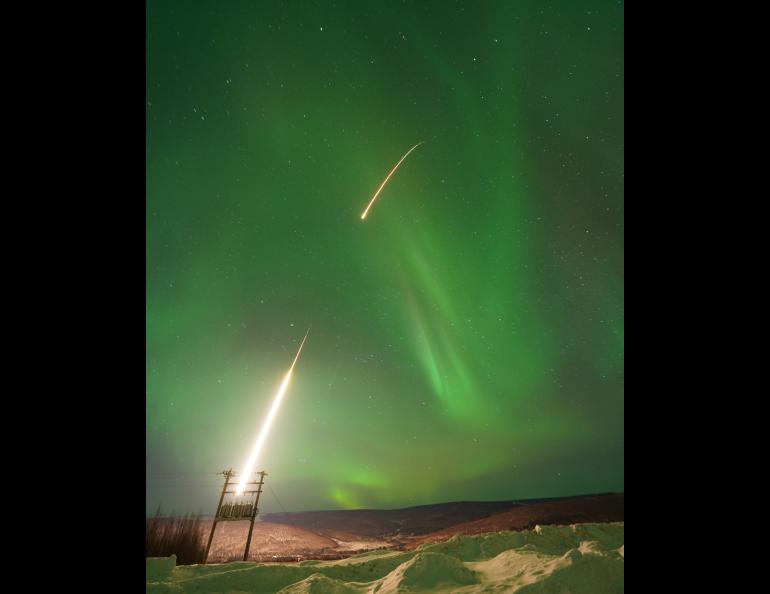
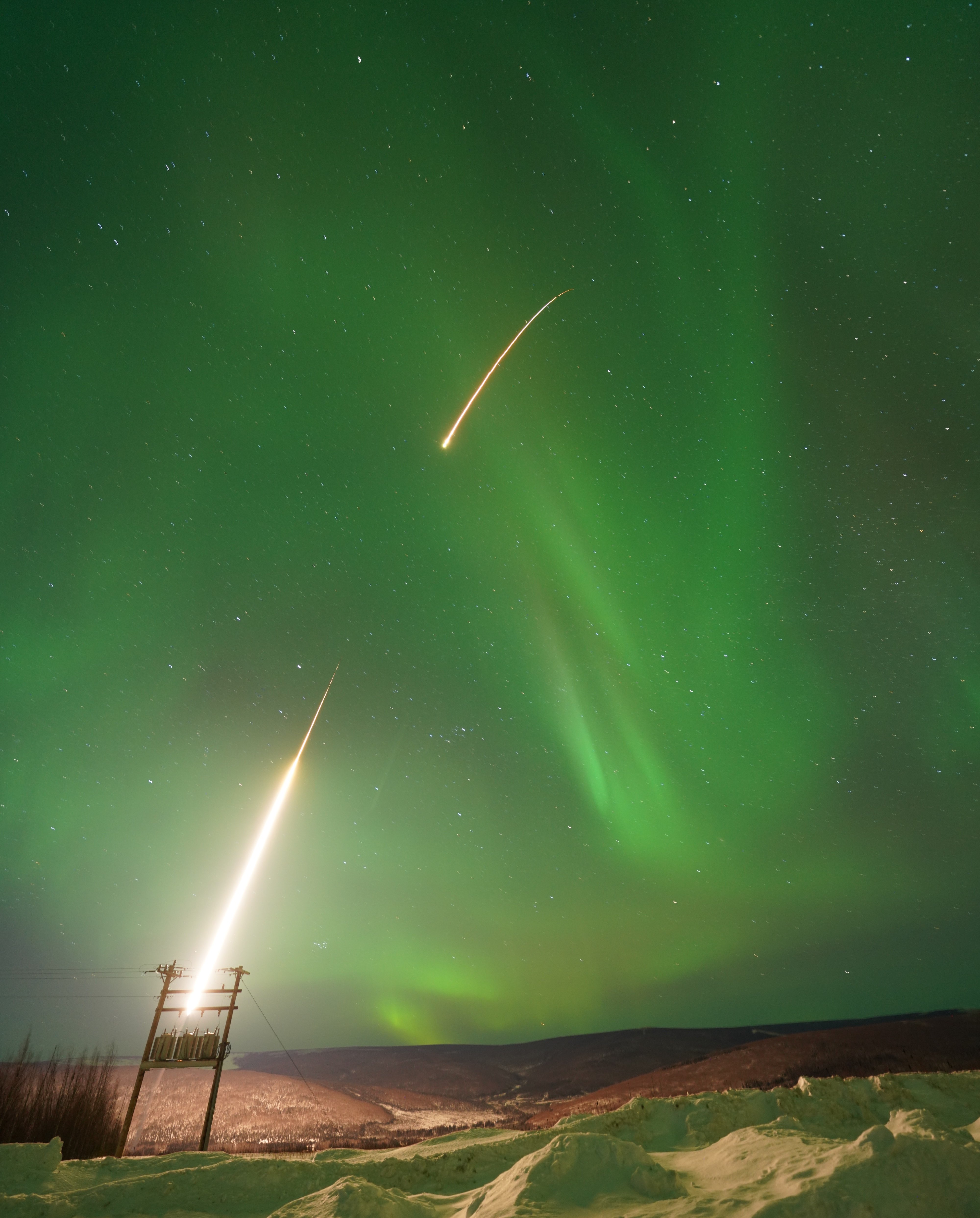
A second NASA sounding rocket launched from Poker Flat Research Range at about 3:30 a.m. today in a mission to study a form of northern lights known as black aurora.
The University of Alaska Fairbanks Geophysical Institute owns Poker Flat, located at Mile 30 Steese Highway, and operates it under a contract with NASA’s Wallops Flight Facility, which is part of Goddard Space Flight Center.
The Black and Diffuse Aurora Science Surveyor mission, led by Marilia Samara of Goddard Space Flight Center, launched 10 days after Poker Flat’s first launch of the season.
The launch window for a third mission, consisting of two rockets, closes Feb. 20. That experiment, led by Dartmouth College physics and astronomy professor Kristina Lynch, aims to gather information about how disturbances in Earth’s middle and upper ionosphere distort auroral curtains.
Text PFRRLAUNCHES to 866-485-7614 to subscribe to launch updates. Go to the Poker Flat active missions webpage to view live broadcasts.
The two-stage rocket of Samara’s mission flew north on the second day of the two-week launch window. The mission was on the launchpad at Poker Flat in early 2025, but the necessary aurora conditions didn’t materialize before the launch window closed.
Black auroras form when streams of auroral particles temporarily thin or shut off in small regions of the upper atmosphere, creating well-defined dark shapes within the broader glow of a diffuse aurora. Diffuse auroras themselves are typically faint and spread over large areas.
Black auroras look as though pieces of the aurora have been erased. These dark structures drift and evolve along with the surrounding aurora.
• Sarah Frazier, NASA Goddard Space Flight Center, sarah.frazier@nasa.gov
• Rod Boyce, University of Alaska Fairbanks Geophysical Institute, 907-474-7185, rcboyce@alaska.edu


