
Related Coverage
Recent Posts
Mission to study solar flares launches from Poker Flat
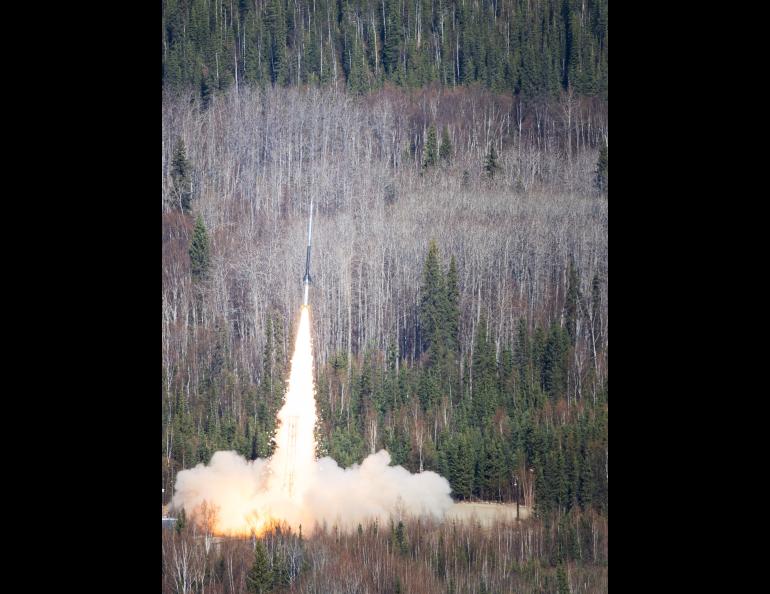
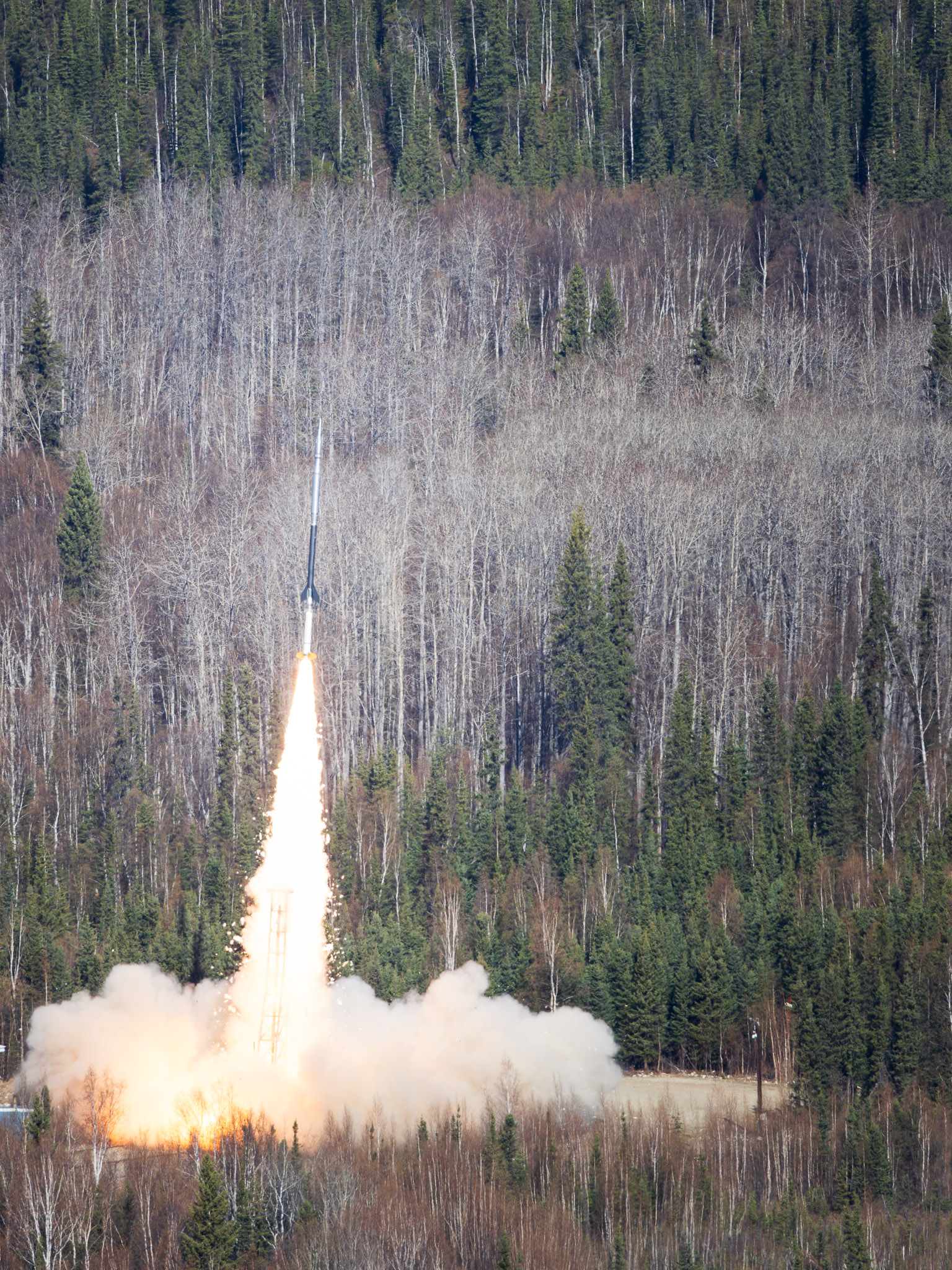
A NASA sounding rocket launched from Poker Flat Research Range at 11:23 a.m. Thursday in a continuing mission that uses X-rays to study the sun.
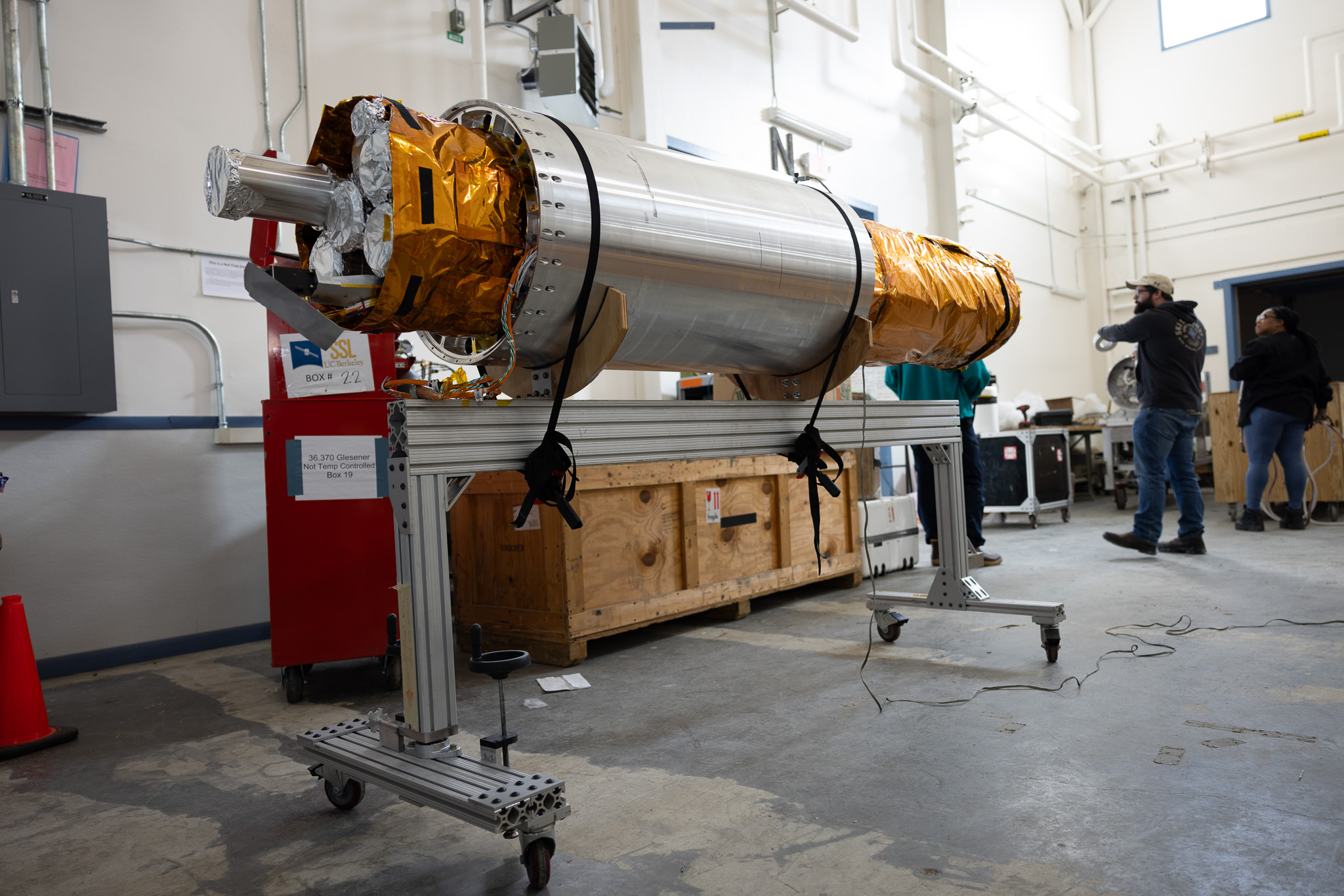
The NASA Black Brant IX rocket carried the Focusing Optics X-ray Solar Imager to record large solar flares.
The University of Alaska Fairbanks Geophysical Institute owns Poker Flat, located at Mile 30 Steese Highway, and operates it under a contract with NASA.
This mission, called FOXSI-5, is led by assistant research physicist Juan Camilo Buitrago-Casas of the University of California, Berkeley’s Space Sciences Laboratory. Buitrago-Casas has been involved with three of the previous four FOXSI missions. This is his first as the lead scientist.
Buitrago-Casas said scientists on this mission got lucky when “the sun threw a small surprise our way.” An old but still-active solar region came back into view just as several different spots on the sun erupted, giving them an unusual multi-point snapshot of solar flare activity.
“Seeing science data coming down on every detector during the flight was an incredible feeling for the whole team,” he said.
Solar flares are immense bursts of radiation in the form of light. They are often accompanied by a cloud of plasma that explodes into space at up to millions of miles per hour. That plasma cloud, called a coronal mass ejection, consists of electrically charged particles that carry energy and magnetic fields.
Solar flares emit X-rays. The FOXSI instrument can record them at a high sensitivity level.
Studying flares is important because the plasma they eject can interact with Earth’s magnetic field to create auroras and sometimes harms satellites and communications.
The launch came with only two days remaining in the launch window.
“Solar flares don't run on rocket schedules,” Buitrago-Casas said. “You wait, you watch, you adapt.”
“We had been standing by on the pad for two weeks, ready to go on a moment's notice, and we were prepared to keep watching the sun until the very last minute of our window on Friday,” he said. “The sun finally gave us what we came for.”
• Juan Camilo Buitrago-Casas, University of California, Berkeley, milo@ssl.berkeley.edu
• Sarah Frazier, NASA Goddard Space Flight Center, sarah.frazier@nasa.gov
• Rod Boyce, University of Alaska Fairbanks Geophysical Institute, 907-474-7185, rcboyce@alaska.edu


