Skip to main content
Shop
Donate
UA Directory
Intranet
Quick Links
Geophysical Institute
Main navigation
Home
About
Contact Information
Contact
UAF Directory
Visitor Information
About the GI
Community
GI Publications
Timeline
GI Quarterly
People
Leadership
Researchers
Graduate Student Researchers
Emeriti
Research
Atmospheric Sciences
Remote Sensing
Seismology & Geodesy
Snow, Ice & Permafrost
Space Physics & Aeronomy
Tectonics & Sedimentation
Volcanology
Facilities & Labs
Services
Design & Printing
GI Human Resources
Education Outreach
Instrument Development
Keith B. Mather Library
Research Computing Systems
News & Info
News
Alaska Science Forum
Alaska Science Pod
Science for Alaska
Aurora Forecast
Visitor Information & Tours
Events
Community
Student Info
Intranet
Search
Breadcrumb
Home
/
News
Filter By Year
- Any -
2026
2025
2024
2023
2022
2021
2020
2019
2018
2017
2016
2015
2014
2013
2012
2011
2010
Article Type
- Any -
Read
Explore
Research Group
- Any -
Atmospheric Sciences
Remote Sensing
Seismology & Geodesy
Snow, Ice & Permafrost
Space Physics & Aeronomy
Tectonics & Sedimentation
Volcanology
Facility/Lab
- Any -
Alaska Center for Unmanned Aircraft Systems Integration (ACUASI)
Arctic and Homeland Defense Center University Affiliated Research Center (AHDC UARC)
Alaska Climate Research Center (ACRC)
Alaska Critical Minerals Collaborative (ACMC)
Alaska Earthquake Center (AEC)
Alaska Satellite Facility (ASF)
Alaska Space Grant Program (ASGP)
Alaska Volcano Observatory (AVO)
Advanced Instrumentation Laboratory (AIL)
Arctic Coastal Geoscience Lab (ACGL)
College International Geophysical Observatory (CIGO)
Geochronology Laboratory (Geochron Lab)
Geographic Information Network of Alaska (GINA)
Geophysical Institute Permafrost Laboratory (GIPL)
High-frequency Active Auroral Research Program (HAARP)
Hyperspectral Imaging Laboratory (HyLab)
Poker Flat Research Range (PFRR)
Wilson Alaska Technical Center (WATC)
New satellite antenna is operational
September 29, 2017
The new blue antenna that sits atop the Elvey Building at the University of Alaska Fairbanks is now operational. The antenna was installed in...
Read more
Geophysical Institute aims research toward defense
September 11, 2017
In an effort to gain more federal funding, the Geophysical Institute at the University of Alaska Fairbanks said it plans to tailor some of its...
Read more
Researchers take on atmospheric effects of Arctic snowmelt
September 6, 2017
Researchers at the University of Alaska Fairbanks’ Geophysical Institute are exploring the changing chemistry of the Arctic’s atmosphere to help...
Read more
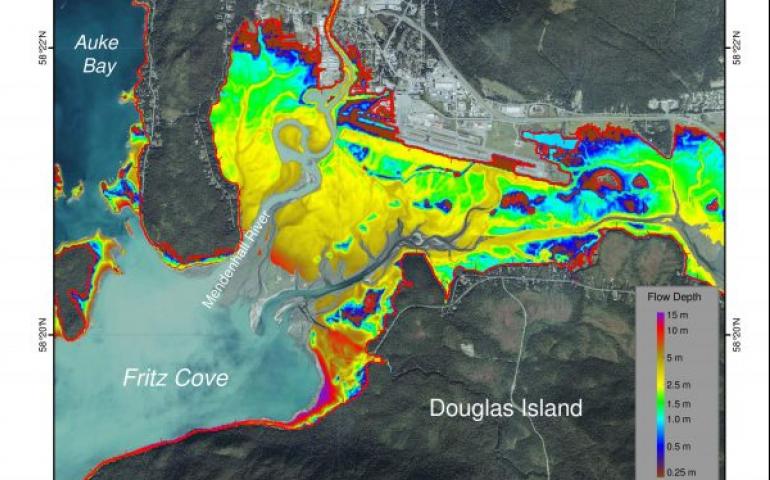
Preparing Alaska’s communities for a tsunami
August 3, 2017
University of Alaska Fairbanks researchers recently gave Juneau and Sitka new information about what ocean waters near these Southeast Alaska...
Read more
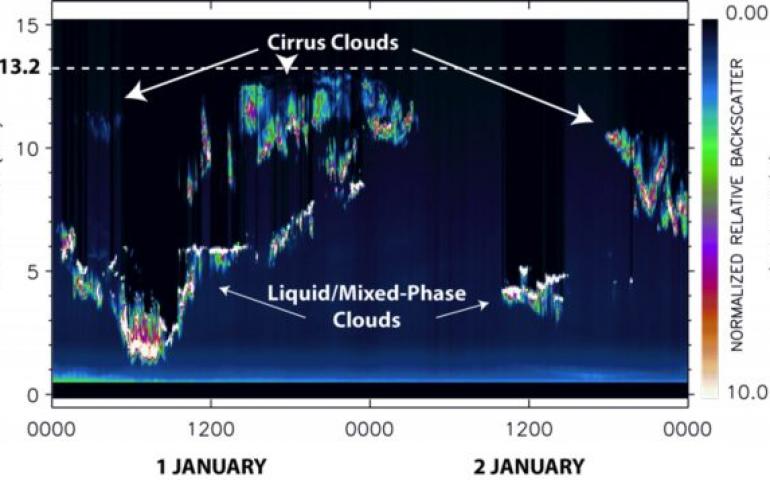
NASA lidar on Elvey Building provides cloud data
August 3, 2017
A rapidly blinking green light beam has been flickering skyward through a foot-square quartz window in the north corner of the roof of the...
Read more
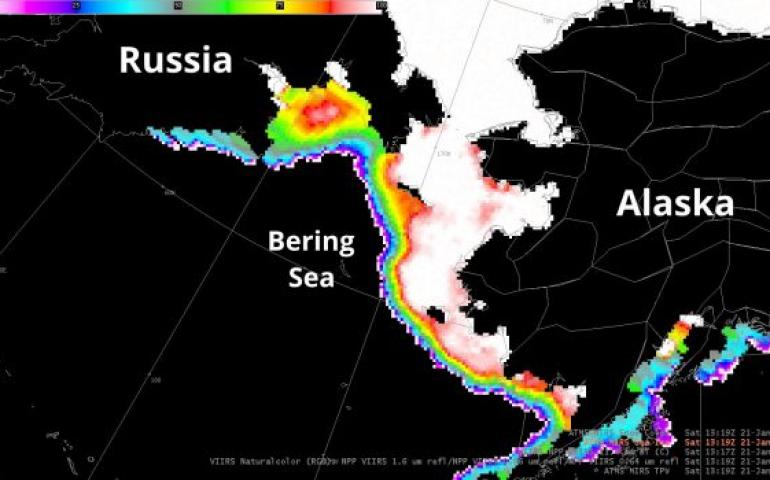
Using microwaves to see through clouds
August 3, 2017
The most common types of satellite images are only able to see the “top” of the sky — if it is a cloudy day, the satellite will only be able to...
Read more
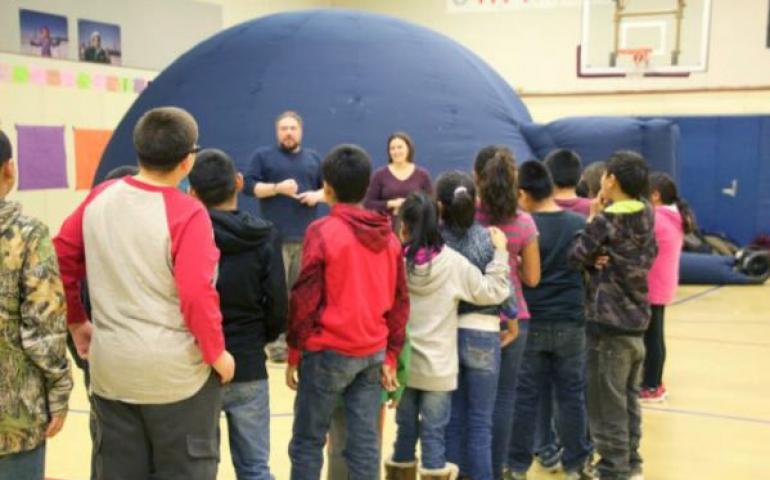
New curriculum connects aurora, Iñupiat culture
January 26, 2017
A new curriculum that weaves aurora science with Iñupiat culture and language is now available for elementary and middle school teachers across...
Read more
NASA sounding rockets to launch from Poker Flat Research Range
January 18, 2017
A NASA sounding rocket campaign starts Jan. 20 and will run through early March at the Poker Flat Research Range in Alaska. The research rockets...
Read more
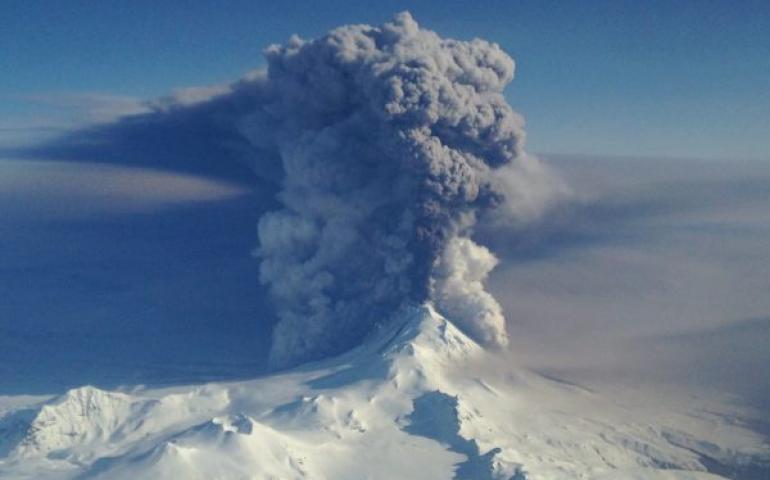
Volcano study examines relationship between seismic signals, sound waves
January 17, 2017
A study of relationships between seismic signals and sound waves from an erupting volcano in Alaska may someday help scientists infer the height...
Read more
UAF researcher joins study of Arctic sea ice change
December 12, 2016
A University of Alaska Fairbanks researcher will participate in sea ice research that combines observations from unmanned aerial systems and...
Read more
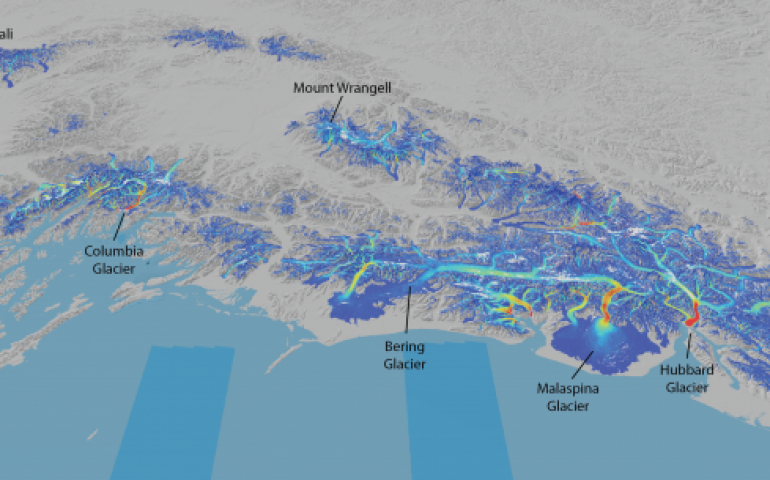
Satellite provides global view of the speed of ice
December 12, 2016
Glaciers and ice sheets move in unique and sometimes surprising patterns, as evidenced by a new capability that uses satellite images to map the...
Read more
West Antarctica’s largest glacier started retreating in 1940s
November 28, 2016
Pine Island Glacier — about the size of Florida and one of the largest ice streams in Antarctica — has been thinning and retreating at an...
Read more
ACUASI team tests near-space glider
November 22, 2016
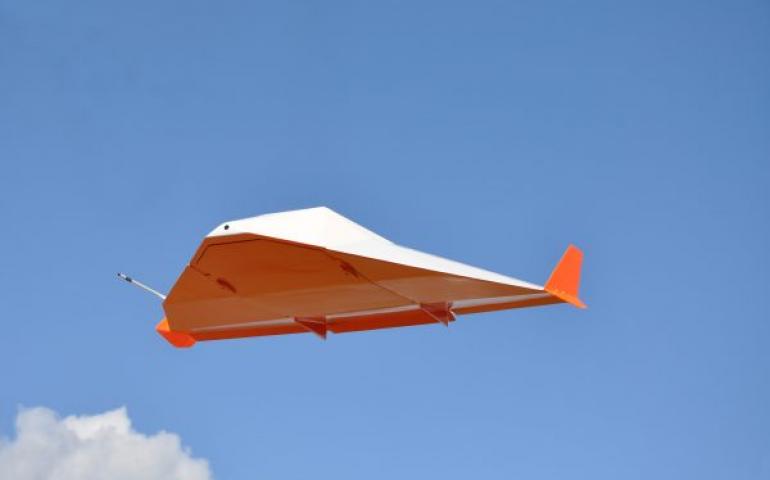
Staff at the University of Alaska Fairbanks helped with a successful test of a high-altitude glider to help evaluate how advanced surveillance...
Read more
Asteroid impacts create habitats for life, study suggests
November 18, 2016
Around 65 million years ago, a massive asteroid crashed into the Gulf of Mexico. The impact and subsequent effects wiped out about 75 percent of...
Read more
Project tests method for monitoring ice conditions
November 16, 2016
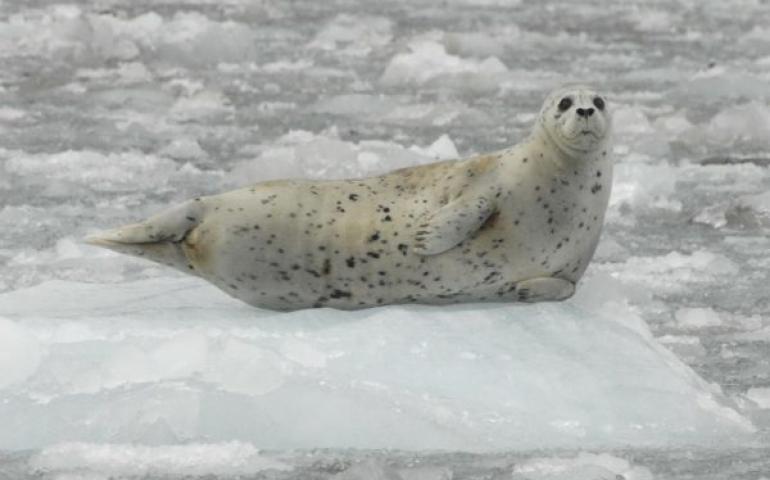
Along Alaska’s southern coast, harbor seals use icebergs from tidewater glaciers as platforms to give birth, nurse, molt and avoid predators. As...
Read more
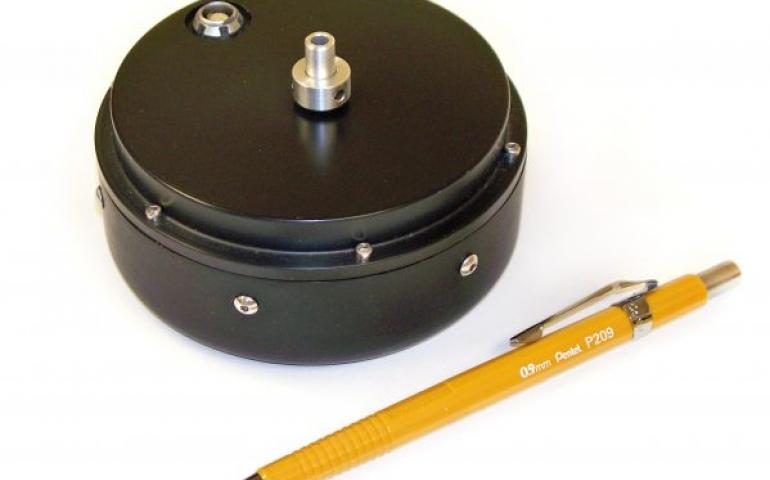
Patent received for improved infrasound sensors
August 9, 2016
Jeffrey Rothman, supervisor of the electronics shop at the University of Alaska Fairbanks Geophysical Institute, has received a U.S. patent for...
Read more
UAF’s Mölders blends interests in science, style
July 6, 2016
When Geophysical Institute atmospheric scientist Nicole Mölders was growing up in West Germany, women older than 50 were all supposed to look the...
Read more
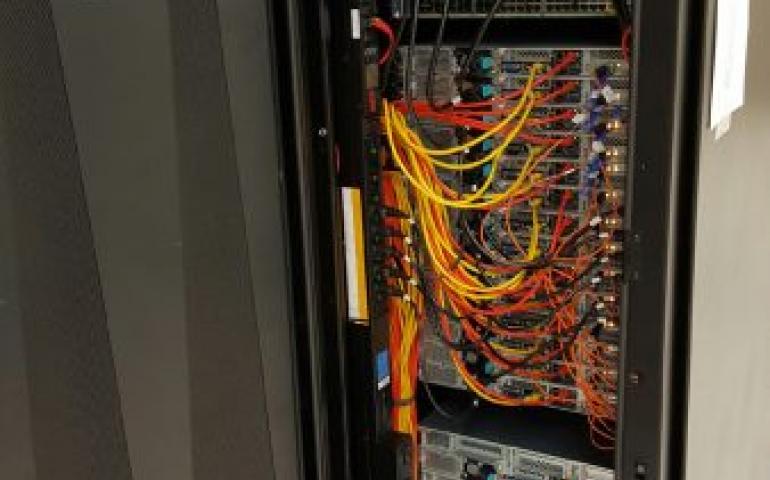
Murdock grant awarded for new computing system
June 22, 2016
The University of Alaska Fairbanks has received a two-year grant for an energy-efficient, high-performance computing cluster. The new Penguin...
Read more
Pagination
Previous page
←
Previous
First page
1
Page
20
Page
21
Page
22
Page
23
Current page
24
Page
25
Page
26
Page
27
Page
28
Last page
30
Next page
Next
→