
“Peyuluk: Volcano” selected for international film festival
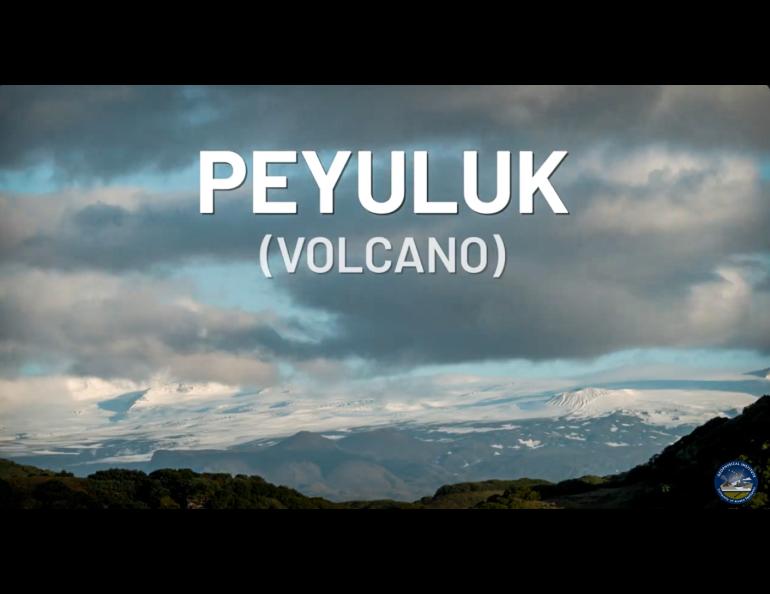
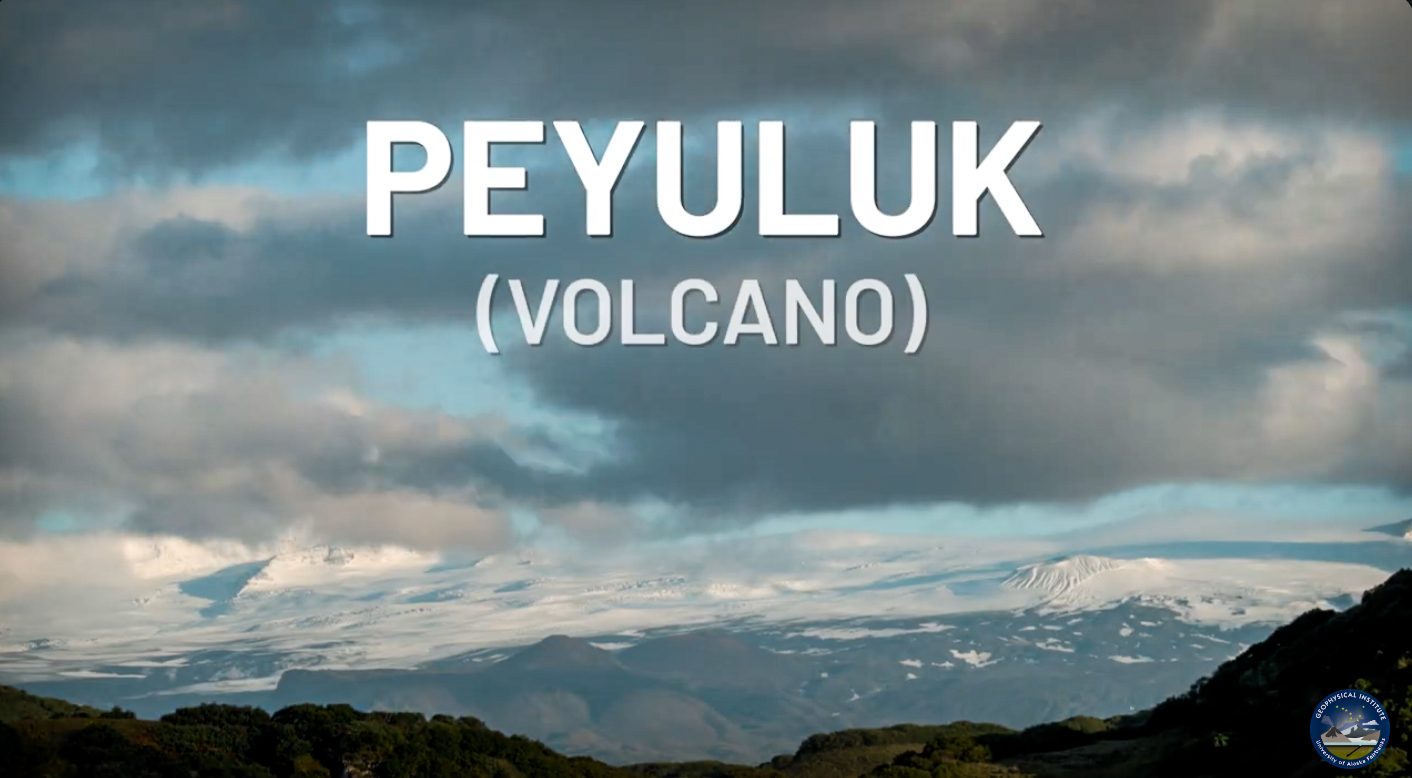
A short documentary film about what it’s like to live at the foot of an active volcano on the Alaska Peninsula has been selected to screen at the Anchorage International Film Festival in December.
The “Peyuluk: Volcano” film will be shown as part of the Absolutely Alaska Shorts block at 10 a.m. Friday, Dec. 13 at the Anchorage Museum.
The film can also be viewed for free online any time at PEYULUK.
The 17-minute documentary was co-produced by a team of University of Alaska Fairbanks Geophysical Institute and Alaska Volcano Observatory scientists, GI Education Outreach and Design Services staff and the Native Village of Perryville, Alaska.
The film introduces Alaska’s active volcanoes by interweaving local Indigenous community knowledge and lived volcano experience with volcano research and hazard preparedness. Current and former Perryville Elders and community members are featured in the film alongside volcano researchers and the stunning landscape of the Alaska Peninsula.
Perryville has a unique volcano history — the current residents of this village at the foot of Mt. Veniaminof are the descendants of people evacuated from the village of Katmai after the 1912 Novarupta eruption. This history is threaded throughout the film, emphasizing the importance of observation, appreciation and readiness when it comes to living with volcanoes.
This educational film was developed as part of two National Science Foundation-funded projects: the Prediction and Resilience against Extreme Events, or PREEVENTS, eruption forecasting project led by GI research associate professor and AVO member Taryn Lopez, and the Cultural Connections to Alaska Science project, led by Lynda McGilvary, director of the GI’s Education Outreach team. Lopez and McGilvary are the film’s executive producers. GI Media Producer Bryan Whitten served as the film’s cinematographer and editor and GI Senior Instructional Designer Lori Schoening directed the film. Schoening also led the team of producers, which included Mario Angarita Vargas, Cheryl Cameron, Patsy Shaha, Kristi Wallace and the community of the Native Village of Perryville. The production team extends thanks to all those whose interviews, expertise and hospitality made this film possible.
This material is based on work supported by the National Science Foundation under Grant Nos. 1855126 and 2201324. Any opinions, findings, and conclusions or recommendations expressed in this material are those of the author(s) and do not necessarily reflect the views of the National Science Foundation. The University of Alaska is an equal opportunity/equal access employer and educational institution. The university is committed to a policy of nondiscrimination against individuals on the basis of any legally protected status.
Lori Schoening, University of Alaska Fairbanks Geophysical Institute, 907-474-5436, llschoening@alaska.edu
Taryn Lopez, University of Alaska Fairbanks Geophysical Institute, 907-474-7389, tmlopez@alaska.edu


