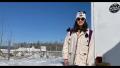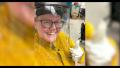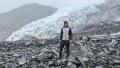
Meet graduate student researcher Anastasia Chen
Graduate student researchers are the future of science and an integral part of our UAF Geophysical Institute community.
So let’s meet another one of them.
Here’s Anastasia Chen from the GI’s Atmospheric Sciences Group. Her advisor is professor William Simpson
Q: Where are you from? Tell us about that place.
Anastasia: I am from Fairbanks, Alaska. Every summer in my backyard, there's a lot of raspberry bushes that pop up and you can hear the birds and squirrels. During the winter, if the sun hits the snow just right, the ground looks like hills of iridescent glitter.
Q: Tell us about your education path. Where were you before coming to UAF? What stage are you at in your graduate program?
Anastasia: I did my undergraduate here at UAF in Chemistry with a concentration in Biochemistry. Currently, I am in my last semester in my M.S. Chemistry degree with a concentration in Environmental Chemistry.
Q: Tell us about your general field of research. What do you find interesting about it?
Anastasia: I study wintertime air pollution in the Fairbanks North Star Borough (FNSB). I think it's interesting how air pollution impacts the world in many ways, and the amount of air pollution we have depends on different factors such as the source of pollution and meteorological factors.
Q: What are you working on now?
Anastasia: Currently I am observing two decades of wintertime pollution data in the FNSB at three Alaska Department of Environmental Conservation (ADEC) sites. There's a focus on how a residential fuel mandate implemented in Fall 2022, prohibiting the distribution of high-sulfur fuel in the FNSB fine particulate matter (PM2.5) nonattainment zone, impacts the sulfur-containing pollution following the mandate.
Q: Why did you choose UAF?
Anastasia: I chose UAF because it is a welcoming place. There are also many opportunities ranging from academic-based to extracurriculars which is nice. I also enjoy the 180 in scenery we have when we transition seasons.
Q: What do you like most about doing research at the UAF Geophysical Institute?
Anastasia: My favorite part would be the flexibility, and the opportunities to hear about others' work, both within my field and outside of it. I also appreciate being in Fairbanks, as it provides a unique place for studying air pollution under the dark and frigid conditions we have in the winter.
Q: What do you do outside of UAF? What would you tell someone about things to do in Fairbanks?
Anastasia: I take care of my two rabbits and lift weights. I also enjoy practicing ukulele, drawing, reading mystery novels, and learning languages. I would recommend checking out the Noel Wien Library and getting outside, especially during sunny clear days.
Q: What do you hope to be doing when you complete your graduate degree?
Anastasia: I hope to gain experience in a data analysis related field in air pollution, chemistry, or something related. If it involves art/graphic design or programming to convey meaning, that's cool because I enjoy creating art which tells a story. I hope my contributions can help the community in some way. I also want to keep making music and art.
Rod Boyce, University of Alaska Fairbanks Geophysical Institute, 907-474-7185, rcboyce@alaska.edu